
A buyer asking for white polycarbonate sheets may mean a translucent opal panel, a sheet intended to diffuse daylight, or an opaque white cover. Those descriptions are not interchangeable. For roofing and glazing, the useful comparison is usually between an opal or milky-looking polycarbonate sheet and a clear sheet of the same construction. Clear panels prioritize a view through the material and direct daylight; opal panels are generally selected when a softer appearance, greater visual screening, or more distributed daylight matters. Neither color alone determines structural capacity, insulation, fire classification, service life, or suitability for a particular roof.
Pingyun's Polycarbonate Sheet brochure shows a color labeled “Opal” for both its UV-PC hollow sheet series and UV-PC solid sheet series. It also shows clear versions of both. That gives a real starting point for comparing the two color choices, but it does not establish an opal-specific light-transmission figure, a universal white corrugated option, or an identical specification for all white-looking sheets. This guide explains the practical differences, shows how to compare the two Pingyun series without mixing their specifications, and sets out the questions to settle before placing an order. [1][2]
The first difference is optical, not chemical. Both names can describe polycarbonate. “Clear” describes a relatively transparent visual finish; “white” describes appearance but may conceal several different optical results. An opal sheet can transmit light while limiting a direct view through the panel. A truly opaque white sheet may allow far less daylight. A lightly frosted finish can differ from either. If a supplier quotes “white” without a color reference or sample, the buyer cannot know which of those outcomes will arrive.
Pingyun's brochure provides a useful naming anchor: its white-looking swatch is identified bilingually as Opal, rather than merely as “white.” The hollow series page places Opal beside a Clear sample; the solid series page also displays separate Opal and Clear swatches. These are color options in two different structural series, not one universal sheet supplied in multiple formats. The brochure's pictures show appearance, but a photograph or printed swatch is not a measured specification for haze, visible-light transmission, solar heat gain, or color consistency. [1]
A comparison should therefore hold as many variables constant as possible. Compare an opal solid sheet with a clear solid sheet when appearance and visibility are the question. Compare opal hollow and clear hollow panels of the same wall configuration when evaluating roof daylight. Do not attribute a difference caused by thickness, internal webs, coatings, or installation to the color alone. A clear twinwall panel and an opal solid panel differ in far more than tint.
The search phrase white polycarbonate sheets is useful for discovery, but a purchase order needs a more exact description: material, construction, color reference, thickness, dimensions, UV-protected side if applicable, surface finish, and required evidence for performance. The specification should also say whether the purpose is to admit diffuse light, block a view, match an existing facade, or provide an opaque visual cover. Each purpose leads to a different acceptance test.
The table describes selection questions, not guaranteed differences in any particular Pingyun SKU. Terms such as “usually” and “may” are deliberate: pigment loading, surface treatment, wall geometry, and thickness can change the outcome. For an architectural finish, place both sample sheets against the actual sky or light source, and view them from the intended distance and from inside the space.
Not automatically. Opal is the actual color label shown in Pingyun's brochure. “White” is a broad search term and visual description. “Milky” is an informal appearance description. “Frosted” may describe a textured surface, a matte treatment, or a color effect. Two sheets can look similarly pale in a small swatch but distribute light differently across an installed roof.
For procurement, quote the supplier's exact color name and request a physical sample or an agreed visual standard. If a buyer requires a particular degree of translucency, do not rely on color names alone. Ask for a color-specific transmission and haze measurement with its method and thickness stated. If the requirement is privacy, examine the sample with a bright object and a person behind it at realistic distances. If the requirement is a near-opaque panel, say so explicitly; the word “opal” does not establish opacity.
Likewise, diffuser sheet is an application-oriented term, not proof that every opal sheet has a documented diffusion performance. A historic Pingyun marketplace listing uses “Polycarbonate Diffuser Sheet” in its title, but that title alone does not identify the same SKU as either Opal swatch in the brochure. The buyer should request the actual proposed product's drawing and optical data before equating those descriptions. [1]
The intuitive answer is often yes, but “less” needs a defined comparison and a measurement. Compare two sheets made to the same construction, thickness, and UV configuration under the same test method. Visible-light transmission describes how much visible light passes through; haze or diffusion describes how much the transmitted light spreads. A panel can transmit useful daylight while making objects behind it indistinct. Conversely, a low-transmission sheet might not distribute daylight evenly.
Pingyun's brochure gives a broad 12%–82% light-transmission statement depending on color and a separate table of hollow-sheet values by thickness. Neither is a standalone performance claim for Opal at a specified thickness. Assigning the table's highest number to a white sheet would therefore be incorrect. The practical request is for a test or current datasheet that identifies the color, wall structure, thickness, and test method together. [2]
For roof projects, ask what the designer actually needs to control: daylight quantity, glare, direct view, solar heat, or nighttime appearance under artificial light. These targets may conflict. A bright, visually screened sheet can still introduce unwanted heat or glare under some conditions; a clear sheet can be managed by shading or layout. Without comparable data and a mock-up, the color decision remains aesthetic rather than quantified.
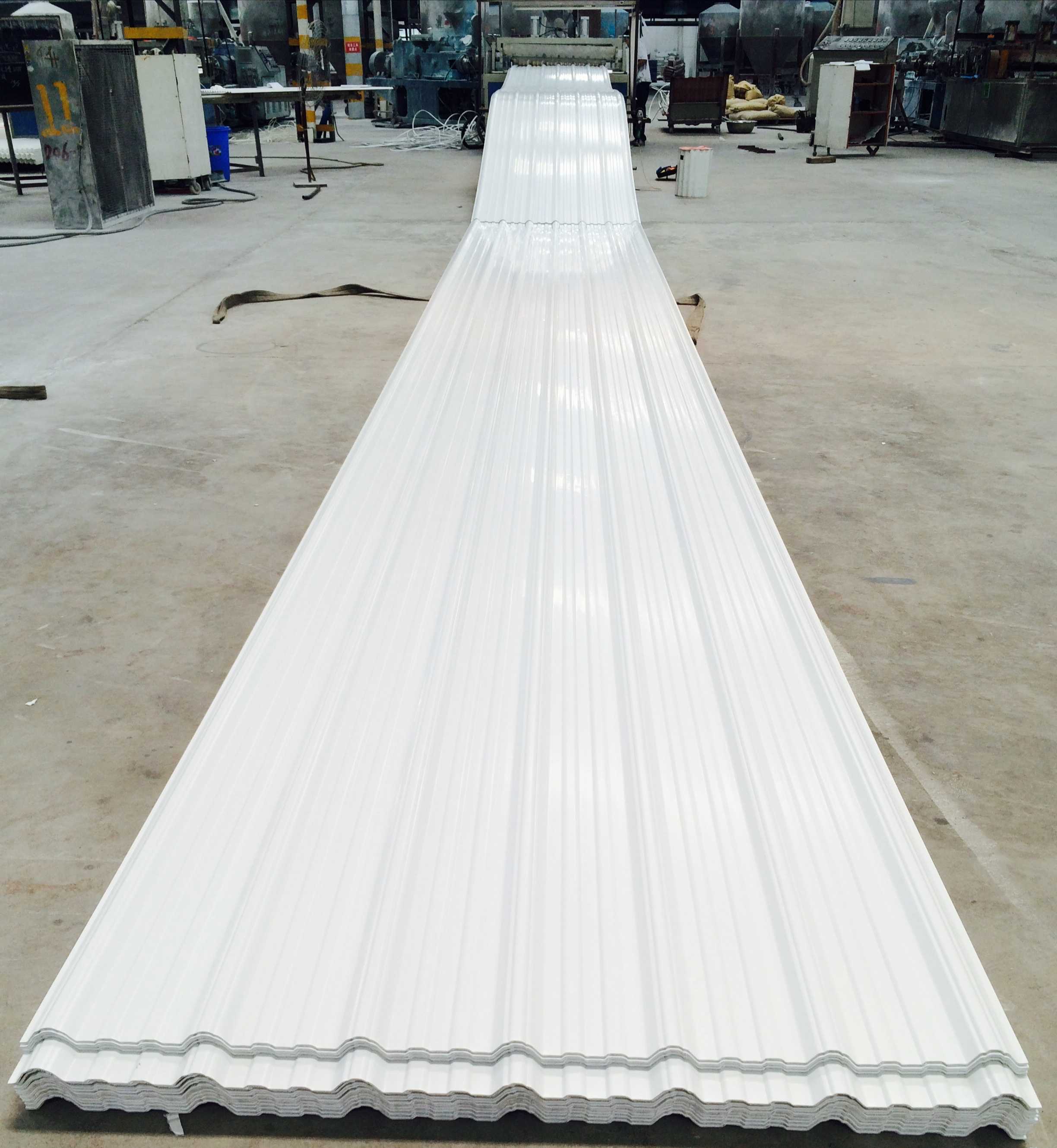
Color is only one axis. Solid describes a continuous sheet; hollow describes a panel with internal cavities or webs. Pingyun's brochure separates these into a UV-PC Solid Sheet Series and a UV-PC Hollow Sheet Series, and each page includes an Opal swatch. Pingyun's current product directory also separates solid, hollow, and corrugated polycarbonate categories. This distinction is the foundation for a responsible product comparison: a white-looking solid panel is not an alternative to a white-looking hollow panel on color alone. [1][3]
Solid polycarbonate is relevant where a continuous surface, visual finish, fabrication requirement, or panel behavior expected of a solid sheet drives selection. Hollow polycarbonate is relevant where cellular construction, span and weight considerations, and the overall roof or glazing system drive the decision. Those are design questions, not universal performance rankings. A hollow sheet needs proper edge and channel detailing; a solid sheet needs details suited to its own thickness, movement, and support. Either can fail a project when its edges, fixings, or supporting frame are wrong.
The brochure lists various nominal thicknesses for both series, but its specifications are series-level statements. A listed thickness does not prove that every color, coating, width, or order quantity is available together. Before using a table from an archived brochure in a tender, obtain a current quote tied to a specific product code and color. Do not take the specification for one series and print it next to a photo of the other.
Consider an opal solid option when a project calls for a smooth, continuous white-looking panel and the design can accommodate the appropriate support and fixing details. Possible discussions include an architectural canopy, partition, signage face, or a rooflight that needs visual screening. These are application scenarios, not claims that Pingyun has supplied a named project. The brochure's solid series illustrates Opal alongside Green, Blue, Brown, Clear, and Clear Embossed. The existence of a swatch does not by itself specify its impact rating, compatible span, thermal behavior, or exact daylight performance. [1]
A buyer should begin with the finished appearance and then test the proposed physical construction. Is the panel viewed from below? Will light come from above during the day and below at night? Does the frame require flat or curved panels? Are joints visible? Can the chosen thickness and fastening scheme accommodate movement without creating stress at edges? What surface side faces sunlight, and what coating is supplied? These details are more consequential than a generic claim that solid polycarbonate is “strong.”
Ask for a sample in the proposed thickness, not just the color chip. Hold it against a dark background and a bright source; inspect both faces and any embossed finish. If the application is a light box, test the actual backlighting distance and lamp arrangement for hot spots. If it is an outdoor roof, mock up the support and joint, because a visually pleasing sample may look different once fasteners, framing, and adjacent clear panels interrupt the surface.
Consider hollow Opal when the project calls for a cellular panel and values a white-looking daylight surface rather than a clear view. Pingyun's brochure expressly pictures an Opal member of its UV-PC Hollow Sheet Series and describes the hollow construction in its general product narrative. The illustrated color is a real archived brand reference. It does not prove that every hollow configuration in the market, or every sheet described as twinwall or multiwall, has the same wall count and color availability. [1]
For a hollow roof, the wall geometry needs to appear in the quotation and drawing. The direction of ribs affects bending and drainage; the brochure tells installers that cold bending must run parallel to the ribs. The edge detail also matters. Open cells can collect dirt, insects, and condensation if the wrong closure is used or the panel is cut and left unsealed. Confirm the supplier's instructions for top and bottom edges, compatible tapes, profiles, drainage, and the fixing arrangement selected for the project. Avoid assuming that a cosmetic bead of sealant can replace a designed channel closure. [2]
Where a sample is inspected, examine not just its face color but the appearance of its ribs and cut edge. The webs may remain visible when the panel is backlit. If the design requires an uninterrupted luminous surface, that visual texture may be unacceptable even though the color is correct. On the other hand, internal webs can be appropriate when the roof architecture already has regular framing and the buyer wants a cellular panel. These are mock-up findings, not attributes that can be inferred from the phrase “white polycarbonate.”
Pingyun's site lists a Polycarbonate Corrugated Sheet category, and its product pages display corrugated PC offerings. That establishes a corrugated construction within the broader PC range. The brochure passages identifying Opal, however, belong specifically to its solid and hollow series. They do not establish an Opal corrugated SKU or its availability, coating, dimensions, or transmission. The safe statement is that Pingyun identifies opal solid and hollow series and separately lists corrugated PC products; a buyer seeking opal corrugated sheets must obtain a matching product-specific confirmation. [1][3]
This distinction prevents a frequent catalog error. A website may list white-looking polycarbonate on one page and corrugated sheets on another. Joining those categories into “white corrugated polycarbonate sheets in stock” requires evidence that the exact combination exists. Ask for a current product code, actual sample, profile drawing, effective cover width, sheet length, wall construction if relevant, color reference, and UV-coating specification. A generic photograph of an opal flat sheet should not be used to approve a profiled translucent roof panel.
If the project is a replacement roof, profile compatibility can be as important as color. The wave pitch, height, lap, and fastener positions should be checked against existing panels and the supporting frame. A nominally similar profile may leak or sit unevenly if its geometry differs. For new construction, an opaque or white-looking corrugated material might also be PVC or FRP rather than PC; verify the polymer stated on the actual order instead of inferring material from appearance.
Start with the intended room, not the catalog's brightest photograph. A warehouse aisle, greenhouse crop, covered walkway, workshop, retail atrium, and residential carport can all use roof daylight differently. In one space, a visible view of the sky may be welcome; in another, direct brightness on screens or work surfaces is a liability. An Opal sample suggests a diffuse appearance, while a Clear sample suggests more visual transparency. Neither sample tells you by itself how the completed building will perform.
Ask the designer to describe the daylight problem in observable terms. Where does light enter? Which occupied surfaces receive it? When does the site receive direct sun? Is the goal general illuminance, a brighter ceiling, visibility through the panel, or suppression of silhouettes? Is nighttime privacy important? A roof that looks discreet by day can reveal equipment or people when illuminated from below after dark. A small desktop sample should therefore be examined in both lighting directions.
Choose a comparison assembly: same framing, same roof pitch, same panel size, and as close as possible to the same thickness and structure. Compare an Opal panel and a Clear panel side by side in that assembly. If the project is large, request the supplier's color-specific visible transmission and haze information, and ask the designer to evaluate it with the building's glazing geometry. Without those inputs, neither color can be claimed to deliver a stated daylight factor or energy saving.
The brochure's generic statement that transmission varies with color is useful as a warning against treating all panels alike. It is not a substitute for a white-panel data sheet. Moreover, daylight is not the same thing as solar heat: visible transmission and total solar energy transmission describe different parts of sunlight. A panel can be bright to the eye without being an ideal heat-control choice. Request the correct optical measures for the proposed color if thermal comfort matters. [2]
Clear panels can admit light while preserving a more open view, particularly with solid construction. That can work where the sky or an adjacent landscape is part of the design. It can also reveal dirt, sealant lines, stored goods, framing shadows, or a harsh sun patch that the designer did not intend. Hollow clear panels may still show webs and reflections, so “clear” should not be understood as invisible glazing. Observe the actual sheet under real light.
From a maintenance perspective, clear areas can make leaf debris, condensation, and scratches easier to see. This does not mean they are inherently less durable or that an Opal panel needs less cleaning. It means the acceptance standard for appearance should include the installed environment: trees, industrial deposits, rainwater runoff, and accessibility. Where the roof design alternates opaque roofing with clear strips, the junction between different materials must be engineered rather than copied from an attractive rendering.
If the project needs safety glazing or fall protection, color is irrelevant to the regulatory decision. Ask for a system design and evidence suitable for the local application. Do not rely on “impact resistant” marketing language to treat a roof panel as a walkway. Pingyun's brochure explicitly warns against standing directly on the board during installation; it instructs installers to use a padded board fixed to the frame before walking above it. [2]
An Opal rooflight may visually soften the view of roof structure or reduce direct visibility through a panel. Whether it produces even illumination depends on its actual optical properties, the source of light, sheet dimensions, and spacing of supports. A white-looking surface can appear dramatically brighter against a dark roof than it does on a small swatch. Conversely, a heavily pigmented version could leave an interior darker than expected. Test before committing to a full roof area.
Ask whether the design intends the Opal panel to provide privacy, diffusion, or simply visual consistency with another white surface. Those objectives need different checks. A privacy mock-up requires viewing a person or object behind the sheet at actual distances. A daylight mock-up requires evaluating illuminated surfaces under sun and cloud. A color-matching mock-up requires physical samples next to the adjacent material and inspection under both natural and artificial light.
Do not write a specified transmission percentage into the schedule unless the proposed Opal product supports it. The archived Pingyun table lists hollow-panel percentages by thickness but does not separate its listed colors into different optical rows. For the Opal color, the technically honest instruction is to request the exact grade's current data and the test conditions. If the supplier cannot provide it, an approved full-size mock-up can settle appearance, but it will not create a certified performance value. [2]
The color question and the construction question should be separated. A hollow panel has internal cavities; a solid panel does not. A thicker or more complex hollow profile may change the way a roof assembly transfers heat, but the roof's actual thermal performance depends on the entire design, not simply on a white tint. Conversely, an Opal finish does not turn a solid sheet into an insulating board. When comparing bids, require the same test condition and the same definition of what has been measured.
Pingyun's brochure describes thermal and sound insulation as features of its hollow structural panels. It presents a sound-insulation column for hollow panels of stated thicknesses. These are archived brochure claims for the listed construction; they are not an Opal-specific acoustics test, an installed roof noise guarantee, or a reason to apply the same figures to solid or corrugated sheets. The brochure does not provide a color-separated thermal-resistance table. It is consequently more accurate to discuss the project objective and request a current, product-specific report than to call every white polycarbonate sheet “heat insulating” or “soundproof.” [2]
A building designer must also account for what lies around the sheet. A narrow daylight strip in an otherwise insulated roof has a different impact from a roof entirely covered with translucent panels. Thermal bridges at framing, uncontrolled air leakage at joints, and uninsulated curbs can dominate an individual panel's contribution. Ask whether a published thermal value is for the sheet alone, the installed glazing unit, or a complete assembly. The number cannot be transferred across those boundaries without calculation by a qualified designer.
Similarly, the sound of rain under a canopy differs from a laboratory sound-insulation measurement. Panel vibration, fastener spacing, frame stiffness, the air cavity below the roof, and interior finishes all affect what occupants hear. The question is not “Is white quieter than clear?” but “What noise sources are relevant, and what evidence is available for this sheet and assembly?” A color match does not settle it.
It is possible for two colors of otherwise similar sheet to interact differently with sunlight, but the word “white” alone gives no quantified answer. Solar energy encompasses more than visible light. A visual comparison or visible-light transmission result cannot prove a particular reduction in total solar heat gain. Nor does a printed assertion about energy saving establish what will happen in a particular roof, climate, or orientation. Treat an Opal sample as an appearance option until the proposed product's relevant solar-optical properties are documented.
If heat gain is a priority, give the supplier and designer the roof orientation, glazed area, expected occupancy, need for winter daylight, and ventilation strategy. Ask for solar transmission or other appropriate product data under an identified method. Assess the sheet alongside shading, roof insulation, opening areas, and ventilation. A warehouse where lighting energy matters may accept a different trade-off from a greenhouse where sunlight is part of the production environment. The best choice cannot be inferred from “white reflects heat” without evidence about the specific material.
Avoid the opposite assumption too: a clear panel is not necessarily thermally unsuitable. The structure and roof system matter. A hollow clear panel could have a different thermal behavior from a solid Opal panel because of its cavities, even while admitting more visually direct light. When a seller compares the two, insist on like-for-like data and a statement of exactly what changed. If the sales material switches thickness, structure, or UV coating while claiming a color benefit, the comparison is not controlled.
The archived brochure says a special hollow structure can reduce building energy consumption. This is a supplier statement, not a measured saving for a white roof. A project claim would require the actual building baseline, climate, occupied schedule, and roof assembly. In a publishable product guide, the stronger message is practical: request thermal and solar data for the chosen construction and color before making an energy claim. [2]
There is no sound answer from color alone. Pingyun's brochure provides acoustic figures in a thickness table for its hollow series, but it does not give separate figures for Clear and Opal. If the same hollow structure is offered in both, a buyer still needs assurance that the values apply to the quoted variant. The numbers also cannot by themselves predict a perceived rain-noise level beneath a lightweight canopy. Those two measures describe different situations.
For a quiet courtyard or workspace, ask the designer what sound problem needs solving. Is it rain impact, traffic noise passing through the roof, machinery transmitted through the frame, or echo within the room? A panel that reduces transmission of outside noise may still sound conspicuous when drops strike it. Consider a physical mock-up and the complete ceiling or roof assembly where acoustic comfort is a purchasing criterion.
A quotation should identify the test standard, specimen, thickness, mounting, and frequency-dependent or single-number result if acoustic performance is guaranteed. If no such data exist, avoid promising a decibel reduction. The honest buyer-facing description is that hollow construction is discussed in the Pingyun brochure for sound insulation, while suitability for a noise-sensitive building must be assessed as a system. [2]
Durability should be tied to UV protection, material grade, exposure, detailing, and maintenance, not to a color name. A light appearance may hide or reveal certain kinds of wear, but that is not evidence of longer service life. Pingyun's brochure labels its pictured series UV-PC and separately discusses a surface UV-protective layer. The hollow-series description qualifies UV protection as applying to UV-coated material. A buyer should therefore ask which face or faces of the offered Opal sheet receive UV protection and whether installation markings identify the exterior face. [1][2]
The same question applies to Clear. Two color variants may share a coating or may not; a category name is insufficient proof for the exact shipment. Request the current technical sheet, surface protection details, installation orientation, and written warranty terms. If a seller uses phrases such as “anti-yellowing,” ask what property is measured, at what time, under which conditions, and what remedy is offered if the criterion is not met.
Even a UV-protected panel can be damaged by unsuitable cleaners, stressed holes, inadequate expansion allowances, incompatible sealants, or abrasive maintenance. An outdoor lifetime claim is particularly vulnerable when the installation details are left unspecified. The color selection is therefore part of a broader specification, not a shortcut around engineering.
Polycarbonate is often selected where impact behavior matters, but a generic material property cannot authorize an unsupported roof span or human access. The brochure describes impact resistance in comparative terms. It does not establish the maximum span of a particular Opal sheet in a specific roof, or certify that the roof can be walked on. For a structural decision, ask for current load and deflection data for the exact product and support layout, together with the project's wind, snow, maintenance, and local approval requirements. [2]
Panel strength is affected by thickness, profile, internal walls, how the sheet is restrained, the orientation of ribs, support spacing, and the size and placement of holes. A nominally thicker panel may not be a suitable substitute if its geometry differs. A corrugated clear sheet could need a completely different purlin layout from a flat hollow Opal panel. A supplier's sample helps evaluate appearance; a drawing and design check establish how it should be supported.
Where people may have to clean or service a roof, specify a safe access method independent of the roof panel. Pingyun's installation page warns against personnel standing directly on a board and describes a temporary padded board fixed to the frame. That warning should not be watered down by a marketing assertion that the material is “unbreakable.” Do not allow color or perceived thickness to determine whether the panel is walkable. [2]
Safety also includes failure at edges. An installer might drill a fastener too close to a cut edge, trap a sheet rigidly as it expands, or fit incompatible metal and sealant components. Cracks may then originate at a detail rather than in an uninterrupted field of material. A precise procurement package should include an installation guide, compatible profiles, fasteners, washers, edge closures, and responsibility for the interface with the supporting frame.
A designer may want a curved canopy because a continuous luminous surface fits the architecture. Polycarbonate can be cold-bent in suitable forms, but bending is not an unrestricted right to force a panel into any radius. Pingyun's brochure includes a hollow-sheet table of minimum bending radii by thickness and states that cold bending should follow the ribs. Those statements belong to the hollow series as shown, not to every solid, corrugated, or differently structured panel. [2]
For a proposed curve, specify which side will face the weather, the direction of ribs, panel length along the curve, intended radius, edge retention, and movement allowance. Have the supplier confirm whether the exact proposed product and coating can be cold-bent to that geometry. If the project needs a tight curve, ask whether a different panel structure or fabrication method is necessary rather than using an unapproved bend on site.
Check the final appearance as well as the mechanics. A curved Clear panel can expose the frame and landscape behind it; a curved Opal panel may look more uniform but can reveal web shadows or uneven support pressure under backlighting. A short sample bent in a workshop is not equivalent to a full-length roof panel supported at the proposed intervals. A meaningful mock-up uses the actual radius and joint system.
Do not quote the brochure's bending figure as a universal warranty term. Its table is an archived product statement, and its accompanying note warns of breakage below the stated minimum radius. Current product variants, production details, or applicable installation instructions should be confirmed before a contractor orders curved panels. [2]
Color does not determine wind-uplift resistance or snow-load capacity. The governing roof design must consider the support structure, fastener or glazing system, panel dimensions, local environmental actions, and edge and corner zones. Opal versus Clear is an optical choice within a structurally acceptable product selection. If the owner favors Opal but its exact construction lacks the required system evidence, changing color names on the specification does not solve the design problem.
Request an approved fastening or glazing detail for the project conditions. Ask whether the values presented are for the individual sheet, a laboratory assembly, or a full roof system. A calculation for the center of a roof may not cover a corner subject to different uplift. A panel's published thickness without its exact section and support pattern is inadequate for checking these issues.
Snow can also affect daylight and maintenance. A white-looking roof surface may make snow accumulation difficult to judge visually from below, and a clear rooflight can become dark when covered. These are operational considerations rather than stated Pingyun performance properties. A safety plan for snow removal must not place workers directly on an unverified translucent sheet. An architect should establish how roof access, guardrails, and maintenance equipment work before either color is installed.
The brochure associates its PC products with a B1 fire-retardancy description under a named historical standard. That is a brochure statement, not an independently supplied test report for the exact Opal SKU being quoted or proof of acceptance under every jurisdiction's current code. Fire classification often depends on specimen preparation and the test method. Ask for current documentation identifying the product, thickness, configuration, result, and applicable standard before inserting a classification into a specification. [2]
A color change should not be treated as neutral without confirmation: pigmentation, co-extruded layers, coatings, and product families can vary. If the roof or interior application is regulated, the buyer should ask specifically whether the submitted report covers the proposed Opal or Clear grade and installation conditions. A brochure that lists a fire descriptor and a separate page that shows an Opal swatch do not automatically link the two at SKU level.
Also distinguish material classification from assembly approval. A rooflight's compliance can depend on supporting frames, seals, openings, distance to a boundary, and the roof build-up. These matters must be reviewed by the project professional under local requirements. This article does not convert an archived marketing claim into a code determination.
Many installation principles are shared between colors if the sheets truly have the same structure, thickness, and coating. However, the details still need to be issued for the exact product. A Clear and an Opal hollow sheet may require the same style of channel closure but different appearance checks; a Clear solid sheet and an Opal hollow sheet will not share all their connection details. Avoid using color as the organizing principle for an installation manual. Use construction and system type first.
Pingyun's PC brochure includes instructions on cutting, drill clearance, edge engagement, movement allowance, protective film, rib orientation during bending, walking precautions, and avoiding certain chemical contacts. Those instructions are valuable evidence that installation is not simply a matter of placing a panel on a frame. They are not a substitute for a current, project-specific detail package. In particular, a hole allowance copied from the brochure should be checked against the actual screw, washer, profile, sheet size, and design movement. [2]
A good contractor package identifies the sunny or exterior side, drainage direction, maximum permitted support intervals, sheet insertion depth, movement gap, fastener type and location, end tape and profile, sealing materials, cleaning procedure, and replacement access. Require the installer to report conflicts between those documents and site conditions before cutting the supplied sheets. Once a panel has been drilled, cut, or fixed incorrectly, a late color approval cannot rectify a mechanical defect.
Photograph the approved Opal and Clear samples under controlled lighting, but retain physical samples for color and texture matching. Digital photos can change white balance and make an Opal swatch appear more opaque or yellow than it is. If both variants appear in the same roof, establish which sheet goes where and label bundles clearly. The location schedule should refer to an agreed drawing, not an installer deciding on site which panel seems “more white.”
Before cutting, check the panel's identity, face orientation, dimensions, and the drawing's installed direction. Verify whether the cut edge will remain exposed, enter a glazing channel, or need a closure. A cutting mistake on a hollow sheet may leave open cells in an unintended location. A cutting mistake on a patterned or coated solid sheet may reverse its visible finish. A corrugated sheet must retain correct overlap and edge geometry.
The Pingyun brochure recommends a suitable high-speed circular saw, restraint during cutting, and clearing sawdust afterward. That is an archived instruction for the brochure's PC products; the actual blade, support method, and personal protection should follow current supplier guidance and site safety procedures. If a batch is unfamiliar, test on an offcut before cutting the ordered length. Protect the panel from scratches while handling it. [2]
Drilled holes require particular attention because the panel moves with temperature. The brochure says holes should allow displacement and should be away from sheet edges. Do not convert that image into a universal hole schedule without checking the actual fixing system. A gasketed roof fastener, a floating glazing channel, and a concealed clamp manage movement in different ways. Excessive tightening can defeat an otherwise adequate hole allowance and introduce point stress.
Ask whether penetrations can be eliminated or moved into a compatible supporting profile. Where a roof opening, light fitting, or other service must pass through the panel, obtain an engineered detail rather than improvising a sealant patch. If the proposed Opal sheet is only available in a different thickness from the approved Clear sheet, re-evaluate fixing, edge support, and expansion details rather than assuming color substitution is harmless.
Outdoor PC sheets may have a UV-protected side; hollow sheets also have a rib direction. The Pingyun brochure instructs that the side with the relevant printed protective film face the sun and says bending should be parallel to ribs. These instructions are specific enough to signal a real installation risk: a crew can install a visually acceptable Opal sheet backward or rotate hollow channels into an unintended orientation. [2]
Confirm which face has the specified protection on the product actually shipped. Read the film markings before removing it, and preserve a labeled sample for the site's quality records. Coordinate the direction of hollow cells with the roof slope, drainage and edge-closure scheme. For a flat solid sheet, a textured or coated face may also have an intended viewing or weather side. The drawing should mark orientation clearly instead of expecting the installer to infer it from visual color.
At joints between Opal and Clear sheets, make sure profiles, support height, thickness, and overlap are compatible. If their construction differs, a single trim detail might pinch one panel and leave the other loose. Mixed-material rooflight bands deserve a full-size section drawing, not just a colored roof plan. Check that water does not drain from an incompatible roofing material onto unprotected panel edges or into open cells.
Protective film is temporary. The brochure instructs installers to peel part of it at the edges during installation and remove the rest on completion. Follow the current product instructions on timing: leaving film in sun for an extended period can complicate removal, while removing it too early can expose the surface to site abrasion. The subcontractor's handover checklist should include confirming that film has been removed, cells have been closed as specified, and the weather-facing side is correct. [2]
Edges are part of the roof system. A hollow Opal panel may need breathable or sealing tape in designated locations, an end cap, and profiles that manage condensation and dirt. A solid panel may need channels or gaskets sized for its thickness and movement. A corrugated sheet requires laps, closures, and fasteners matched to its profile. The exact scheme depends on the product and roof layout, so a generic statement such as “seal every edge” can be as wrong as leaving every edge open.
Ask for section drawings at the eave, ridge, side joint, wall abutment, roof penetration, and any change from clear to opal. Each location may see a different combination of water, movement, and trapped air. Check whether the frame material or gasket can chemically contact polycarbonate without damage. Some commonly used sealants or cleaning chemicals are unsuitable for particular plastics; select the materials by documented compatibility rather than on the basis that they are popular on glass or metal roofs.
The archived Pingyun brochure calls for a defined edge embedment in its illustrated installation detail, but that graphic is not automatically suitable for a different profile or framing system. A tender should require the approved detail with the exact product code, not reproduce one number without context. Where a joint is visible from an interior space, mock up the trim color as well as the sheet color. An Opal rooflight can look clean in a color swatch yet acquire an unintended dark grid when dense black framing is used. [2]
Water management should be reviewed before aesthetics. If an edge detail traps water, the roof may stain, leak, or build condensation regardless of the panel's optical quality. Establish where drainage goes, how the roof is cleaned, and whether an individual damaged sheet can be removed without dismantling the surrounding panels. These practical concerns affect both Clear and Opal choices.
The strongest source here is Pingyun's own scanned Polycarbonate Sheet brochure in the supplied archive. Its illustrated pages identify Opal as a color in both UV-PC Hollow Sheet Series and UV-PC Solid Sheet Series, while showing Clear as a separate option. Its specifications page provides series-level information for solid and hollow products. Pingyun's current public directory separately lists solid, hollow, and corrugated PC categories. Taken together, those sources support a narrow statement: Pingyun materials document an Opal color option for solid and hollow PC sheet series, but they do not supply a universal specification for everything a buyer might call “white polycarbonate sheets.” [1][2][3]
That is a useful distinction for any article published under Pingyun's name. A reader should be able to identify what is documented, what is general buyer guidance, and what needs a current product confirmation. An undated brochure establishes that a product or color was represented in those materials; it cannot guarantee today's stock, production configuration, delivery time, applicable warranty, or precise measured results of a particular order. A live category page establishes a catalog classification, not every available color combination.
The brochure contains several broad feature descriptions, including impact resistance, weathering, light transmission, and UV protection. These are brand descriptions of a PC range. They should not be repackaged as an independently verified result for Opal. The specification sheet includes color, thickness and hollow-panel tabulations in adjacent areas, but the presence of those fields on the same page does not establish every cross-combination of thickness, color, or optical result. A responsible product listing ties each claim to its exact SKU and current evidence.
For a procurement team, Pingyun's archive therefore supports a starting inquiry rather than a complete purchase specification. Ask the company to quote the Opal solid or hollow product by code and to issue a current technical sheet. If the site demands a white corrugated panel, request an explicit confirmation of color and profile, not merely a link to the separate PC corrugated category. The next sections show how to turn the broad term “white” into a decision-ready specification.
The solid-series page itself is visual: it shows Opal, Clear, Green, Blue, Brown, and Clear Embossed examples, with broad text about possible uses. The specifications page separately lists solid-sheet thicknesses and widths. Read those as archived series-level entries, not as a currently confirmed matrix that every listed color is available in every thickness and width. A buyer who needs a specific width of Opal sheet should verify that combination in the quotation. [1][2]
Do not borrow the hollow table's acoustic or bending figures for a solid sheet. A solid panel has no hollow structural cells and may behave differently in a frame. Conversely, the existence of a continuous solid Opal swatch does not establish a tested opacity or diffusion level. A photograph in a brochure will also have been affected by printing, scanning, and screen settings. Use it to identify the official color name, then use a physical sample and current data to approve the finish.
If the project asks for a large flat panel, ask for the sheet's supplied form and handling requirements, especially if a historical brochure mentions rolls. The intended finished dimensions, storage, transport protection, allowable deflection, and frame engagement must be agreed separately. A nominal width in a brochure is not the usable glazing width once joints and expansion are allowed for. A designer should draw the overall panel and the visible opening separately.
Where a transparent and an Opal solid panel are proposed side by side, request identical construction data where possible so that a color comparison remains meaningful. If they differ in thickness or surface treatment, declare that difference. The reader is then equipped to choose on actual trade-offs rather than a misleading “white versus clear” binary.
The hollow-series page shows a ribbed Opal sample and other colors. The specifications page has a hollow-sheet table with listed thicknesses, dimensions, weights, bending radii, light-transmission values and sound-insulation entries. Crucially, its optical and acoustic columns are organized by thickness; the color column lists multiple regular colors without assigning a separate numerical result to each. It would be inaccurate to label one table value “Opal transmission” without a new source tying the two together. [1][2]
The brochure also explains that hollow panels can be cut and cold-bent under its stated conditions. Its installation page includes measures for movement and orientation. Again, those are series-level archived instructions, not an authorization to use the same bending radius on a different contemporary multiwall configuration. A buyer should ask whether the quoted hollow sheet is twinwall, another multiwall configuration, or a specific profile with its own drawing.
Inspect the cell geometry in the proposed sample. A sales label such as “hollow” says nothing by itself about the number of walls, rib spacing, or appearance of the edge. Those details affect both the structural discussion and how an Opal roof looks from below. Where the roof must appear uniformly luminous, rib shadows and support framing need to be assessed in an installed mock-up. Where the panels must drain, the cell direction and end closure are design-critical.
If a current quotation gives a light-transmission figure for an Opal hollow sheet, check that its color, thickness, wall count, and test standard match the material delivered. This precise request creates a bridge between the broad brochure and the project-specific approval process. It also avoids copying a visually appealing but unsupported percentage into the article or project schedule.
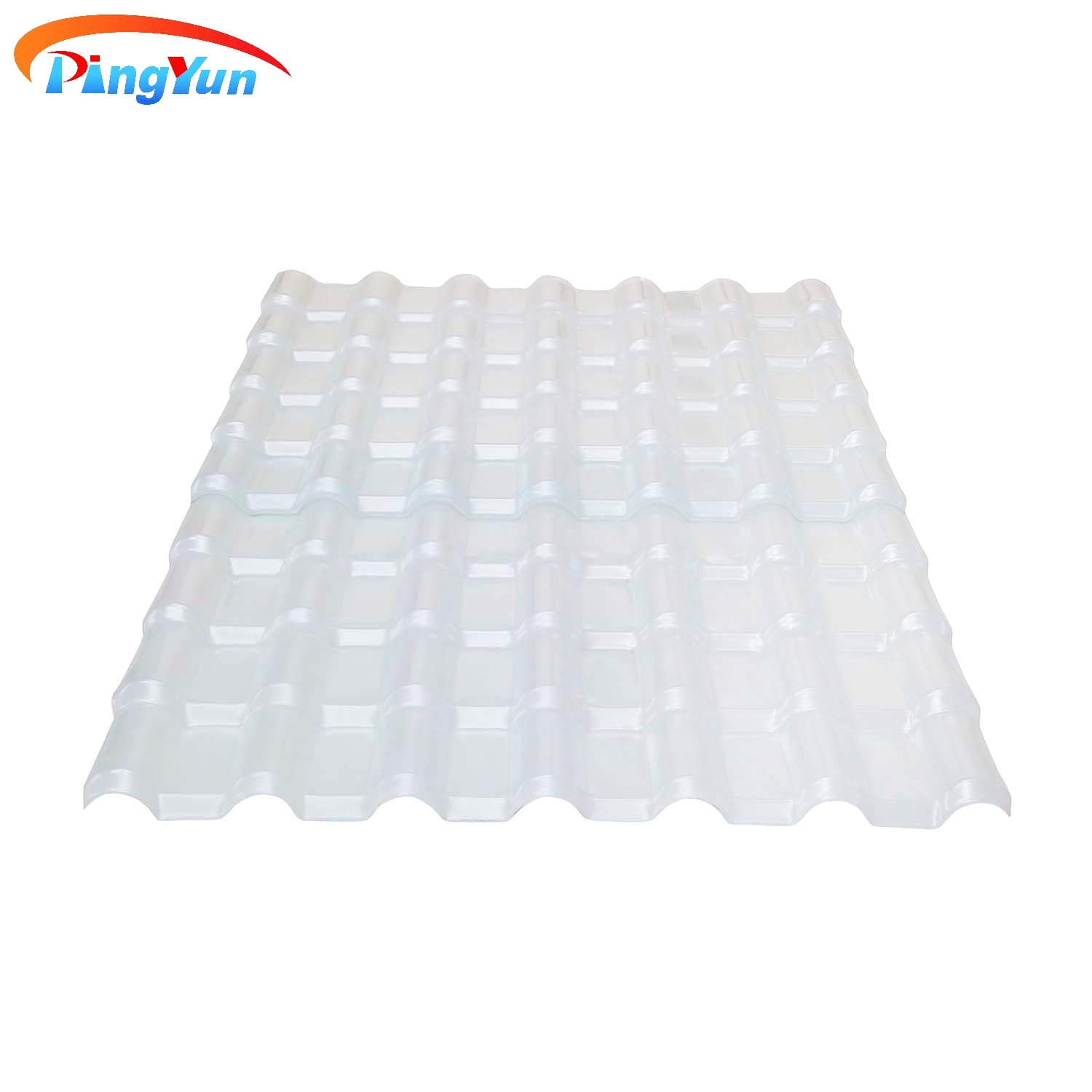
A good application decision begins with the problem being solved. The material, roof structure and permitted loads must already fit the project; only then should the color and visual effect decide between otherwise suitable options. Several common project types illustrate why the answer varies. The following are selection scenarios rather than Pingyun project references. They do not assert that the company supplied any named installation or that a particular color automatically passes its design requirements.
For each scenario, identify the sheet construction first, then define what “white” must achieve. Do not let one attractive photograph act as evidence for thermal comfort, compliance, visibility, or installed quality. A physical sample, system detail and current product data provide more useful answers. When those are unavailable, disclose the uncertainty and choose a performance specification that suppliers can actually test.
A greenhouse uses incoming light as a functional resource, not merely as architectural daylight. Crop type, growing season, climate, orientation, shading, ventilation and existing glazing all affect the right choice. A clear panel may be considered where maximum visual brightness is desired; an Opal panel may be considered where growers seek a softer distribution of daylight or reduced direct visibility. Neither should be approved for crop performance on appearance alone.
Ask the greenhouse designer to state the spectrum and quantity of light relevant to the crop and the required environmental strategy. A general brochure's visible-light-transmission percentage is not a crop-yield prediction. Haze, photosynthetically active radiation, solar gain, condensation behavior, and greenhouse temperature can all matter, but they need data for the actual grade. A color swatch photographed indoors cannot answer any of these quantitatively.
Test the candidate sheets in a small, representative area if the crop risk warrants it. Observe light across benches at different times and check the greenhouse's ventilation response. Some operators prioritize plant uniformity; others need visibility through a roof for maintenance or monitoring. A buyer should compare the sheet against those operational needs rather than adopting a universal claim that white PC is superior to clear PC for all greenhouses.
Pingyun's hollow and solid brochure pages mention greenhouse applications as potential uses, and the archived color charts show Opal and Clear. That is evidence of product positioning, not of a documented yield advantage for either color. If a supplier offers an anti-fog or light-diffusing treatment, request a SKU-specific description and evidence; do not presume those features come with every Opal sheet. [1]
For a carport, owners may want daylight without a clear view of leaves, dirt, or equipment overhead. Others prefer a bright transparent canopy that feels visually open. An Opal and a Clear sample can produce very different impressions even when both are acceptable structurally. Place full-size pieces on the proposed frame to judge the appearance from the driveway, from beneath the canopy, and from nearby windows.
A carport roof is exposed to rain, sun, wind and cleaning activities, so the support and fixing details come before color. Check the product's UV-facing side, compatibility with framing, movement allowance, slope, joints, and drainage. If the structure is curved, ask about the approved bending direction and radius for the exact sheet. Never place maintenance staff on a panel just because a glossy catalog calls polycarbonate impact resistant.
Nighttime light can reverse the visual priority. An Opal panel under a porch light may glow, show dark support silhouettes, or conceal the sky entirely. A Clear panel may expose the interior framing and reveal light fixtures. If neighbors can see the roof from above, their view also matters. Mock up both variants with the actual framing color and light sources, not a freestanding swatch.
The brochure includes a separate rain-awning series, but that is not a color-specific specification for a roof sheet. The buyer should confirm whether the quotation is for a sheet, an assembled canopy, or a combination. Accessories, brackets, drainage, and installation scope can otherwise be mistaken for attributes of the panel itself. [1]
Warehouses often need daylight without producing glare on workstations, scanners, forklift routes or stored goods. A translucent strip can also change how occupants judge the roof surface, especially when alternating with opaque panels. Clear may provide a strong sense of openness; Opal may appear visually calmer. The actual daylight outcome depends on rooflight spacing, orientation, height, and material properties.
Begin with a rooflight layout that is structurally and weatherproofing-compatible with the surrounding roof. Then compare the proposed Opal and Clear versions in identical or explicitly different constructions. Ask about transmission and distribution, but also about access for cleaning and replacement. Dust or deposits from site operations can change the perceived appearance of both colors over time. A nominally bright panel in a catalog may be less useful if it cannot be maintained safely.
If the warehouse has fire, smoke, or impact-related requirements for roof openings, obtain the relevant project approvals. A generic PC brochure does not turn an opal or clear panel into a certified rooflight assembly. A material may be suitable for one application but not another. Mark which requirements are the sheet supplier's responsibility and which must be resolved by the roof-system designer or contractor.
For orders containing multiple daylight strips, control batch color and labeling. An Opal panel from a replacement shipment may look different from older weathered panels, and the center of a large roof may be hard to access for correction. Agree how samples, retained reference pieces, and incoming inspection will be used before the main order ships.
A public walkway may need generous daylight, weather cover, a tidy underside, and resistance to vandalism or incidental impact. An Opal surface might help conceal the view of grime or structural elements; a Clear surface may feel more open and provide better visual awareness. These are design hypotheses to test, not evidence that either variant meets a public-space impact or fire code. Seek site-specific safety review.
Pedestrian environments make edges especially visible. Exposed hollow cells, protruding fixings, scratched sheet faces, and drips from poorly detailed joints can undermine the appearance of a well-chosen color. Ask for a rendered section and a physical edge sample. Check how the panel can be removed above a public path without closing an entire facility. Maintenance and replacement deserve as much attention as the opening-day visual.
Reflected and transmitted light at night need consideration. A backlit Opal shelter roof can become a prominent luminous surface, while clear glazing may reveal lighting fixtures and service conduits. The appropriate choice depends on lighting design and neighboring views. Conduct an evening mock-up if the project is visually sensitive, and do not substitute a daytime product photo for that review.
The brochure lists public-building and shelter-type applications for its PC range. Such categories are useful for initiating an inquiry, but the archive does not identify a specific public project or approved system. Keep marketing images and verified installed case studies separate. [1][2]
A white-looking polycarbonate sheet is often considered for a luminous wall, display, partition, or sign face. Here the optical target may be hiding a light source while maintaining a smooth glow. The buyer needs to know the source spacing, viewing distance, brightness, and whether the panel will be exposed to cleaning or accidental impacts. A sample must be tested in the actual light-box depth or partition frame.
A solid Opal panel may offer the continuous face a designer wants; a hollow Opal panel may reveal webs when backlit. Clear Embossed is another distinct brochure color or finish, not simply a substitute for Opal. A panel that looks uniformly white from the front can show lamp patterns from the back. Approve the illuminated assembly rather than the material alone. [1]
Inside a building, ask about the applicable fire requirements and the product's cleaning compatibility. “Indoor” does not remove the need for relevant documents. A white appearance also changes under warm and cool light sources. The approved color sample should be viewed under the lighting actually specified, against adjacent paint or cladding materials, before a large order is made.
The brochure mentions advertising and indoor separation among possible PC applications. That is not proof of a tested luminous-signage package or of any particular diffusion coefficient. Request such information if the design contract needs it. Where optical uniformity is essential, a supplier mock-up with the exact product and lighting can be more revealing than a broad catalog performance claim. [1][2]
The phrase white roofing sheet can refer to different polymers and construction types. Pingyun's catalog contains PC products but also PVC roof tiles, UPVC roof sheets, hollow PVC products, and translucent sheets made from other materials. A white sample or a similar roof profile does not identify its polymer. An accurate comparison therefore asks first: Is the offered sheet actually polycarbonate? Only after that should a buyer compare colors, structure, and performance within the PC category. [3]
PVC and UPVC may be chosen for weatherproof roof coverings with particular profiles, while PC is often considered for daylighting and glazing. That general distinction is not absolute: each product family has many grades and geometries. The mistake is to borrow a PVC roof tile's warranty, a UPVC panel's width, or a translucent FRP sheet's light data and print them as specifications for white PC. Similar-looking roof images do not make their data transferable.
A simple purchase description can prevent confusion: “Polycarbonate, Opal color, solid sheet,” or “Polycarbonate, Opal color, hollow panel,” followed by the chosen SKU and the rest of the specification. If the roof needs a corrugated white material, specify whether the requirement is for PC specifically or simply for a white-looking roof covering. The supplier may propose alternatives, but each should be identified by its real material and assessed against the intended purpose.
The two construction axes can be visualized as a matrix. Along one axis sit clear, opal, and other colors; along the other sit solid, hollow and corrugated formats. A claim in one cell cannot automatically fill another. Likewise, an opacity claim is an optical property, not an indication of chemical resistance or structural strength. Keep each data item attached to the correct cell, with a sample or document reference.
No. Polycarbonate and PVC are different polymers, even if both can be fabricated into light-colored sheets. The installed products may differ in intended function, profile, light transmission, stiffness, connection details, weathering strategy, and available documentation. The right answer comes from the exact product, not a generic ranking of materials. A buyer seeking daylight under a canopy should not accept an opaque white PVC tile without recognizing the change in daylighting function.
Conversely, a roof specified for a particular PVC profile should not accept a flat Opal polycarbonate panel merely because it looks white. Profile fit, roof pitch, fastening, lap, and load response need re-evaluation. A material substitution may affect both water tightness and fire documentation. The supplier should mark every departure from the original schedule, and the designer should approve those changes before procurement.
Pingyun's public product directory is especially useful here because it visibly separates PVC Roof Tile, Corrugated UPVC Roof Sheet, Twinwall Hollow PVC Roof Sheet, Polycarbonate Sheets, and Translucent Roof Sheet. The categories do not imply interchangeable performance. If a salesperson sends a link to one category while quoting another, ask for clarification and a product code. [3]
Avoid a claim such as “white PC is better than white PVC” without stating the application and metric. More useful questions are: Which product admits the required daylight? Which fits the support system? Which has current documents for the project jurisdiction? Which can be supplied and maintained within the budget? Those questions produce defensible choices rather than sweeping assertions.
No. FRP is a fiber-reinforced composite, while PC denotes polycarbonate. Both may appear pale or be sold for daylighting, but their internal structure, behavior and installation details can differ. A buyer should verify the polymer and reinforcement, not assume that a translucent white photograph represents PC. The difference becomes particularly important when a replacement sheet must match a previous rooflight's profile and overlap.
Pingyun's directory lists FRP Transparent Roof Sheet within its broader Translucent Roof Sheet category and lists polycarbonate categories separately. The existence of both categories is not evidence that they share the same dimensions or color options. For a mixed-roof procurement, mark the locations and material of every sheet on the roof plan and compare each quotation line to it. [3]
If a supplier proposes an FRP alternative to an Opal PC requirement, evaluate it as a substitution. Ask for its optical values, fire and weathering documents, profile geometry, compatible accessories, and installation guidance. A lower quoted sheet price may come with different fastening or maintenance costs. The decision should be explicit and documented, not a silent swap concealed by the adjective “white.”
For maintenance, confirm the cleaning and chemical limitations of whichever material is selected. A cleaner suitable for one polymer may not be suitable for another. Mark replacement stocks clearly so a maintenance crew does not install a visually similar but incompatible panel several years later.
A project can intentionally combine opaque roof coverings with clear and opal daylight panels. The risk lies at their interfaces. Different materials can have different profiles, movement, fasteners, edge conditions and support heights. A single generic roof-sheet detail cannot automatically govern each transition. The roof-system designer should provide junction sections and specify who supplies each closure and seal.
Create a roof-material schedule tied to drawing references. Each line should name the material, color, structural format, thickness, supplier, approved sample, current technical sheet, and accessories. Mark where a color change occurs within the same material as well as where a material change occurs. Those are different kinds of junction: the former may be mostly visual, while the latter may change the entire roof detail.
During receiving, label the pallets by roof zone. A roof worker might reasonably confuse pale Opal PC with another white translucent sheet if packaging is removed. Require identifying markings to remain legible until installation and keep a photograph of the label with the handover records. Do not rely on a side-by-side visual guess after the material has been stored outdoors.
After installation, record which sheet went where and retain spare pieces or exact product codes for repairs. A replacement from the same color name may look different after weathering, while a different polymer could also have a distinct movement behavior. The operations manual should therefore include supplier contact details, revision dates of instructions, drawings, and an approved method for safe roof access.
A specification should turn a broad search phrase into an identifiable deliverable. It need not contain invented performance figures. Instead, it should state what the project needs and require the supplier to fill documented values for a proposed SKU. A useful starting line is: polycarbonate sheet; Opal color subject to approved physical sample; construction and thickness as scheduled; UV protection and installation orientation to be confirmed; drawings, test evidence and compatible accessories submitted for approval. This language does not pretend that a photograph supplies all the missing data.
Define the intended location. An exposed rooflight needs weatherproof connections and an outdoor grade; an interior partition needs its own appearance and fire review; a greenhouse panel needs an optical evaluation aligned with crop needs. A buyer should not ask one generic product to satisfy all three merely because they are all described as white PC. Set a separate acceptance criterion for each location, then check whether one product happens to meet more than one.
In a request for quotation, ask for a completed schedule rather than a catalog link. The fields below reveal gaps without forcing the seller to guess the designer's intent. They also make competing bids comparable. If a bidder cannot provide a test value, mark it as “not documented” rather than inserting an industry-average figure. The absence of information can itself be a purchasing risk, especially where a performance property is critical to approval.
The schedule should include the quantity and drawing references of every panel type. If the roof mixes Clear and Opal, list both as separate items even when the manufacturer proposes the same nominal sheet structure. That allows the buyer to verify transmission, sample approval, and location separately. If the supplier later changes the offered thickness to meet stock availability, the deviation becomes visible rather than disappearing into a revised total price.
A small sample can establish color and finish, but it cannot establish an entire roof's appearance. Start with labeled pieces of the exact Clear and Opal grades in the intended thickness. Record which side is UV-protected and keep any protective film until the face is identified. Compare the samples over a dark background, against the sky, under artificial light, and with an object placed behind them.
For visual screening, view from inside and outside at realistic distances. For rooflight appearance, assemble a section of the actual frame. For a light box, install the proposed light source at the specified depth. For a greenhouse, review with the agricultural designer. For a replacement roof, place the sample next to the existing panel and inspect both profile and color. Do not mistake a good color match for a verified profile match.
Agree in writing what the approval covers. It may cover only color, or it may also cover visible rib shadows, edge appearance, surface texture, and acceptable variation within a production lot. A supplier's sample should have an identifiable product code and date. A chip printed in a brochure is useful for selecting candidates, but should not be the sole acceptance standard for an expensive roof.
Keep one approved reference with the buyer and one with the supplier if feasible. Record lighting conditions used for approval and photograph the installed mock-up without treating the photographs as a replacement for the physical piece. When the production batch arrives, compare a random delivered piece against the retained reference before the panels are cut or installed.
The RFQ should ask bidders to state their proposed product rather than infer it from “white polycarbonate sheets.” Name the intended use, material, Opal reference if desired, construction, dimensions, design loads, optical objective, and required documents. Ask separately for sheet price, compatible accessories, packaging, delivery terms, and installation support where relevant. This structure makes an incomplete bargain visible.
For the seller's response, require a product sheet or drawing that shows the wall geometry or corrugation, the UV-protected face, nominal thickness, overall and effective dimensions, tolerances, weight if required for handling, and edge and fixing instructions. If the installation is outdoors, ask for weathering evidence. If the design relies on daylight, ask for color-specific optical data. If fire classification is mandatory, ask for a current applicable report, not an unqualified category claim.
Include a field for exceptions and substitutions. A bidder who cannot supply Opal in the scheduled thickness may propose a different thickness, a milky finish, a different polymer, or a clear panel with film. Those proposals should be described as alternatives and reviewed for structural, optical, installation, and warranty consequences. They should not be silently quoted under the same line item.
For Pingyun inquiries, use the archived brochure to identify the Opal solid or hollow series that warrants a current inquiry, not to assert a current price or MOQ. Send the design brief and request a written current offer tied to a SKU. If the application demands a white corrugated PC panel, require explicit confirmation that the proposed corrugated profile is available in the specified white-looking color. [1][3]
Do not compare only the sheet price per area. One bid may include edge tapes, profiles, gaskets, fasteners, protected packing, and a detailed installation manual; another may price the bare sheet. A thicker panel may need a different frame, while a narrower useful cover width can increase the panel count and labor. A lower headline price can therefore shift costs to site construction.
Normalize each bid around the same installed scope: supplied area and usable coverage, panel lengths and waste, supporting framework assumptions, closures and fixings, required documentation, delivery and unloading, installation work, access for maintenance, and warranty conditions. If one bidder offers an Opal solid sheet and another an Opal hollow sheet, compare them as different technical options. A common color name does not make the bids equivalent.
Identify bid qualifications clearly. A company may offer a visually similar sheet without color-specific transmission data. If daylight performance is a contractual criterion, that omission matters. Another may submit a fire descriptor without the report required by the local authority. A third may omit a detail for movement at the eave. Such gaps are more useful to the buyer than a broad claim that one offer is “premium.”
Avoid assigning arbitrary scoring percentages to appearance, price, and durability as if they were universally valid. Establish project-specific priorities and pass/fail requirements first. A rooflight that cannot be approved by the relevant authority is not rescued by a cheaper price. Once mandatory requirements are met, the owner can compare appearance, lead time, service support, and cost on a like-for-like basis.
Receiving inspection begins before opening a pallet. Compare the delivery note and labels against the purchase order: polymer, series, color, thickness, dimensions, finish, coating orientation, quantity, and batch. Examine packaging for crushed edges, abrasion, heat exposure, or moisture entry. Photograph any discrepancies before material is moved or cut. Keep labels and the packaging record in the project file.
Open a sample of bundles and inspect the actual panels. Opal and Clear stock can be mixed accidentally when a project uses both. A panel that looks “close enough” on a cloudy loading bay may differ sharply when installed against bright sun. Compare it with the approved sample under consistent light. Confirm that the UV-facing marking is present and that the cells, if any, match the approved drawing.
Check dimensions and profile against the shop drawings, not just the quoted nominal name. Verify the accessory boxes and seals, because an otherwise correct shipment may be unusable if its matching profiles are absent. If a discrepancy is found, segregate the affected material and resolve it before installation; cutting and drilling can complicate a claim.
Do not assume that a historical brochure statement about customizable colors is a contractual promise for the delivered order. The purchase order and acknowledged quotation define the agreed specification. Record the approved deviations, if any, together with who authorized them. This discipline is especially important when the owner has specified a visual white finish that may be described differently by different suppliers.
The first mistake is treating “white” as a complete product name. It identifies neither how much light passes through the material nor whether the sheet is solid, hollow, or corrugated. The remedy is to specify the polymer, structural format, exact color reference, and grade. A source that merely shows a pale photograph is inadequate for a performance specification.
The second mistake is borrowing a number from a different sheet. An archived table for hollow sheets can be cited as a table for that series, but its thickness-dependent values cannot be silently promoted into Opal-specific values. A solid-sheet width does not describe a corrugated roofing panel. A PC brochure's UV feature does not establish that a particular quotation has the same coating. Claims should carry their product identity with them. [1][2]
The third mistake is choosing a roof panel on visual criteria before checking load, water management, fire requirements, and safe access. Color is important for the human experience of a building, but it is not a substitute for engineering. The fourth is approving a sample without examining it in the proposed frame and lighting. A chip may conceal rib shadows, lamp hot spots, joint lines, or unexpected nighttime visibility.
A fifth mistake is equating a brochure claim with a legal warranty or a third-party test. A brochure can describe product positioning and give useful archived information. The buyer still needs current documents specific to the quoted variant, especially where a critical property will be written into the building contract. The following questions help identify where an attractive white sheet might not be the right sheet.
Printed and digital colors vary with inks, displays, lighting, and camera settings. The swatch may show how a manufacturer names a color without showing the optical effect of the exact product. In the Pingyun brochure, “Opal” is a legitimate name for a pale swatch in both solid and hollow series. It is not itself a transmission test or a promise of identical appearance across the two constructions. [1]
A specification should therefore attach an approved physical sample and describe the test of appearance. A small piece can be used for an early review; a framed mock-up settles questions of joints, support shadows, and viewed area. If the owner expects uniform white, inspect the material from a distance and with light behind it. If the owner expects daylight, measure or assess the amount and quality of light in the building.
Even an approved sample has limits. It may not represent every shipment indefinitely, and it may not reveal changes caused by exposure or cleaning. Agree acceptable variation and batch control with the supplier. Where the entire roof is visible from a nearby building, request the same production batch or an agreed matching procedure for the project areas that must look uniform.
Finally, do not approve a white-looking PVC or FRP sample in place of PC without documenting the substitution. It may look almost identical in a small rectangle while behaving differently in the roof. A sample label should identify material, supplier, series, grade, thickness, finish, and whether it is the proposed final product.
Brochure pages can put a color chart next to a specification table for readability. That layout does not mean every figure applies to every color shown. Pingyun's hollow sheet table has rows keyed to thickness, while the color cell groups several regular colors. A reader could wrongly pair the highest transmission with Opal simply because Opal appears in the same table. The source does not make that pairing. [2]
Similar caution applies to other broad features. The brochure's B1 descriptor names a historical fire standard; it is not the current certificate for a proposed white SKU. Its thermal and sound descriptions are general, not installed-roof outcomes. Its UV discussion should be reconciled with the actual coating on the shipment. A data table provides a useful question to ask the supplier, but it does not relieve the buyer of verifying applicability.
If a value is essential, state what evidence is needed: product code, color, thickness, wall geometry, test method, report date, and the party responsible for the result. Do not invent a tolerance around an unsupported number. If the supplier cannot provide color-specific information, decide whether the project can accept a visual mock-up instead of a numerical requirement or whether an alternative product is necessary.
A publishable guide should be transparent about that boundary. It can describe a brochure as a brand source and a product page as a current catalog listing, while avoiding the false implication that either constitutes independent laboratory validation. This makes the article more useful to buyers than a sheet of unqualified marketing statistics.
A late color change can expose hidden assumptions in a design. The new grade may have different availability, nominal thickness, UV treatment, or optical behavior. A designer who sized roof openings for Clear may need to check whether the Opal version still delivers the intended daylight. An owner who requested privacy may need to inspect the nighttime view. A contractor may need new labels and a revised roof map to prevent mixed installation.
If the construction remains identical and the supplier confirms the same relevant properties, the change may be manageable. But that conclusion must be established rather than presumed. Request a written deviation schedule and check visual, structural, weathering, fire, and delivery implications. Keep the approved sample and revised datasheet with the construction documents.
The reverse substitution also requires review. Replacing Opal with Clear can expose stored goods, services, or adjacent occupants to direct view and bright patches. A panel that looks transparent in a warehouse roof photograph may create glare in a different orientation. A temporary sample section can answer some appearance questions before the material is ordered.
Do not let the phrase “same polycarbonate, different color” end the discussion when the project specification relies on light distribution, solar control, or appearance. Those are precisely the functions that color and finish can change.
An Opal panel is not maintenance-free because its pale surface appears tidy from below. Dirt, pollen, airborne residue, leaves, and water marks still affect appearance and daylight. A Clear panel may reveal some deposits more sharply; an Opal panel may make other stains more noticeable against its light background. The maintenance objective is to preserve the roof's intended function, keep drainage paths open, and avoid damage from cleaning chemicals or unsafe access.
Begin with a documented access method. Neither the visibility through Clear nor the apparent solidity of Opal tells a worker where it is safe to stand. The Pingyun brochure expressly warns against standing directly on the board during construction. Arrange a safe working platform or other engineered access system before cleaning, inspection, or panel replacement. Keep the roof map available so maintenance workers can identify the exact material and protected face. [2]
Obtain the current cleaning guidance for the actual PC grade. The brochure warns against contact with alkaline substances and aggressive organic solvents, and its list includes several categories of chemicals commonly encountered on building sites. Rather than use a “universal” solvent to remove sealant, paint, or adhesive, ask the supplier to approve the cleaner and test it on an inconspicuous sample. Use nonabrasive methods appropriate to the product's surface. [2]
Inspect edges and joints as well as the exposed face. A hollow panel can appear dirty from inside its cells if edge closures fail. Cleaning the outside surface cannot correct contamination sealed within a chamber. Identify why water or dirt entered, repair the closure detail in accordance with the product's instructions, and determine whether the sheet must be replaced. A solid sheet has no cells, but its edges and fastener positions still deserve inspection for stress or water entry into the roof assembly.
A change in appearance can have several causes: surface contamination, abrasive cleaning, chemical exposure, film residue, condensation inside a hollow panel, or material weathering. It is important not to diagnose every white or cloudy patch as a failure of UV protection. A Clear sheet that has become hazy can resemble a poor-quality Opal sheet from a distance, while an Opal sheet that has collected dirt may look darker. Photographs alone may not identify the cause.
Document the location, installation date, product label, exterior-facing mark, cleaning history and pattern of change. Compare exposed and sheltered parts of the same roof if safe access permits. Ask whether the discoloration is on the outside surface, the underside, or within the cellular structure. If it is near a fastener or sealant, check the chemical and mechanical detail. If it is widespread, ask the supplier to assess the batch and the warranty terms.
Do not promise a fixed number of years before yellowing for the Opal option without grade-specific supporting documents. The archived brochure includes a broad “10 years quality” graphic elsewhere, but it does not provide a current warranty contract identifying an Opal SKU, exclusions, or remedies. A visually white color may make changes harder to judge by casual observation; that does not increase the reliability of an unsupported lifespan claim. [2]
For large projects, retain an unexposed reference sample and an installed baseline photograph taken under recorded conditions. Those can help an investigation, though a proper performance dispute may still require measurement. Set inspection intervals according to the project environment and supplier instructions rather than assuming a universal frequency for every PC roof.
First identify the installed panel from the handover schedule, not from its appearance alone. Note its material, structure, thickness, color reference, finish, UV-facing side, dimensions, and compatible profiles. A substitute that looks white from below may not have the same wall geometry or thickness. For a roof with weathered panels, compare a new sample in place before ordering all replacements, especially if the repair must be visually unobtrusive.
Investigate the cause of damage. A hole near an edge, stress cracking around a fastener, or recurring edge contamination may indicate a failed detail that would damage the replacement too. Repair the root cause and follow the product-specific installation instructions. If snow, fallen objects, or maintenance access caused the incident, review the roof's use and protective measures with the designer.
A replacement decision should consider whether an individual panel can be removed without disturbing the adjacent glazing or roof covering. That is why the original project detail matters. If a frame has trapped the panels behind inaccessible trim, a modest sheet cost can turn into a significant repair operation. Ask the roof-system supplier to identify spare profiles and gaskets when the project is first built.
Record the replacement batch and any approved difference in color or coating. If the existing roof contains both Clear and Opal panels, mark their positions to avoid accidentally restoring the wrong visual pattern. Final inspection should confirm water management, orientation, edge closure, and removal of the protective film as directed.
The productive conversation begins with a precise application brief rather than a request for “the best white sheet.” Share the project location and intended use; indicate whether the sheet will be outdoors, indoors, or in a greenhouse; provide the roof drawings and approximate panel dimensions; describe the desired appearance from both sides; and say whether privacy, diffuse daylight, or an opaque visual finish is the leading requirement. If the requirement is a replacement, send dimensions and photographs of the existing profile and edge details.
Ask Pingyun to identify a current product that corresponds to the brochure's Opal solid or hollow option, if available. Request a sample and a current technical sheet. Where the desired product is corrugated, ask separately whether that exact profile has an Opal color option. A yes to “Do you sell corrugated PC?” and a yes to “Does your brochure show Opal PC?” do not combine into a yes to “Is this corrugated Opal PC available?” without a product-specific response. [1][3]
If an application depends on a measured property, name it. A greenhouse may need crop-relevant optical information. A regulated public roof may need fire documentation. A curved canopy needs bending and support confirmation. A building with strict glare control needs data or a mock-up for the exact color and structure. Clear and Opal variants should be compared under the same standard, not against separate marketing phrases.
Finally, agree the contract documentation: approved sample, product code, drawing, current data, compatible accessories, packaging, installation instructions, inspection criteria, and written warranty terms. These items make the choice repeatable. Without them, the project may receive a visually pale sheet that technically differs from the one the designer intended. The point of this guide is not to crown white or clear as the universal winner; it is to make the comparison specific enough that either can be chosen responsibly.
Ask for an order acknowledgment with a complete product designation. It should state polycarbonate explicitly, identify whether the sheet is solid, hollow or corrugated, describe the exact Opal or Clear color, and name the surface finish and UV treatment. It should also state the nominal thickness and dimensions along with tolerances, quantities, packaging, agreed accessories, and how substitution requests will be handled.
Request the documents relevant to the project, not every certificate named on a sales page. If optical data matter, ask for the quoted color and thickness. If fire performance matters, require a current report that covers the variant. If the panel will span between purlins, ask for system-specific loading information and installation drawings. If a local authority must approve the rooflight, clarify who submits which document and when. A technical file that is complete for an indoor sign face may be inadequate for a public roof.
Confirm the scope of any warranty in writing. Does it cover material defects, transmission change, surface appearance, or something else? What are the conditions on orientation, approved cleaners, installation, and maintenance? How is a claim made, and what remedy is available? The brochure's broad quality slogan is not an adequate substitute for those terms. Request the actual current document before describing a warranty publicly. [2]
Agree what happens if the ordered Opal grade is unavailable at the promised time. A supplier should not ship a Clear or different white-looking material without a documented approval. If the project's appearance is highly visible, require the approved sample and delivery batch to be compared before full installation. This checkpoint is less expensive than dismantling an already installed roof.
A designer needs more than the manufacturer's color chart. Confirm structural support and loads, roof pitch and drainage, movement allowance, edge detailing, fire requirements, safe access, interfaces with neighboring materials, and expected light and heat behavior. Make sure the specified optical result actually relates to the product proposed. A current SKU and drawing are essential when the project might otherwise switch between hollow and solid construction.
If the design calls for a bright but screened interior, test both daylight directions. A panel may meet a percentage requirement yet still create bright web shadows, glare, or unwanted visibility of roof equipment. If an even luminous ceiling is the goal, evaluate the assembled system with the intended lighting and frame. If a greenhouse uses the sheet, have its specialist assess the optical data in relation to cultivation needs rather than rely on a generic building brochure.
The designer should also define acceptance at practical scale. Are visible joints allowed? What variation between batches is acceptable? Can the installer cut sheets on site, or must lengths be supplied ready for the roof? Will maintenance crews have a safe route to clean and replace panels? These questions prevent a reasonable product from being undermined by an incomplete design.
A comparison schedule can record the advantages and limitations of Clear and Opal without pretending that one color wins every category. A well-defined final selection may be an Opal hollow rooflight, a Clear solid canopy, or a mixed arrangement—but only after the supporting design and documents match that exact choice.
White polycarbonate sheets should be specified by product and performance, not by color alone. Pingyun's supplied PC brochure identifies Opal as a color in both its hollow and solid sheet series; its public directory separately identifies corrugated PC products. That evidence is sufficient to discuss an opal solid-versus-hollow or opal-versus-clear choice, but not to claim a universal white SKU, an opal-specific transmission figure, or a guaranteed white corrugated option. [1][2][3]
For a real project, choose the structural format first, then approve the exact color and finish with a physical sample. Compare optical and system data for the proposed grade, confirm UV-facing and edge details, and request current fire, structural or thermal evidence only where the design needs it. A buyer who keeps color, construction, performance and contractual terms separate can choose Clear or Opal on meaningful grounds rather than marketing shorthand.
The next useful step is concrete: send the proposed roof location, drawings, desired Opal appearance, and performance requirements to the supplier. Ask for a current product designation and sample that match one another. If the available documentation cannot establish a mandatory requirement, leave that issue open for design review rather than treating the brochure illustration as a completed specification.
Pingyun's supplied Polycarbonate Sheet brochure shows an Opal color in both its UV-PC Hollow Sheet Series and UV-PC Solid Sheet Series. Opal is the brochure's white-looking color name. Current availability, exact dimensions, coating and any other required performance should be confirmed for a quoted product code; the brochure is not a live stock list. [1][2]
The brochure's Opal swatch does not by itself prove opacity. Some opal panels admit daylight while limiting a view through the sheet. Request a physical sample in the intended thickness and color-specific optical data if the project has a measurable opacity or privacy requirement. Examine it under both daytime and nighttime lighting.
Do not assume that. Pingyun's brochure gives a broad color-dependent transmission statement and a hollow-sheet thickness table, but it does not assign a separate value to the Opal color in the table. Ask for comparable data tied to the exact Opal and Clear grades, constructions, thicknesses and test method. [2]
A solid sheet is continuous material; a hollow panel has internal cells and ribs. Both are pictured in Opal in Pingyun's brochure, but their structural, handling, edge and installation requirements differ. Select by the intended roof or glazing system and request the actual product drawing rather than choosing by color alone. [1]
The Pingyun brochure discusses greenhouse applications for PC materials, but it does not document crop-specific results for its Opal swatch. The greenhouse designer should check the proposed sheet's relevant light and heat data against the crop, climate and structure. An appearance sample alone cannot establish growing performance. [1][2]
Pingyun's catalog lists corrugated polycarbonate products, and its brochure separately shows Opal solid and hollow sheets. Those facts do not confirm that a particular corrugated PC profile is available in Opal. Request a product code, current color confirmation, profile drawing and sample before describing it as an available white corrugated sheet. [1][3]
Color alone does not establish either result. The archived brochure discusses thermal and sound insulation for hollow PC panels, but it does not give a white-specific installed-roof guarantee. Ask for current evidence for the chosen sheet and have the designer evaluate the complete roof assembly. [2]
Yes, when a particular product has one designated protected face. The Pingyun brochure describes UV-coated products and installation orientation. Confirm the actual shipment's coating specification and face marking, then follow the current instructions so that the intended side faces the required exposure. [1][2]
Do not assume so. The Pingyun brochure warns against standing directly on the board during installation and discusses a board fixed over the supporting frame for access. Have the site designer and contractor provide a safe access method for installation, cleaning and repairs. [2]
No. The brochure carries a B1 descriptor under a historical standard, but the buyer needs current, applicable evidence for the exact product, grade and jurisdiction. A color chart and broad series statement are not a product-specific approval or a complete roof-system assessment. [2]
State the application, whether the panel is solid, hollow or corrugated, the intended Opal appearance, nominal thickness, panel dimensions, structural and optical needs, and accessories. Ask for a current product code, sample, technical sheet, installation instructions and written commercial terms. For corrugated Opal, ask for explicit confirmation of that exact combination. [1][3]
No. Similar color does not mean the same polymer or installation system. Pingyun's product directory separates polycarbonate, PVC and translucent FRP categories. Verify material, structure, profile, supporting details and documentation for the actual proposed item before approving a substitution. [3]
Copyright © 2025 by Techos New Material Co.,Ltd.
 EN
EN