
A buyer can identify a credible polycarbonate roofing sheet supplier by asking for evidence that connects an identifiable sheet to a specific roof detail, a controlled technical document, a clear commercial offer, and a workable procedure for delivery and claims. A low unit price or a page full of attractive properties answers none of those questions. The useful supplier is the one who can tell you precisely what will be delivered, what has been documented for that exact product, what the installer must do, and what remains subject to project design.
The word supplier may describe a manufacturer, distributor, trading company, importer, or installer. None of those business models is inherently unreliable. What matters is whether the seller can trace the offered polycarbonate roofing sheet to current product information and take responsibility for its part of the transaction. A seller that does not manufacture a sheet can still provide excellent traceability and service; a seller that does manufacture one still needs to substantiate product claims. The procurement method in this guide judges the proposed transaction rather than awarding credibility for a label.
Source boundary. Pingyun is the brand context for this article. Its public catalogue displays a Polycarbonate Sheets category and identifies solid, hollow and corrugated subcategories; a public corrugated-roofing-sheet product page is also available. These establish the existence and naming of listings, not a guarantee of a particular dimension, optical value, fire classification, certification, capacity, service life, or fit with your project. Knowledge-base searches made for this article returned no matching content. Accordingly, Pingyun-specific statements here rely only on the cited public pages. Every supplier-assessment method below is general guidance, not evidence that Pingyun has a particular factory, test laboratory, certification, customer record, production capacity, or service program. [1–4]
The first question for a buyer is not “Who is the best supplier?” It is “What exact risk does my roof introduce, and what evidence would demonstrate that the proposed supplier can help address that risk?” A profiled translucent insert must match the adjacent roof; a framed hollow rooflight needs sound edge and drainage details; a canopy exposed to weather needs project-specific structural approval. No website headline solves all three. Define the duty first, then compare only offers that answer the same duty.
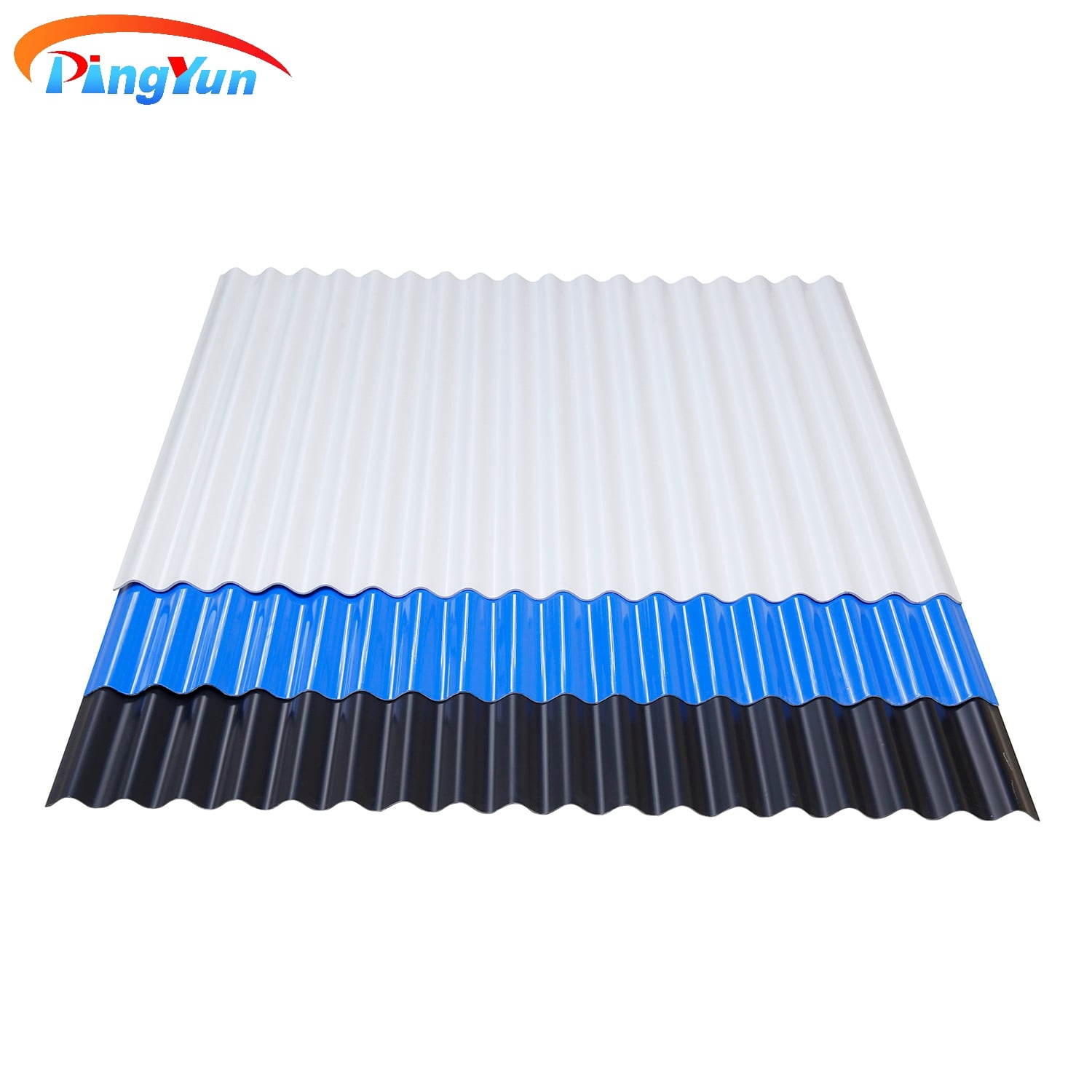
Table of Contents
A supplier search becomes much clearer when the buyer starts with a roof brief rather than a product phrase. A request for “clear PC sheets” could bring back a solid glazing panel, a multiwall panel, or a corrugated sheet. All may belong to the same polymer family, but their installation methods and intended roof interfaces differ. Even two corrugated products may have different profile geometry. Start with a drawing of the roof and a description of the role the translucent area must play. Then ask each seller to name the product it proposes and show how that product fits.
Pingyun's public Polycarbonate Sheets directory separates solid, hollow and corrugated categories. Its corrugated category links to a page titled Corrugated Polycarbonate Roofing Sheets. Those are useful starting points for an inquiry; the pages are not substitutes for the documents that should accompany an actual offer. The buyer should request the current designation and product literature before interpreting a category label as an approved specification. [1–4]
A photograph shows appearance, not the dimensions that control fit or the requirements that control safety. Tell potential suppliers whether the application is a daylight strip within a metal roof, a separate framed rooflight, a freestanding canopy, a replacement panel for an existing roof, or another defined arrangement. Include available roof drawings and identify any uncertainty in them. If the original roof profile is not documented, plan to measure or obtain a physical reference rather than asking a seller to guess from a distant image.
The briefing package should also identify who is responsible for structural design, waterproofing, accessory selection, and installation. A supplier may offer guidance or drawings, but that responsibility should be established in the contract and project review. If a quote covers sheets only, the designer still needs to resolve the roof assembly. If a quote claims to include a complete system, list the accessories and details included. Do not let the scope drift between these two arrangements during price comparisons.
Describe the building's use and the reason for admitting light. A warehouse may seek daylight for selected circulation or work zones; a carport may value weather protection with a translucent appearance; an occupied atrium may raise different comfort and fire questions. These examples define decision contexts, not evidence of Pingyun projects or product suitability. Ask a seller to identify which proposed sheet and which documents relate to the context. Avoid treating an application word on a webpage as an approval for every building of that type.
For replacements, the brief should state whether an exact match to the existing profile is mandatory or whether the project permits new flashings and framing. A sheet that looks nearly identical in a catalogue image may fail to nest in the surrounding material. The consequences include leakage, rework, discarded panels, and delayed use. A reliable candidate does not insist that vague similarity is enough; it seeks the actual profile and the decision maker's approval.
A trading business may source from a manufacturer, while a manufacturer may use several lines or product grades. In either case, ask for the identifiable product behind the offer. The answer should include a current product designation, structural type, profile or section, color or finish, and the revision of the technical information. Product identity is not a marketing synonym. It lets a buyer compare what is quoted, sampled, approved, delivered, and installed without silently changing construction midway.
A seller's corporate story, factory imagery, or public catalogue can help begin diligence. They do not alone establish who made a specific shipment. Ask how the quoted goods will be identified on packing lists and packaging, and what record will connect the delivered batch to the approved sample and purchase order. If the supplier cannot answer because production has not yet been scheduled, it can explain when the information will become available and how it will be communicated.
The distinction protects buyers from a familiar procurement trap. A seller may present a polished sheet sample, quote a generic item, and later deliver an alternative that looks similar but uses different construction or surface treatment. That might be an innocent substitution or a material change. A clear product identifier and an agreed change-control process make the difference visible before installation. Confidence should come from an inspectable chain of evidence, not from a business label.
A buyer need not demand privileged production secrets to establish identity. Standard documents, sample labels, revision control, and consistent order descriptions usually answer the practical question. If confidential detail is necessary for a large project, a controlled review may be arranged. The aim is to verify the promised deliverable, not to collect documents that nobody on the buyer's team can understand or use.
A public page may say that a sheet is durable, UV resistant, easy to install, or suitable for several uses. Treat those as statements to investigate, not as complete evidence of the performance needed on site. Ask which property is being claimed for which product, under which test or installation assumptions, and whether the evidence applies to the exact finish offered. Similarly, a buyer's belief that translucent roofing will reduce lighting costs is a design hypothesis, not a supplier fact. It needs building-specific analysis.
On Pingyun's public corrugated-roofing page, the tabular and descriptive areas contain differing thickness wording. This article does not choose one value or extend that page's figures to Pingyun's whole polycarbonate range. A prospective buyer should ask Pingyun for the current controlling datasheet and a written clarification for the actual item quoted. That is a stronger diligence practice than copying a number from a screenshot. [3]
A useful evidence register has four columns: proposed claim, precise product, supporting document, and status. Status can be confirmed, pending clarification, not available, or outside the supplier's responsibility. A pending claim is not necessarily a rejection. It tells the project team what must be resolved before the order or installation approval. The register also discourages optimistic language from becoming a contractual promise by accident.
Do not confuse a negative finding with proof of absence. If a public directory does not list a certificate, the conclusion is that the directory did not establish one, not that the company has none. If a supplier cannot yet document a load value, the quotation may need clarification; it does not prove that the sheet will fail. This disciplined language helps both buyer and supplier move toward evidence instead of argument.
The first round should be proportionate to the order. An early screening might ask for the proposed product family, available technical literature, the ability to address the destination and project drawings, lead-time assumptions, packaging approach, and a named contact for clarification. A complicated facility may also require a sample, profile drawing, more formal quality records, and a meeting involving the roof designer. The buyer should not impose an elaborate factory audit on a small order merely because a checklist says to do so.
Assess the response for relevance, completeness, and willingness to identify limitations. A candid answer that a seller cannot confirm a particular roof detail without the adjoining profile is useful. An instant assurance that every profile matches is less useful unless supported by evidence. Look for a person who can distinguish a sheet's property from the roof assembly's performance and who knows when a design question must return to the project engineer.
Create a shortlist only after excluding offers that describe different products. A low-priced solid panel and a higher-priced corrugated insert may both be legitimate, but their installation scopes differ. Convert each offer to a complete, comparable solution or keep the alternatives in separate categories. A shortlist built on mismatched products will produce a false winner even if every seller is honest.
The first screening also tests document discipline. If a seller sends several conflicting brochures, request a controlling revision. If it offers a test report for a different material, note that the report may explain general material behavior but not qualify the quoted sheet. If it says certification will be supplied later, specify the date and whether approval depends on it. Small clarifications made before a purchase can prevent large disputes after delivery.
Prompt replies are useful, but speed is not the same as accuracy. A supplier who takes time to consult the product team and returns a specific answer may be preferable to one who immediately says “yes” to every question. Test communication with a realistic query: identify the roof profile, request the exact matching drawing, ask whether the quote includes compatible fixings, and request clarification of any page discrepancy. Notice whether the response addresses each point or repeats broad sales copy.
Record decisions in writing. A useful meeting note identifies the question, answer, responsible party, document version, and any remaining action. This is particularly important when a project involves a distributor, installer, architect, and end owner. Each party may believe another has checked profile fit. Written records turn the expectation into an explicit review. They also make future maintenance easier because the installed product can be traced.
Language and time-zone differences are manageable if the parties agree on how documents and revisions are exchanged. Use clear units in the actual commercial documents, specify drawing conventions, and confirm whether a translated document is authoritative. This article deliberately supplies no universal size or fixing spacing; those must be drawn from the controlled document for the specific sheet and local design. Translation is not a reason to guess.
When a concern arises, evaluate the quality of the resolution as well as the concern itself. A supplier willing to correct a misleading quotation line and identify the approved replacement document may be demonstrating stronger controls than one whose brochure appears neat but whose team refuses to answer. Supplier diligence should reward transparency, not simply the absence of visible questions.
A quote without a product designation, a test report that cannot be matched to the offered construction, or a promise that a page title alone proves project compliance are clear reasons to ask for more detail. So is an apparent profile match that has not been checked against the neighboring roof. These are not automatic findings of fraud. They are gaps between an offer and the evidence needed to buy it responsibly.
Other warning signs include a sample with no label, changes in color or finish without an approved revision, accessories listed as “standard” but not itemized, warranty language with no exclusions or claim route, and a freight quote that does not specify handling or damage procedure. A surprisingly low price may be entirely legitimate, perhaps reflecting a different scope or transport condition. Compare what is included before interpreting the price.
Avoid using the absence of an impressive customer list as a universal disqualifier. A buyer may not be entitled to see confidential project names, and a smaller supplier can still deliver a well-documented commodity order. If references matter for the project's risk, request references that can actually be checked with consent, or substitute relevant documented capability where appropriate. The governing question remains whether the transaction can be completed and verified.
A useful red-flag response has three steps. Write the evidence gap, request one specific document or explanation, and set a decision consequence. For example: “The quoted sheet's profile is not identified. Please provide a dimensioned section before technical approval; no purchase order will treat the item as compatible until the roof designer accepts it.” That is a constructive procurement control, not an accusation.
Technical capability is not measured by how many adjectives a website places beside a product. It is measured by whether the seller can identify the proposed sheet, provide relevant data, explain limits, and coordinate with the project's roof designer. A competent supplier need not perform the architect's or structural engineer's work. It should, however, know what information it can responsibly supply and what assumptions make its data valid.
The evidence package depends on the sheet type. A corrugated roof insert needs a profile and lap strategy; a framed solid or hollow panel needs perimeter, support, and edge treatment. Common questions include optical behavior, exterior surface treatment, movement, support, fasteners, maintenance, transport, and replacement. A generic polycarbonate material document may be useful context, but cannot replace a product-specific roof-system submission.
Ask for a controlled drawing of the proposed section. It should identify the geometry needed to check whether a profiled sheet can nest with adjacent roof material. The buyer's roof designer can compare that section with the existing or proposed roof profile. If they differ, do not solve the mismatch by assuming that more sealant will compensate. A transition detail may be possible, but it requires explicit design and pricing.
A hollow panel presents a different geometry problem. Its cell orientation, supported edges, end closures, drainage arrangement, and connections to framing need to be understood as a system. A flat solid sheet likewise requires a defined frame and support method. These are category distinctions, not claims that any Pingyun product comes with a particular accessory kit. Ask exactly which accessories are offered and which must be procured elsewhere.
A drawing should also clarify which dimension is overall and which represents effective installed cover. Two quotations that describe the same overall width can yield different installed coverage when overlaps differ. The buyer need not insert a generic numeric overlap in the tender; it should ask each supplier for the applicable detail and let the roof designer approve the installed arrangement. This reduces the temptation to compare price per nominal sheet rather than price for the roof area actually covered.
If the project involves a replacement sheet, request a physical sample or accurately dimensioned reference of the original profile. Observe the material in section, not only in plan. A nearly matching crest can still create a water path at the lap. The supplier should state whether the proposed product is intended to replace the named profile or whether a transition detail is necessary. Put that distinction in the offer before ordering.
Where daylight matters, request the exact offered sheet's optical data with its construction, color, thickness and test context. A general statement that polycarbonate transmits light does not tell a designer how an installed rooflight affects visibility, glare, or heat. Likewise, a panel described as insulating needs an assembly context. The seller can submit data for its product; the building team must assess the consequences for the interior.
Clear, tinted and diffusing options can serve different functions. A brighter sheet is not automatically the better solution when heat or glare is critical. A hollow structure may affect the balance between daylight and heat flow, but the result depends on the exact panel and edge details. If two bidders use different measurement methods, the apparent numerical comparison may be invalid. Ask the designer to specify comparable metrics before ranking offers.
Do not assume that a roof's energy performance follows directly from a sample held against the light. Location, opening size, roof slope, occupancy and lighting controls matter. A sample can establish appearance and provide a check against delivered color; a datasheet can provide measured properties; a building analysis can evaluate the installed effect. A reliable supplier recognizes the difference and does not promise project energy savings without a project study.
If the project needs special spectral characteristics, specify them and request applicable documentation. This is particularly important for plant-growing spaces, where ordinary visible-light descriptions are not interchangeable with horticultural metrics. A seller should not convert the marketing phrase “good daylighting” into a universal crop outcome. The project agronomist or designer defines the need; the supplier documents the actual sheet.
Outdoor exposure raises questions about the proposed surface and its installation orientation. Ask whether the offered construction has a specified exterior face, how it is identified on the product or packaging, and what the current installation instruction says. A title containing “UV” should prompt these questions, not end them. The evidence should apply to the actual offered finish and market rather than to another item in a broad catalogue.
A buyer should also ask how weathering evidence is described and what performance is being claimed over time. Initial appearance, color retention, optical change, and physical durability are separate measures. A warranty may address some aspects and exclude others. Do not repeat a single page's advertised service term as a guarantee for every Pingyun sheet. Ask for the written terms tied to the exact purchase and identify their limitations. [3]
On an exposed canopy, debris, hail, wind, and cleaning can interact with the sheet and its fixing system. These are not grounds to assert a universal impact rating or an unconditional weather guarantee. The engineer determines the relevant project actions, and the supplier provides the tested or calculated information required for the offered construction. If a claim cannot be tied to the project requirement, note the gap and consider a different design or supplier submission.
The easiest installation mistake to prevent is a misunderstanding about which face points outward. Before ordering, request a sample of the product marking and an instruction showing the relevant orientation if the product requires one. At delivery and installation, confirm the sheet matches the approved sample. This is a process recommendation for products that have a specified face, not a claim that every Pingyun product has an identical coating or marking.
A roof panel is not a freestanding structure. Its capacity depends on its span, profile, support condition, fixing pattern, environment, and material construction. Request product-specific design data in the form needed by the responsible engineer, with assumptions clearly stated. Avoid copying a support spacing from another manufacturer's guide or from a page describing a different profile. A figure without its boundary conditions is not a valid project specification.
Likewise, roof coverings can move under changing temperatures, and the detail must accommodate the interaction of sheet, frame, fasteners and neighboring material. The appropriate hole preparation, clearance, fastening method and seal depend on the approved product and assembly. This article gives no generic dimension because a false dimension is worse than an explicit request for current instructions. A supplier's technical value lies in supplying controlled information and answering how it applies to a proposed detail.
Safety deserves its own check. A translucent roof sheet should not be treated as a walkable surface merely because it looks continuous with surrounding roofing. The project's fall-prevention and access arrangements must be designed separately. Product impact language does not establish a safe working platform. Ask who approves roof access, maintenance methods and any required safety provisions. This responsibility cannot be offloaded onto a sales brochure.
In a tender, ask the supplier to state the extent of its review. Did it check the roof profile only? Did it supply loading information for a project engineer? Did it propose a complete assembly? An answer can be narrow and still useful if the boundaries are clear. Trouble begins when a buyer assumes that receiving a sheet drawing means the supplier has approved the entire roof.
A useful installation guide addresses the real interfaces the installer will encounter: supporting structure, laps, perimeter edges, fasteners, thermal movement, drainage, and cleaning after installation. It should identify the product or product family to which it applies. A document written for a different sheet may contain sound general principles yet still give an incompatible fastening pattern or closure detail.
Ask whether the quotation includes compatible fixings, washers, tapes, closure profiles, flashings or other necessary components. If it does, identify their exact nature and count. If it does not, assign responsibility for choosing and sourcing them. “Accessories included” is insufficient if the package lacks a critical part or substitutes a generic item without approval. A line-item schedule may seem tedious, but it is the most direct way to compare complete installed value.
The contractor should perform a first-installation review against the approved drawings before applying the method across a large roof. A sample bay or mock-up can expose profile mismatch, awkward fixing positions, light appearance or water-detail problems. Its approval should be recorded and should not be treated as proof of unspecified performance. It is a practical control for installation consistency.
At handover, the owner needs the product identity and maintenance instructions. A supplier that can provide a clear replacement designation and compatible accessories supports future repair; a seller that cannot identify the installed sheet makes minor future work harder. Include this record in the contract deliverables if it matters to the project. The value is in documentation that remains usable after the sales team has moved on.
A factory name or photograph is not a quality system. A quality system consists of procedures and records that connect incoming material, production, inspection, packing and corrective action to a finished, identifiable shipment. The amount of evidence a buyer should request depends on order size and risk. For an architecturally important roof, a documented inspection plan and a traceable sample can be more useful than a broad company presentation. For a small replacement, a confirmed match and careful receipt inspection may be the primary concerns.
Nothing in the public Pingyun catalogue evidence used here establishes an audit outcome, production capacity, test laboratory, certification, or factory process. The checks in this section are questions for any potential supplier, Pingyun included. A reader must not convert a suggested question into an assertion that Pingyun already satisfies it. [1–4]
Ask how the seller or manufacturer identifies incoming sheet materials and how they prevent unintended substitution. Depending on the production arrangement, that may involve supplier qualification, lot records, storage rules, production instructions or laboratory checks. A buyer does not need to prescribe a particular machine or inspection frequency without knowing the process. It needs to know whether the proposed product can be traced to the material and construction described in the quotation.
The practical contract issue is whether a change in material grade or construction would be communicated before shipment. If a seller reserves the right to supply an “equivalent” item, define equivalence in terms of the properties and roof fit that matter. A substitute with similar appearance may have different surface treatment or section geometry. The project designer should review material changes, and the buyer should record acceptance in writing rather than relying on a conversation after goods have arrived.
For a distributor, the key question is how original product identity survives resale. Can it provide the manufacturer's current documents? Are labels preserved? Does it separate stock with similar appearance but different specification? Does it know when a batch was produced and whether the accompanying report applies? A distributor need not operate a sheet production line to give good answers. Its task is to maintain a trustworthy chain between source and buyer.
For a manufacturer, ask which controls govern material selection and how nonconforming input is handled. If only company-wide policy language is available, request an example of the type of shipment record that would accompany the order. A sensitive buyer may arrange a confidential review rather than demand public disclosure. The goal is relevant evidence, not a theatrical pile of paperwork.
Roof fit depends on dimensions that correspond to the installed detail. Ask which characteristics are checked during production and which tolerances apply to the exact offered profile. A buyer may be especially concerned with profile pitch, crest geometry, cover width and length when replacing part of an existing roof. A flat glazing panel raises a different set of edge and framing tolerances. The project designer should identify the critical dimensions and agree how they will be measured.
A sample can help reveal a gross mismatch, but one sample does not prove a batch is consistent. Ask how first articles or production pieces are compared with an approved reference and how out-of-tolerance pieces are segregated. If the supplier provides a measurement report, check that the designation and revision match the quotation. A report from another profile may look impressive without answering the project's fit question.
The buyer should avoid inventing a universal dimensional tolerance in an article or inquiry. The tolerances need to be defined for a particular product and roof interface. Overly loose acceptance criteria invite a mismatch; unrealistically tight criteria may create unnecessary cost and rejection. Drawing-based approval lets the roof designer identify which deviations actually matter to weathering and installation.
At receipt, check a representative sample against the agreed identity and inspect for obvious damage. If the shipment is large or the consequences of nonconformance are serious, establish sampling and rejection procedures before dispatch. An inspection method invented only after a dispute begins is much harder for both parties to accept. A reliable supplier will know what is being inspected and how disagreement will be resolved.
Appearance can matter greatly on a translucent roof. Color, surface texture, clarity and optical effects may appear different under natural light than under warehouse lighting. Ask for a labelled approved sample and define whether the sample is a color reference, construction reference, or both. A sample from a different thickness or finish may not represent the ordered item. A buyer should not assume that every sheet will be visually identical to a tiny offcut in every viewing condition.
Agree which variations are acceptable and how they will be assessed. If a large roof will be visually prominent, a mock-up or initial production sample may be appropriate. Check the proposed process for managing batch-to-batch changes across phased deliveries. Mixing different versions on one elevation could create a visible inconsistency even when each version is otherwise usable. A documented approval procedure prevents an aesthetic issue from being discovered after installation.
Appearance and performance should remain separate. A sheet that looks cloudy because of condensation or protective film cannot be assessed as though it were clean and installed. Conversely, a visually bright sample tells little about structural support or long-term weathering. Treat each observation as evidence for the property it actually addresses. The supplier should be able to explain what the sample can and cannot prove.
When the buyer wants a tinted product, identify the exact color or reference in the quotation and confirm availability. A supplier's website may show colors as examples without confirming stock or identical appearance. Avoid designing a roof around a marketing image. Ask for a current sample, the relevant optical information, and the change implications if the selected color is unavailable.
It names the product, checkpoints, responsible parties, acceptance basis and records. It may include first-piece approval, dimensional review, visual inspection, packaging verification and shipment identification. The plan should match the contract risk. An elaborate testing list that nobody will perform is less useful than a short, agreed sequence executed consistently. A supplier may offer standard controls; the buyer can request additional checks when the roof detail demands them.
Ask which records are available at each stage, not just whether the company “performs QC.” If a report uses pass/fail language, identify the criteria used. If a test method is important, request its name and applicability to the proposed construction. Do not assume a resin-property test demonstrates the behavior of an installed sheet. A properly scoped test report supports a defined claim, and the roof designer assesses how that claim relates to the project.
When a test result falls outside expectation, ask what happens next. Is material held, reworked, rejected or offered with a proposed concession? Who can authorize a deviation? Will the buyer be notified before shipment? These questions reveal whether quality control operates as a decision system or simply as a marketing phrase. A strong response need not promise a zero-defect world; it should show a credible path for recognizing and resolving nonconformity.
For larger purchases, the buyer may choose a witness point or third-party inspection. Define what can be witnessed, when notice must be given, and what evidence is required if the buyer cannot attend. Witnessing a test is not the same as designing the roof or guaranteeing durability. Keep the inspection decision tied to the real risk rather than treating factory attendance as a badge of seriousness.
Not for every order. An audit may be justified when the material is high-risk, the order is substantial, or the buyer has a specific quality concern that document review cannot resolve. It should have a scope: material identification, production control, inspection, packing, traceability or another issue. A visit without objectives may produce photographs but little evidence. Travel, confidentiality, and production schedules should be considered.
If the supplier is a trading company, clarify whether the audit would visit its office, the actual manufacturing site, or a subcontractor. A factory address does not itself prove that the offered item is made there. Conversely, an audited facility does not prove that every later batch is identical. Connect the audit scope to the order identity and the planned controls. The buyer should ask for permission and a traceable document trail rather than assume a site visit solves the entire procurement problem.
Remote review can be useful when access is constrained. A live walkthrough, sample of anonymized inspection records, or focused video showing the handling of a specific process may answer a narrow question. Yet a remote view has limits, and it should not be advertised as an independent certification. Record exactly what was reviewed. A decision made from partial evidence can still be reasonable if its limitations are stated.
Pingyun's public product pages are not a substitute for any of these audit records. This article has not audited Pingyun or any other roofing-sheet company. It provides a process for evaluating an offer, not an endorsement of a factory's practices. [1–4]
Sheets can be damaged between factory and roof even when they were correctly made. Ask what protects edges and surfaces, how bundles are identified, how long panels are supported, and what handling method is expected on delivery. The appropriate packing depends on sheet form, transport distance and loading method. A generic statement such as “packed safely” needs translation into a packing specification that the receiving crew can check.
Confirm whether protective film, if present, must be removed at a particular stage under the actual product instruction. Do not copy a timing rule from another brand. The receiving team should photograph visible damage, compare counts and labels, and segregate questionable goods before installation. Agree who pays for a replacement when freight damage is identified and what documents the seller needs for a claim. The purchase contract should not leave this responsibility to improvisation.
Transport planning matters particularly for unusually long or project-specific sheets. Check whether the supplier's packaging, carrier and site unloading equipment are consistent. A panel that can be produced but cannot be unloaded without damage is not an orderable solution. Consider whether cutting at the project site changes waste, edge treatment or handling. Ask the designer and supplier to approve the final approach rather than selecting a length solely to reduce nominal lap count.
Packaging is part of total value. A cheap unit price paired with inadequate protection may produce rejected sheets and schedule delay. Conversely, very elaborate packaging may add costs without benefit to a short, controlled delivery. Ask for a proportionate packing plan and include it when comparing quotations. The measure of success is usable material arriving in identifiable condition.
The packing list should identify product designation, quantities, relevant sizes, finish and any accessories. If batch or lot identification is used, it should remain visible in the delivery records. The installer needs approved drawings and instructions, not simply a sales invoice. The owner later needs a record of what was installed so repairs can be specified accurately. These are different information needs, and a procurement schedule should assign each one.
Link the order to an approved sample and revision-controlled drawings. If the product changes before dispatch, obtain a written substitution proposal that states what changed and why. When the shipment arrives, check against the approved schedule, not the vendor's latest catalogue. Preserve documents in the project's asset file rather than in a single purchaser's inbox. Years later, the model identity may matter more than the original unit price.
A certificate or report, if supplied, needs the same discipline. Its scope must match the shipped product; its issue date and document holder should be clear. If a certificate refers to a company management system, do not file it as proof that a particular sheet meets a fire requirement. Document organization is a technical control because it prevents accurate pieces of evidence from being used to support the wrong conclusion.
Before closing the purchase, ask for a final document index. It can list quote, controlled datasheet, approved drawing, sample identifier, packing list, applicable test evidence, installation guidance, maintenance instructions and agreed warranty terms. An index is not a performance guarantee. It is a practical way to discover missing items while the transaction remains active.
Certificates and references can be valuable, but their value lies in their scope and verifiability. A certificate for an organization is different from a test report for a sheet, and a report for one construction does not automatically cover another color, finish or thickness. A customer reference may describe delivery quality but not structural suitability for a new roof. A rigorous buyer checks what each document actually proves before using it in a selection decision.
The reference transformer article places substantial weight on certifications, project references and technical capability. Those are useful categories of inquiry, but none of its transformer-specific certifications or claims belongs in a polycarbonate-roofing specification. This article borrows the question-led evaluation structure and changes the evidence demanded to suit a sheet-and-roof transaction. [5]
Begin with the issuer, holder, scope, product identifier, version and validity conditions. Then compare those fields with the offered sheet and the buyer's requirement. A certificate covering a factory quality-management system may show a management process within its scope, but it does not demonstrate that the proposed roof sheet satisfies a specific fire class or load condition. Conversely, a product test report addresses particular specimens and test methods; it is not evidence of every management process in the company.
If a seller supplies an image of a certificate, ask for enough information to verify the document through the issuer or an appropriate primary source. Do not infer authenticity from the presence of a logo on a brochure. If a translated certificate is offered, check the original document and scope as needed. Some legitimate documents may not be publicly searchable; the seller should explain how the buyer can verify them confidentially. A refusal to share trade secrets is not itself proof of misconduct, but an unverifiable compliance claim should remain unapproved.
The required certificate depends on the project jurisdiction, building use and applicable authority. This guide does not prescribe one universal standard or assert that Pingyun holds a particular certificate. The project designer or regulatory specialist should identify the actual compliance pathway. The supplier's task is to respond with documents that fit the pathway or say clearly that it cannot.
When a test document appears to cover a different grade, do not automatically reject the seller; ask for a documented rationale for applicability. Some product families may have a legitimate common basis, while others need separate evidence. The buyer should let the responsible reviewer decide, with the rationale filed alongside the report. Unrecorded assumptions about equivalence are the problem.
A roof's fire requirements can depend on the building, its use, local rules and the complete assembly. A generic “fireproof” label has no precise meaning without an applicable test and classification. The seller should identify what was tested and the conditions of the classification. The designer should determine whether it covers the intended use and whether neighboring materials or installation details affect compliance.
Do not copy a claimed fire rating from a different sheet type merely because both are polycarbonate. Additives, thickness, structure and surface treatments may vary. The buyer should not assume a product-page adjective qualifies every item sold under the brand. On Pingyun's public corrugated page, marketing language and a particular product table appear together; they should not be elevated into family-wide fire compliance statements. Request current controlled evidence for the proposed product if the project needs it. [3]
An honest quotation can state that a specific document is pending or unavailable. The buyer then knows whether to seek another construction, alter the design through the proper approval process, or exclude the bid. Concealing the gap behind broad safety language is worse for both sides than acknowledging it early.
Fire evidence also illustrates why a sample cannot answer every question. A sample may confirm profile and appearance; a relevant report or approval supports the technical requirement. The owner needs both where both matter. Rank evidence according to the question being asked, not according to how visually persuasive it is.
A reference may help a buyer understand communication, order accuracy, packaging, defect handling or schedule performance. With permission, a buyer might contact a previous customer about comparable supply circumstances. The reference does not automatically prove that the offered product will suit a different building or meet a new legal requirement. Ask specific questions: Did the supplied product match the approved sample? Were delivery changes communicated? Were complaints resolved? Did the project retain installation records?
A reference should be relevant to the proposed transaction. A story about a decorative wall panel does little to demonstrate a roofing profile's delivery and documentation. Equally, a single large project may not predict a supplier's handling of small replacement orders. A buyer can weigh references among other evidence rather than treating a famous name as a substitute for product documentation.
Confidentiality matters. A supplier may not be authorized to reveal customer names or drawings. If a reference is necessary, ask for one that can be contacted with consent or request redacted records that illustrate the particular capability under review. Avoid constructing a “case study” from an unverified photograph. This article supplies no Pingyun client or project names because none were verified for this purpose.
Public project galleries can be useful leads but are not complete procurement evidence. A photograph rarely identifies the exact sheet, installer, climate, approval route or maintenance outcome. Ask for details directly if the project risk warrants them. Until the information is verified, cite the gallery only as a gallery, not as proof of measured roof performance.
Capacity is relevant when an order has a strict delivery window or unusually large volume. A seller's annual production figure, even if genuine, may not show available capacity at the required time. Ask for a realistic production and dispatch schedule, material availability, approval milestones and the process for handling delays. If a factory visit or documented schedule is justified, scope the request to the order rather than demanding an impressive but irrelevant headline number.
Capacity can also depend on color, profile, length and finish. A product that appears in a catalogue may require a different production slot or minimum run from a standard item. Ask whether the quoted construction is currently available and whether a substitute would need separate approval. A credible supplier can explain contingencies without pretending that any schedule is risk-free.
No Pingyun production output or factory workload figure is asserted here. Its public category and product pages do not establish the current capacity needed to meet a particular purchase order. A buyer should obtain a project-specific written commitment and assess it against the schedule, not borrow a general marketing statement. [1–4]
Delivery reliability is partly a buyer responsibility. Late design approval, changed dimensions or ambiguous accessories can delay even a well-managed supplier. Set dates for buyer review and freeze the controlled specification. A fair evaluation records dependencies on both sides before deciding that any delay proves supplier unreliability.
It can establish that a page is publicly displayed, how the seller presents a category, and what is written in the visible page at the time it is checked. It cannot by itself prove that the item is in stock, that every claim has been independently tested, that the item fits a particular roof, or that the page text will govern a future contract. A reliable buyer uses the site to find candidate products and questions, then asks for current controlled documents tied to the order.
Pingyun's catalogue makes the solid, hollow and corrugated distinctions visible and links to a corrugated roofing-sheet product page. These are the brand facts used in this article. On that corrugated page, different text sections use inconsistent thickness wording. The proper response is not to select a favored number; it is to request the controlling documentation and confirm the precise offer. [1–4]
A page title such as “high quality” or an application list is a marketing entry point. The buyer should determine how that title maps to a product designation, data and installation detail. A seller may have more current documents than the website, but the buyer should not assume them into existence. Ask and record the answer. This simple step keeps a helpful catalogue from becoming a source of unsupported product promises.
Source discipline also improves article quality. An educational guide can discuss supplier due diligence without falsely saying a named brand has passed every proposed test. It can explain what a buyer should ask while stating plainly what public sources establish. This distinction is especially important when an article is long enough that a reader may encounter one section without the opening source note.
A price for an unqualified sheet is not a price for a functioning roof. A purchaser needs to know whether sheets, accessories, freight, packaging, taxes, documentation, replacement spares and site responsibilities are included. Offers may differ legitimately; the error is comparing their headline totals as though they cover the same deliverable. A well-structured commercial review aligns each bid with the approved technical scope and states every exclusion.
The objective is not to maximize paperwork. It is to expose costs and responsibilities that would otherwise arrive after the apparent bargain has been chosen. A supplier with a higher sheet price may offer better packing and clearer technical support; another may be equally good with a simpler scope. Evaluate what each one actually commits to, and avoid treating either price level as proof of quality.
Start with the roof area and the approved layout, then ask each bidder to quantify the sheets and accessories required for its own proposed detail. Profile overlaps and cuts affect usable cover. For a hollow framed system, edge components and framing may represent significant scope. For a corrugated strip, transitions to neighboring roof material may be decisive. A price per nominal sheet or nominal area can conceal these differences.
The bill of materials should identify panel type, profile, finish, cut length if applicable, compatible fasteners or connectors, closures, sealants or tapes where required, and spares if ordered. Do not invent a standard set for all suppliers. Ask each bidder which parts its installation guidance requires and which parts the contractor will source. The designer should approve the assembly before the buyer treats quantities as final.
Make allowance for waste as a project planning decision, not an unsupported product attribute. Waste can arise from roof geometry, cutting, damage or ordering errors. The layout should show expected cuts and whether offcuts have a useful role. A seller can propose nesting or packaging improvements, but the buyer should review whether they affect joint placement or replacement flexibility. A small reduction in sheet count is not valuable if it creates a difficult roof detail.
Record the quantity basis. If bidders use different effective cover widths or lap arrangements, compare the installed coverage. A clear schedule helps reveal whether one offer has omitted accessories or chosen an incompatible profile. It also provides a check against the delivery note and final invoice. The commercial document should describe the same approved product as the technical submittal.
Ask for an itemized delivered offer with clear delivery terms, destination, packing, loading and unloading responsibilities. Identify whether shipping insurance and damage claims are handled by the seller, buyer or carrier under the agreed terms. International and domestic orders can have different obligations, so do not assume that a familiar trading term describes every practical step. The buyer's procurement team should review the actual contract language.
A useful comparison table separates sheet cost, accessories, freight, documentation, inspection, packaging and contingencies. Some items may be included rather than separately priced; mark that fact instead of treating a blank cell as zero. Where the installer must purchase additional components, estimate those costs with project evidence. If a bid depends on a special order quantity, note the consequence for future replacement panels.
Schedule cost matters too. A product that arrives after the roof contractor leaves site may require remobilization. Yet “fastest lead time” is not necessarily best if it depends on unapproved drawings or unconfirmed production. Ask for a timeline with assumptions and milestone dates: technical approval, sample approval, production release, dispatch, transit and receipt. A realistic plan is more useful than a single optimistic delivery promise.
Do not use total lifecycle cost as a license to invent a numerical result. Maintenance frequency, service life, repairability and energy impact require project-specific information. A qualitative comparison can still identify differences: access for cleaning, replaceable components, documentation, and likely disruption if one sheet must be changed. Leave uncertain costs explicitly uncertain instead of presenting invented precision.
Ask whether the offered construction is standard for the supplier or depends on a production run, special finish or external component. Clarify the point at which the lead-time clock starts. A seller may quote a period from deposit receipt, approved drawing, sample sign-off or production release. Those are not identical. A buyer comparing lead times should use the same starting event for every offer.
Request a schedule that acknowledges buyer decisions. If the roof profile or color remains unapproved, the supplier cannot confidently release production. Set a date for design review and identify who can approve deviations. A staged order may help a project with phased construction, but it can create color-consistency and freight issues if not planned. Ask the supplier how batches and future replacement stock would be identified.
Delivery evidence can include a production milestone update, packing images or dispatch documents, depending on the order. These are not substitutes for inspection, but they can alert the buyer to a missing accessory or label before the truck arrives. If schedule risk is high, agree on a recovery process rather than assuming penalties alone will produce the missing material.
A written lead time is a contractual promise only under the agreed conditions. Check change clauses and force-majeure terms through the buyer's normal legal review. This guide gives purchasing questions, not legal advice. No public Pingyun page in the source set confirms a present lead time for any specific order; buyers must request one directly. [1–4]
First ask whether a warranty is offered for the exact quoted sheet and market. Then read what it covers: manufacturing defects, appearance, transmission, weathering or another defined outcome. Identify start date, claimant, documentation required, maintenance conditions, exclusions, remedy and responsibility for removal and reinstallation. A warranty term alone says little if the buyer does not know how a claim is processed or what costs remain.
Avoid merging warranty and expected service life. A short contractual remedy period does not necessarily predict the end of useful service, while a promotional lifespan does not necessarily promise replacement. Ask for both concepts separately if both matter. Ensure that the version of the warranty attached to the order matches the product, finish and destination. A website may include different language from a quotation; resolve conflicts before award.
Request a practical claim scenario. If a sheet arrives damaged, who does the buyer contact? If a surface concern arises after installation, what information and photographs are needed? If the product is no longer available, what replacement process is proposed? The quality of the answer may matter more than a bold headline. It reveals whether the seller has considered the owner's real workflow.
This article does not state a Pingyun warranty term. A figure on one public product page would not prove that every Pingyun polycarbonate roofing sheet carries identical coverage or that a specific project is eligible. The buyer should rely on the current written terms for its order. [3]
A transaction is not finished when goods leave the seller. The project should have a receiving procedure, a damage-notice period agreed in the contract, and a way to isolate disputed material. If the sheet is custom cut, replacement timing may be important. Ask whether spares can be ordered, whether a same-profile item will remain identifiable, and what accessories are needed to replace one installed panel.
A supplier may provide sheets only, while an installer controls removal and refitting. The buyer should distinguish product remedy from labor responsibility. If a leak occurs at a lap, investigation may need to determine whether the sheet, fixing, adjacent roof or installation caused it. An automatic assumption that every leak is a sheet defect is as inaccurate as assuming no sheet can be defective. Define an evidence-based investigation route.
Save as-built drawings, sample identity, batch information and installation photographs. These records reduce ambiguity if a claim emerges later. They also support routine maintenance and future purchasing. A vendor's ability to identify a replacement accurately can be a valuable service even when it does not promise on-site repair.
If a seller offers support, describe its format and limits: written response, drawing review, virtual discussion, site visit, or distributor contact. Do not treat “technical support available” as proof of a local field crew. Buyers should confirm what is actually included before relying on the service to manage project risk.
Test it with a specific question and a deadline. Ask for a controlled profile drawing and clarification of how the proposed sheet interfaces with an identified roof. Ask which installation instruction applies and whether the supplier can flag missing project information. The seller's answer will show the usefulness of its support more clearly than a service-page slogan. If the response depends on an engineer's review, note who will supply it and when.
Support is particularly relevant when the installer has not previously handled a sheet type. A clear instruction and a sample-bay review can prevent errors, but the supplier should not be assumed to supervise the job unless contracted to do so. The contractor remains responsible for the work it performs, and the project designer remains responsible for the design within its scope. Explicit responsibilities are a form of risk control.
For long-term ownership, ask how the seller handles archived product information. A future maintenance team may need the original panel identity and a compatible replacement. If an exact item is discontinued, what process will assess a substitute? No supplier can promise indefinite availability without written terms, but it can explain its current documentation and replacement procedure.
Do not assert that Pingyun offers any particular support service merely because its public website displays a service link. A link establishes a website section, not the scope of a contract. Inquire about actual support for the proposed project and write the answer into the agreement if it is essential. [1–4]
Instead of a single arbitrary score, divide each bid into four determinations: compliant with required technical duty; documented but subject to named clarification; commercially complete; and supportable under the project's schedule. Some buyers will use a weighted score, but weights should reflect project risk rather than come from a generic article. An undocumented fire requirement, for instance, cannot be compensated by a low freight cost if it is mandatory for approval.
A supplier that performs well on the actual duty and openly states limits may represent better purchasing value than a cheaper offer promising everything. Conversely, a simple low-priced offer may be excellent for a low-risk replacement when the original profile is known and the scope is clear. Supplier evaluation should explain the choice, not force every project into the same result.
Document the final decision in a short award note. State the approved sheet, supporting drawings, accepted exclusions, remaining checks, delivery milestones and responsible signatories. That note can be more useful than an elaborate spreadsheet nobody revisits. It also protects the project's SEO or marketing content from turning an unverified procurement opinion into a claim about a brand.
The best questions are those whose answers could change the purchase. Asking “Are you reliable?” produces a sales answer. Asking “Which current drawing shows this sheet nesting with my existing roof profile?” produces a document or reveals a gap. A useful inquiry follows the product from design through approval, production, transport, installation and maintenance. It also separates the seller's promises from the project's own engineering decisions.
For a Pingyun inquiry, start from its public category and named corrugated roof-sheet page, then request the exact controlled product documents. Do not presume that the website's particular promotional values apply to all options. If Pingyun proposes an item, evaluate the actual quotation by the same method used for other candidates. This guide does not pre-approve Pingyun; it shows how to assess a named brand fairly. [1–4]
What does the building need the translucent roof zone to do? Is it continuous roofing, an in-plane daylight insert, or a separately framed glazed opening? What drawings establish the surrounding roof geometry? Who is responsible for structural loads, drainage, fire review, thermal design and roof access? Does the offered sheet need to match existing material or can the design be changed? A buyer who cannot answer these questions may need to complete the brief before soliciting a final price.
Ask whether the supplier has received the latest drawing. Versions matter. A profile selected against an old roof detail may be wrong after the architect changes the adjacent panel. The buyer can identify controlled drawing numbers in the inquiry and ask bidders to list every deviation. This makes a “compliant” statement testable and gives the designer a clear review task.
If a roof is being refurbished, ask whether field measurements are required. Existing structures may differ from drawings, and past repairs may have introduced mixed materials. A seller can quote against assumptions, but the assumptions must be written. A quote for an unmeasured old roof should not be represented as a guaranteed drop-in replacement.
Where daylight is the central objective, ask which zones need light, when they are occupied, and whether glare or heat is a concern. The supplier's optical data informs the project design; it does not define the building's comfort target. If the client wants an environmental outcome, specify the method and scope of evaluation instead of asking the sheet vendor to promise a building-wide saving.
What is the exact product designation, structural form, profile section, finish and exterior orientation? Which current datasheet applies? Are the quoted dimensions nominal or effective after installation? Are samples available for the same construction and color? Does the product require an accessory or edge treatment? Which installation instruction governs it? These questions aim to lock down identity before price and marketing language obscure it.
Ask which facts are supported by reports for the actual offered construction and which are general material descriptions. If a report covers a related product, request an explanation of applicability. If a site lists conflicting details, request a controlling revision. The goal is not to embarrass a supplier over a website error; it is to prevent the error from becoming part of the roof.
Where the intended use has a regulatory or safety requirement, ask for the applicable evidence and route it to the responsible reviewer. A bidder may need time to produce a current report, and the buyer should set a deadline. Do not declare compliance simply because the supplier says it normally works on similar roofs.
Ask how the selected sheet can be identified after installation. Future replacements become risky when the only record says “clear polycarbonate.” A durable asset record should connect the installed areas with product identity, finish and approved details. A reliable seller helps create that record or states the information needed to do so.
Who will manufacture the sheet proposed in this offer, if the seller is not the manufacturer? How will the delivered goods be labelled and traced to the approved item? What happens if material, finish or profile changes before dispatch? Can the seller provide the current manufacturer's documents? If it uses several sources, how does it prevent an unapproved substitution? These are reasonable questions for both distributors and manufacturers.
Ask what material availability means in practice. Is stock reserved, production scheduled, or lead time quoted only after final approval? Are accessories procured from another source? Does the schedule depend on the buyer approving a sample? The answers reveal which steps could cause delay. They also allow the buyer to fulfill its own responsibilities on time.
For a sizeable order, discuss whether an inspection point is justified. What can be inspected, what records will be available, and who bears the cost? An inspection should be designed around the product risk, not around a belief that visiting a factory automatically proves all future performance.
Ask how the shipment will be protected and what the unloading crew needs. Longer or more delicate sheets may require special handling. The buyer must confirm that site access and lifting equipment are compatible with the proposed packaging. A supplier cannot deliver successfully to a site that is not ready to receive.
Which certifications or test reports are relevant to the project's actual requirements? Who issued them and what products do they cover? How can they be checked? What management-system documents are available, and which are only corporate-level? A certificate should answer a defined question; no number of unrelated certificates makes an unidentified sheet compatible with a roof.
If references matter, which comparable customers or projects may be contacted with consent? What aspect of performance can they address: order accuracy, delivery, document quality or after-sales response? A project reference cannot replace a test report. A test report cannot reveal whether a seller responds to a claim promptly. Both have a role when the project risk justifies the inquiry.
Does the seller have a written process for nonconforming goods? Ask for the ordinary claim route and escalation contact, not a promise that nonconformance never occurs. Credibility increases when a supplier can explain how a problem would be documented and resolved.
If a seller claims a special environmental benefit, ask for product-specific scope and method. A generic assertion that polycarbonate is recyclable does not establish a recycling service for the installed sheet, and a brand's sustainability story does not prove an emissions figure for this order. Keep environmental claims in the same evidence register as other claims.
Does the price include exactly the product approved by the designer, all required accessories, suitable packaging, freight and applicable paperwork? What will the contractor purchase separately? What assumptions determine quantities and cut lengths? What are the payment and change terms? The buyer should be able to reconstruct the complete delivered scope from the documents without calling the sales representative.
What is the milestone schedule from final drawing approval to receipt? Which events depend on buyer action? What happens if an item becomes unavailable? Are proposed substitutes subject to written approval? If an order has phased delivery, how will product identity and appearance be managed across batches? Define these matters before a schedule problem emerges.
What warranty terms attach to the exact offer? What is covered, excluded and remedied? Does the remedy include the sheet only or installation costs as well? How are shipping damage and later product concerns handled? A buyer should not assume that broad website language controls the contract. Ask for the written order-specific terms.
How will final inspection and acceptance work? A buyer may inspect on receipt, accept only after matching the approved schedule, or establish another arrangement. The chosen process must be written and feasible. An impossibly short claim window on a shipment that cannot be unpacked promptly may create avoidable risk; a vague indefinite process may create uncertainty for the seller.
Begin with a one-page brief and controlled roof drawings. Request a preliminary proposal naming the exact sheet and deviations. Shortlist only technically plausible options. Ask for the relevant data, samples and assembly details. Have the roof designer review compatibility. Clarify any certificate or report needed for approval. Normalize the commercial scope. Confirm schedule, packing, warranties and claim procedure. Finally, record the selection and conditions in an award note.
The sequence can be compressed for a simple order and expanded for a complex one. Its logic should remain intact: define duty, identify product, verify evidence, compare complete offers, and preserve records. Skipping product identification to negotiate price is usually false economy. Seeking documents after panels have been installed turns diligence into a dispute.
If a key question remains unanswered, pause the specific decision rather than abandoning all progress. A bidder may supply a missing drawing or correct a quotation. Set an owner and deadline for each unresolved item. If the missing evidence is mandatory and cannot be produced, exclude the offer or alter the design through the appropriate approval channel. Do not silently convert “pending” to “passed.”
The evaluation is not a marketing contest. A buyer may legitimately select a supplier that is less famous but more responsive to the actual roof requirement. The conclusion must rest on what the evidence supports. Pingyun can be considered as one candidate on the basis of its public product directory; its actual suitability depends on its current written proposal for the project, which this article has not reviewed. [1–4]
Write a recommendation that states the approved product identity, roof detail, evidence reviewed, commercial scope, risks and unresolved conditions. Avoid a categorical claim that a vendor is “the most reliable” unless the project has defined and applied a defensible comparison. A recommendation should help someone else understand why the selected offer meets the current requirement. It should also explain why a lower-priced or better-marketed alternative was not selected if that distinction matters to the stakeholders.
Use plain language around limitations. If fire approval is still pending, say so and do not release the purchase order if approval is a condition. If daylight performance is an estimate, describe the assumptions and responsible designer. If a product sample was visually accepted, do not imply it passed an unrelated structural test. The recommendation should make the decision easier to audit rather than masking uncertainty.
The project handover should preserve the same logic. Archive the approved sheet designation, current literature, drawings, samples or sample record, relevant reports, installation photos, shipment records and maintenance guidance. The owner can then identify a replacement and understand the roof detail years later. Supplier diligence has value when it survives beyond the purchase meeting.
For Pingyun, a careful public-facing conclusion is limited: its public pages present polycarbonate sheet categories and a corrugated roofing-sheet listing. This article does not verify its quality system, certifications, production scale, previous clients, warranty service or performance for a specific roof. A buyer should ask for those items if they matter and assess the response against the same standard used for any other potential supplier. [1–4]
A reliable polycarbonate roofing sheet purchase begins with a reliable description of the roof. Identify the duty, the adjacent materials, the responsible designer and the product type before comparing prices. Then ask each prospective seller for a named sheet, a controlled drawing, relevant technical evidence, an itemized delivered scope and a plausible method for handling changes or claims. This sequence protects buyers without assuming that a factory label, a certificate image or a persuasive product page is enough.
Pingyun's publicly accessible pages establish that it presents polycarbonate solid, hollow and corrugated categories and a named corrugated roofing-sheet product display. They do not prove the details that a specific project would need for approval. The responsible conclusion is neither an endorsement nor a dismissal: request the current quotation and evidence, identify any page discrepancy, and evaluate the reply against the roof's requirements. [1–4]
Price, lead time and warranty matter after technical fit is established. A low number can be excellent when the scope is complete; an impressive promise can be weak when it lacks product identity. The strongest supplier relationship is one in which questions become traceable answers, changes are visible, and the delivered sheet can be recognized years later. That is a more useful definition of reliability than any single marketing adjective.
Define the roof application and verify the exact sheet type. Determine whether the project needs a profiled translucent insert, a framed solid panel or a hollow-panel system, then ask the supplier to identify the proposed product and applicable drawing. Product identity and roof fit come before price comparison.
Not automatically. A manufacturer must still demonstrate that the offered sheet is identifiable and appropriately documented. A distributor can be reliable when it preserves original product identity, supplies applicable documents and handles delivery and claims competently. Evaluate the actual transaction and evidence, not only the business model.
It shows polycarbonate sheet categories, including solid, hollow and corrugated, and a corrugated roofing-sheet product display. It does not establish fit with a particular roof or verify every performance, certification, delivery or support claim for a future order. Request a current, product-specific submission. [1–4]
No. One product page is not the whole range, and the public corrugated-roofing page reviewed here contains inconsistent thickness wording between sections. Ask for the controlling datasheet and quotation for the precise sheet proposed. Do not select a preferred number from competing lines of sales text. [3]
Compare section geometry, effective installed cover, roof lap, supporting detail, finish, documented performance, accessories and delivered scope for the same project duty. A nominal width or generic product name is not enough to establish equivalence. The roof designer should approve any proposed substitution.
It should clearly identify the applicable product and provide the properties required by the project in a controlled revision. The buyer should verify that measurements or classifications apply to the offered construction, finish and intended use. Ask the supplier to clarify omissions and let the responsible designer assess application suitability.
No. A certificate has a defined scope. A company-management certificate does not qualify a particular roofing sheet, while a sheet test report does not approve an entire roof detail. Check document holder, product coverage, test method, date and applicability to the project requirement.
Only when the risk and order justify it. A focused inspection of material identity, dimensional control, traceability or packing can be useful. A factory tour with no scope may add little. For many orders, applicable documents, approved samples and a clear receipt process are more proportionate first steps.
Ask for the exact offered construction, the applicable supporting document, any required installation orientation and the warranty conditions if relevant. A title mentioning UV protection is a prompt for review, not a quantified guarantee for all products. The project must also determine which optical and durability requirements it needs.
Because the sheet alone may not complete the roof. Fixings, closure components, seals or framing can affect fit, weathering, cost and installation responsibility. An itemized schedule shows what the seller includes and what the contractor must source. The list should follow the approved product and roof detail, not a generic accessory checklist.
No. Price only becomes meaningful after offers have been normalized to the same product duty and delivered scope. A low price may be legitimate; a high price does not guarantee quality. Check what is included, how it will be delivered, and which risks remain with the buyer.
Review the exact product and market covered, effective period, exclusions, maintenance obligations, claim procedure and remedy, including whether labor or freight is included. Do not treat an advertised service-life statement as identical to a contractual warranty. Obtain the written terms for the order.
No. They may suggest an application to investigate, but they rarely identify the product, installation detail, design assumptions or long-term outcome. If project references are important, request comparable information that can be verified with consent and use it only for the aspects it actually demonstrates.
Request a written substitution identifying the change, affected documents, samples and possible consequences for roof fit or approval. Have the responsible designer review it before acceptance. Do not allow “equivalent” to mean merely similar in appearance. Preserve the final approved identity in the project record.
Agree on packaging, labels, handling, unloading responsibility and notice procedures before dispatch. At receipt, compare the shipment with the approved schedule, photograph visible damage and segregate questionable material. Do not install disputed panels and attempt to resolve identification afterward.
No. The public catalogue pages used here do not verify those matters. This article does not claim that Pingyun holds a particular certification, has a particular capacity or delivered any named customer project. Ask Pingyun for current, relevant evidence if those questions are material to a purchase. [1–4]
Set essential technical gates, seek product-specific evidence, compare complete delivered scope, confirm schedule and remedy, and document unresolved conditions. Choose based on the requirements of the actual roof. A supplier that states limits clearly can be easier to work with than one that promises everything without identifying what it will deliver.
The Pingyun links below establish only the publicly displayed categories and product-page identity. They do not replace a quotation, a controlled datasheet, a project-approved drawing, or a verified certificate. The final source concerns transformer procurement and informed the structure of the supplier questions; it provides no technical evidence about polycarbonate. Where a purchasing decision depends on a current claim, obtain the relevant document directly from the proposed seller and check its scope against the exact roof sheet and installation.
Copyright © 2025 by Techos New Material Co.,Ltd.
 EN
EN