
A PVC roofing company is only as good as the roof it can be held to deliver, and a PVC roof is only as valuable as the years of dependable service it can be made to give. For a B2B buyer — an importer, distributor, contractor, fabricator, developer, or facility owner — the decision is not "which sheet is cheapest" and it is not "which supplier has the prettiest catalogue." It is an evaluation of a company and a roof system at the same time. Verify the selling entity, identify the exact product configuration, establish which accessories and installation details are included, and record the commercial terms. Omitting any of these can create costs that a low sheet price does not reveal.
This guide is written for the buyer who has to sign off on a purchase order and then live with the consequences. It answers, in order, the questions that actually decide the outcome: how to tell a genuine PVC roofing manufacturer from a repackager or a trading front; which factors drive long-term value; how PVC roofing materials and roof systems age; how maintenance interacts with a warranty; what warning signs expose a weak supplier or a failing roof; and how a buyer should structure a decision, a request for quotation, a sample plan, and a long-term value calculation. It uses Pingyun as the working example of a specific brand throughout, and it is deliberately precise about what is confirmed, what is old, and what must be checked for the exact order.
Evaluate a PVC roofing company by verifying the legal entity and its real relationship to the factory; by freezing one exact product configuration and reading its whole specification, not its headline price; by checking that every test, certificate, drawing, and dimension can be traced to that exact configuration; by confirming that the complete accessory and fixing system exists for the profile you selected; by auditing quality control, traceability, packaging, and change control; by validating the product through a properly designed sample and a trial order; and by pricing the total landed and installed cost over the life you actually expect — not the price of the sheet alone. Evaluate the long-term value of the roof by separating the warranty term from the service life; by matching the material system to the real exposure of the site; by insisting on a system of accessories rather than a stack of sheets; and by building installation quality and maintenance access into the plan from the start.
In one sentence for the buyer who is short of time: a PVC roofing company is worth choosing when it can prove who it is, what it makes, how it makes it, what completes the roof around the sheet, how it will stand behind a documented configuration, and how it helps you avoid the avoidable failures — and a PVC roof holds its long-term value when the sheet, the profile, the fixings, the accessories, the installation, and the maintenance are all treated as one system rather than five separate line items.
That answer is intentionally structured as a process rather than a slogan, because the failures that destroy value in PVC roofing almost never begin with a defective sheet. They begin long before production: an ambiguous model name, a width quoted as total width when the installed cover is narrower, a certificate that belongs to a different product, a ridge capping that nobody saved in the file, a colour approved from a photograph, a warranty headline that says nothing about scope or exclusions, or a delivery date that quietly starts only after a deposit clears. Each of these is a decision a buyer can control in advance. None of them requires special technology to prevent. All of them become irreversible once the container sails.
Before the guidance begins, this guide states exactly what it treats as fact, because a procurement document that blurs confirmed data with marketing language is worse than useless. Three categories of information are used here, and they are not mixed.
First, current, verifiable public pages on the Pingyun website. These are the live category and product pages of the company at the address used throughout: the product catalogue, the PVC Roof Tile category, the Corrugated UPVC Roof sheet category with its Trapezoidal and Wave sub-types, the Twinwall Hollow PVC Roof Sheet category with its T860 and T930 hollow panels and the PVC Hollow Panel, the Translucent Roof Sheet category, the PVC Gutter and Downspout category, the Polycarbonate category, the custom page, and the company, quality, service, and contact pages. These pages establish what product categories and listing names the company publishes. They are used here only to the extent they support a bounded statement about a category or a named listing, and every one of them can change after this article is written. A category page is not a controlled technical data sheet, and nothing here treats it as one.
Second, archived marketplace listings and archived category screenshots held in the workspace. These are historical snapshots of third-party marketplace storefronts and product data, captured at some past date. They are useful because they show the range of field values a listing can carry — dimensions, thickness options, warranty text, sample terms, and stated material composition — and they are labelled as historical and requiring confirmation. They are never treated as the current official specification. Where these archived values differ from one another, the difference is reported, not silently resolved.
Third, first-party information confirmed by the Pingyun representative for this guide. The user has directly confirmed four points about Pingyun: that the company's product policy includes a 20-year warranty; that samples are provided free of charge while the customer bears the freight; that the company's roofing products are anti-corrosion in nature; and that the company classifies its hollow sheet as a kind of insulation board. These four statements are brand policy and product classification. They may be stated accurately here. They are not extended here into model-specific performance data, and this guide does not invent any model-specific chemical-resistance figures, thermal or insulation values, sample quantities beyond "free samples, customer pays freight," or warranty coverage, start-date, exclusion, or payout conditions. Nothing in that list has been confirmed at the level of a specific model, and none of it is presented as if it had been.
There is also a deliberate exclusion. The workspace contains three scanned promotional brochures whose subject is polycarbonate, not PVC. Polycarbonate is a different polymer family. The data in those brochures — including thickness ranges, UV statements, and quality wording — is not used in this guide as evidence about PVC or UPVC roofing. The brochures are mentioned only to show why specifications for PC cannot be transferred to PVC products.
Two further boundaries deserve to be stated plainly, because they are the ones buyers are most often tempted to cross.
The life span of a specific archived model is not the life span of the brand, the category, or the sheet family. The archived marketplace data contains, within a single storefront, warranty and guarantee fields ranging from a few years up to several decades. Some of those fields belong to roof products, some belong to ceiling panels, wall panels, and flooring, and some are marketing headlines rather than controlled terms. A value that appears in one row is evidence about that row alone. It is not a general property, and this guide never averages those values into a single "Pingyun service life." Where an old listing says something that conflicts with the company's confirmed policy — for example, an older listing that carries a shorter warranty term than the company's current policy — the correct treatment is to mark it as an older published listing that must be reconciled with the current policy, not to use it to overwrite a first-hand confirmation, and not to hide it either.
The chemical resistance and corrosion language along with panel thickness is likewise model-specific and context-specific. Titles and descriptions in archived listings use phrases such as anti-corrosion and corrosion-resistant, and a structured field in archived product data lists several acids with a 5% notation but no usable test conditions. These are supplier self-descriptions captured at a point in time. They are not third-party corrosion certifications, they do not define the concentration, temperature, duration, or standard behind any test, and they cannot be read across to a different resin, a different coating, a different profile, or a different thickness. This guide therefore treats anti-corrosion as a confirmed category-level property of Pingyun roofing products, and treats every specific chemical number as unverified for any specific model.
With those boundaries fixed, the rest of this guide is usable. Everything not attributed to Pingyun is general, brand-neutral explanation of how PVC roofing companies, materials, systems, and procurement actually work. It is written to help a buyer ask sharper questions and build a defensible file, not to replace that buyer's own specification, local building regulations, designer, structural engineer, roofing contractor, or the supplier's current controlled documents.
The contents below follow the same logic as the guide itself: establish the process first, then apply it. Read top to bottom for the complete method, or jump directly to the procurement checklist, the RFQ form, the sample plan, or the total-width-versus-effective-cover section if you already know which part of the evaluation you need to reinforce before your next order.
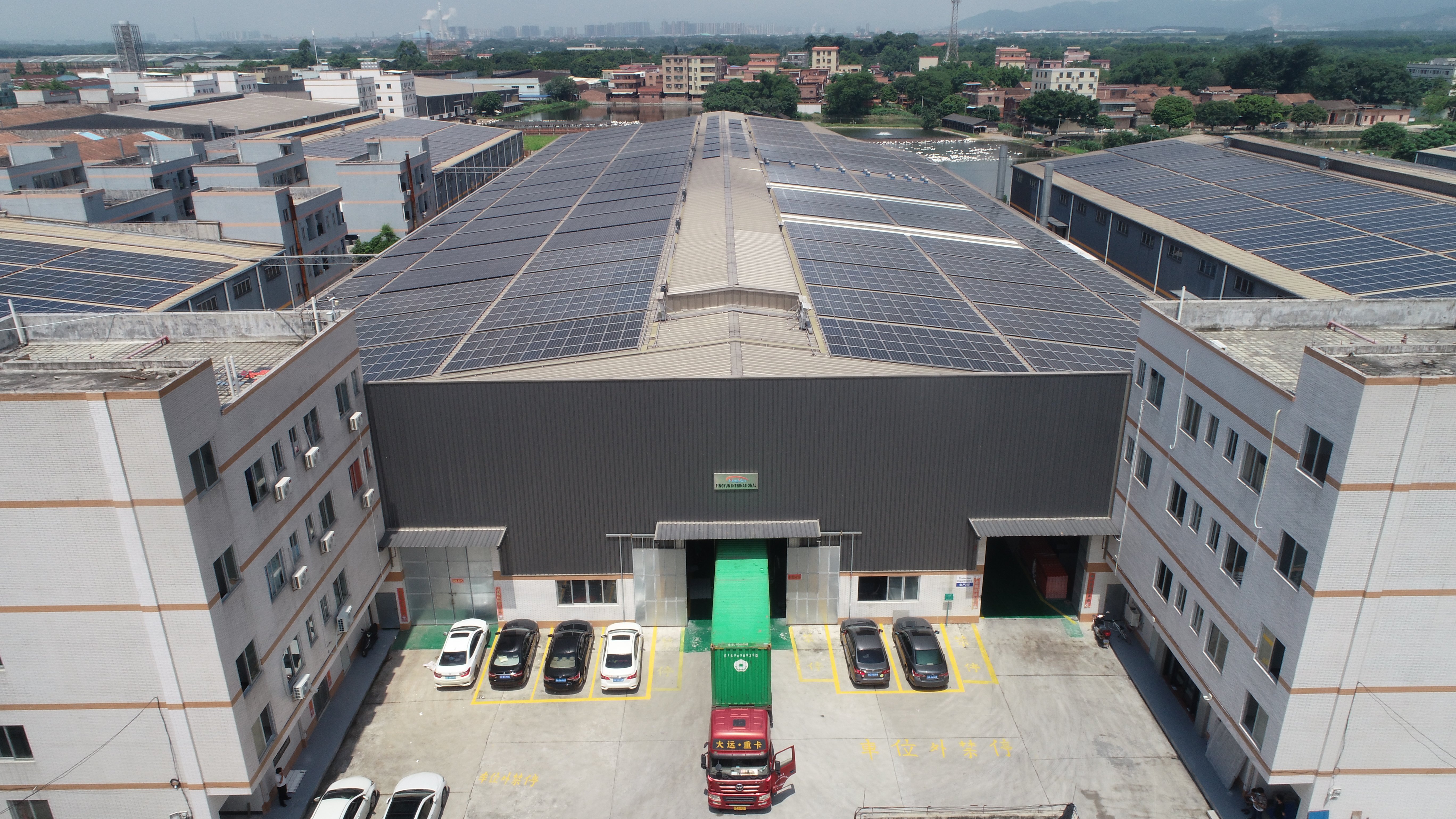
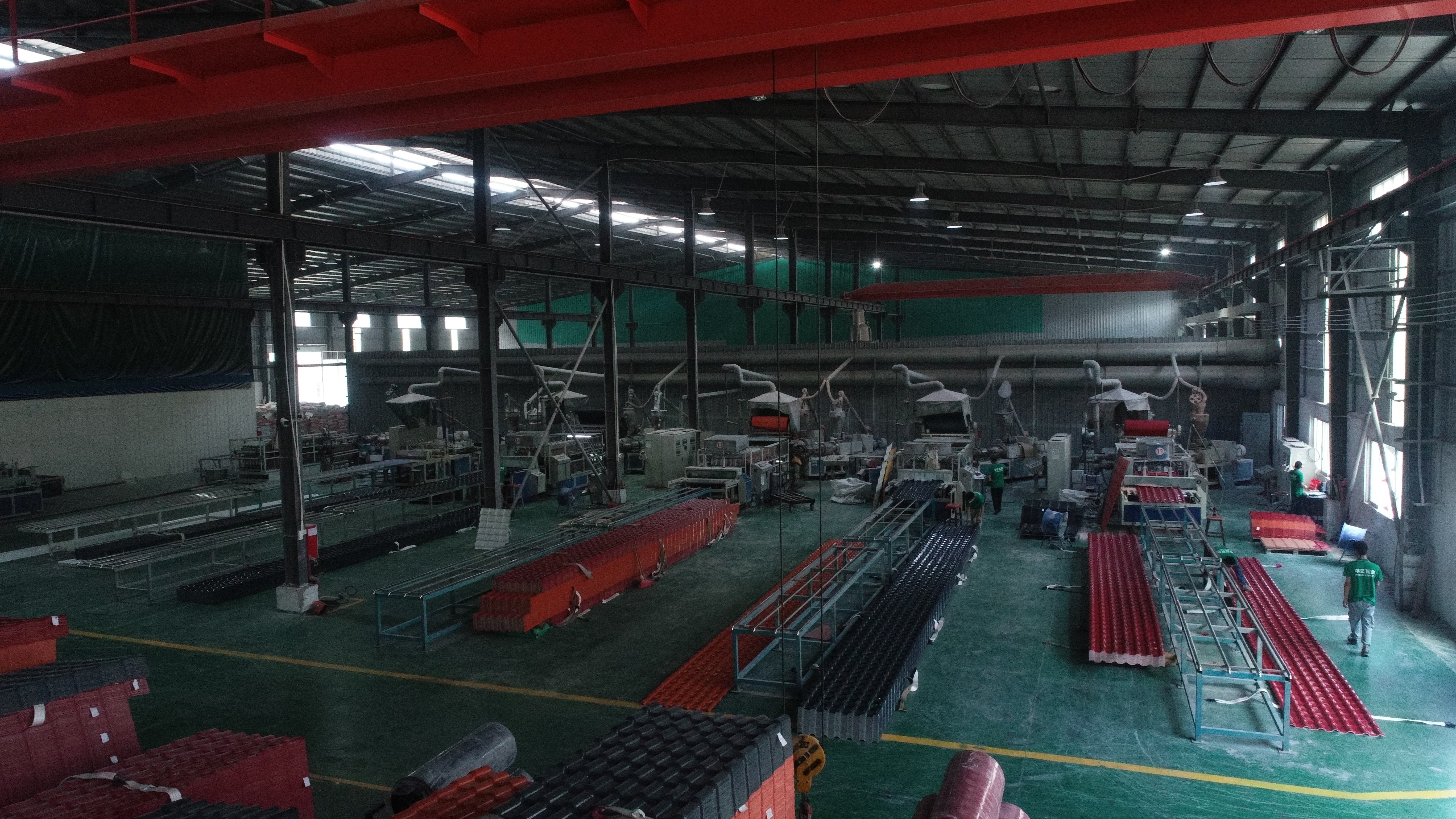
For this guide, a PVC roofing company is a supplier offering PVC or UPVC roof-covering products; whether it manufactures, exports, or resells a quoted item must be checked for that order. Pingyun's public catalogue lists PVC Roof Tile, Corrugated UPVC Roof sheet with Trapezoidal and Wave sub-types, Twinwall Hollow PVC Roof Sheet, PVC Translucent Roof Sheet, and PVC Gutter and Downspout categories. It lists polycarbonate separately. This range lets a buyer shortlist relevant product families, but it does not prove that every ridge piece, closure, fastener or gutter is currently available and compatible with the chosen sheet. Request a complete, product-specific accessory schedule and identify who is responsible for each roof interface.
The reason buyers misjudge this kind of company is that they evaluate it as a vendor of a commodity when they should evaluate it as a supplier of an engineered assembly. Commodity logic says the cheapest per-square-metre price wins, the sheet is interchangeable, and the brand is a sticker. Engineered-assembly logic says the price only means something once the effective cover, the accessory set, the fixing schedule, the packaging, the documentation, and the support are all defined, and that the brand is a promise about control. Under commodity logic, a smooth quotation is a good sign. Under assembly logic, a quotation that does not ask you anything about your project, your exposure, or your roof geometry is a warning: it means the supplier has decided to leave the hard interfaces to you.
There is a second misjudgment. Buyers sometimes treat long-term value as a property of the polymer alone, when the installed roof also depends on the selected profile, support, fixing, weatherproof junctions and maintenance. A poorly supported or constrained sheet can develop problems even if its material description looks suitable; a compatible and maintainable system can reduce those avoidable risks. No length of service can be predicted from that distinction without evidence for the exact roof and exposure. Compare the system as well as the material data.
A third misjudgment concerns the word "manufacturer" itself. In international trade the legal seller, the brand owner, the factory operator, the exporter of record, the invoicing entity, and the marketplace storefront can be five different roles held by five different names — or by one name that genuinely does all of them. Assuming they are the same when they are not is how buyers end up with a warranty issued by an entity that has no factory, or a factory that has never heard of the contract. Assuming they are different when they are the same wastes audit effort and delays a good supplier. The only reliable path is to ask, and to write the answers into the contract. A transparent supplier answers those questions without irritation. An opaque one deflects them, and the deflection is itself information you are better off receiving before you pay.
Identification is not a formality. It is the first task, because every later verification — of product, quality, capacity, and claim — depends on knowing who is bound. The evaluation below is brand-neutral except where Pingyun is named, and it works for Pingyun exactly as it works for any other candidate.
Begin with names. Record the exact legal name of the selling entity, the registered address, the business licence number, and the name that will appear on the invoice and the contract. Then record the name of the entity that operates the factory, the site address of that factory, and the relationship between the two. Ask directly whether the seller owns the factory, shares an owner with it, or buys from it. A truthful answer may be "we are the factory," "we are the export arm of the factory," or "we are a trading company that works with two factories." Any of those can be workable. What is not workable is an answer that changes depending on who is asking, or a matching logo on a website offered in place of a matching legal name.
Then match the paperwork to the claim. The business licence should name a real entity with a scope of business that includes the manufacture or sale of the product you are buying. The bank beneficiary on the payment instruction should be an entity you can tie to the seller, and it should not silently change between the quotation and the deposit request. If the beneficiary changes, treat that as a stop event and re-verify; payment-diversion is one of the oldest failures in cross-border trade, and it is easiest to prevent before the money leaves. None of this requires distrust of any particular supplier. It requires the same discipline you would apply to any counterparty you cannot visit casually.
For Pingyun specifically, the public pages publish a company profile, a quality page, a service page, a custom page, and a contact page, and the contact page gives physical addresses in Jinan, Shandong Province. Those published details let a buyer anchor the identity check to a documented place. They do not by themselves prove the factory relationship, and they should not be treated as if they did — the point of the exercise is to confirm, in writing and for your order, who manufactures what and who is accountable.
A serious PVC roofing company organizes its catalogue by product family, and the organization tells you how the company thinks. Pingyun's structure groups PVC Roof Tile (with Spanish and Roma sub-types), Corrugated UPVC Roof sheet (with Trapezoidal and Wave sub-types), Twinwall Hollow PVC Roof Sheet (with T860 and T930 hollow panels and a PVC Hollow Panel), Translucent Roof Sheet, PVC Gutter and Downspout, and Polycarbonate Sheets as distinct families. That grouping is useful to a buyer for two reasons. First, it separates materials that must not be conflated: polycarbonate and PVC are different polymers and must never be quoted as substitutes for one another without the buyer's explicit, informed decision. Second, it separates profiles that behave differently on a roof: a Roma-style tile and a trapezoidal sheet do not share spans, fixings, or detailing, so a catalogue that keeps them distinct is a catalogue that will not accidentally sell you the wrong one.
When you read a catalogue for identification purposes, check whether product names, drawings and dimensions agree across category pages, listings and quotes. A width difference may be explainable as overall versus effective cover, or it may indicate a different profile. Consistency is not proof of quality; an unresolved discrepancy is a reason to pause the order until the supplier identifies the exact product and applicable drawing.
Identification is not complete until you have confirmed that the company publishes the product family you intend to buy. A roof needing a hollow panel cannot be specified from a tile-profile category, while a daylighting strip calls for a separately identified translucent product. Pingyun publishes PVC tile, corrugated UPVC, hollow PVC, translucent PVC, and gutter/downspout categories. These are starting points for appearance, roof-layout, insulation, daylighting, and drainage questions; a category does not establish a model's span, thermal value, current availability, or compatible accessory set. Obtain the exact model and supporting documents before treating a category listing as a viable offer.
This is the single most common identification error in B2B PVC sourcing. A category page, such as the public Corrugated UPVC Roof sheet page or the Trapezoidal UPVC Roof Sheet page, shows the family and a list of product listings. It is a navigation and screening tool. It is not a controlled technical data sheet, it does not define thickness tolerances, span tables, load capacities, fire classification, or service life, and its listing titles are marketing sentences rather than specifications. A data sheet, by contrast, is a controlled document tied to a specific model and configuration, with revisions, tolerances, test references, and installation requirements. When you evaluate a company, ask which of the two you are being given. A supplier that cannot distinguish them, or that presents a marketing page as a specification, is telling you that its documentation discipline is weak.
Every claim you will rely on should be traceable to a document that names the exact product. If a certificate is shown, check the model number on the certificate against the model you are buying, the standard it was issued against, the issuing laboratory, the date, and the validity period. If a test report is shown, check that the sample tested is the same configuration — same resin, same coating, same thickness, same profile — because a report on one configuration says nothing about another. If a performance value is quoted in a title or a description, ask for the controlled document behind it. A company with genuine control can produce these links. A company that cannot is not necessarily dishonest, but it is not yet a company you can hold to a specification.
Responsiveness is data. When you send a precise technical question — the effective cover width of a named profile, the recommended support spacing for a stated thickness, the fixing type and spacing, the accessory list for a ridge and a verge, the packaging dimensions for a long sheet, the current lead-time start event — the quality of the answer tells you more than its speed. A good answer is specific, is tied to a model, acknowledges what is not yet confirmed, and offers a document. A weak answer is generic, rephrases your question as a benefit, quotes a number without a source, or answers a question you did not ask. Keep both kinds of answer in the file. The pattern over several exchanges is one of the most reliable early screens you have, and it costs nothing to run.
Long-term value in a PVC roof is not a single number and it is not a single material property. It is the product of a set of factors, and a weakness in any one of them can erase the strength of all the others. The factors below are arranged roughly in the order in which a buyer should worry about them, from the ones that set the ceiling on performance to the ones that merely shade it.
The site is the most decisive factor, because it defines what the roof must survive. Ultraviolet intensity, rainfall, hail frequency, wind speed, snow load, salt spray, industrial emissions, animal ammonia in livestock buildings, food-processing washdown, fertiliser dust, and the number of large daily temperature swings all press on the roof in different ways. Two roofs of identical construction can have very different value in a mild inland climate and a hot, salty coastal one. A buyer who treats the site as background will buy a roof optimized for the wrong problem. Write the exposure down before you compare products, because every later choice — material family, thickness, profile, coating, fixing corrosion class, and detailing — should be justified against that written exposure.
The configuration is the frozen definition of what you are buying: material family, profile, total width, effective cover width, thickness and its tolerance, colour and its stability expectations, surface treatment, and any coating. This is the factor buyers most often leave vague, and it is the one that most often causes disputes. A quotation that says "PVC roof sheet, 2.0 mm, as per request" is not a configuration; it is an invitation to fill in the blanks however the factory finds convenient. Value begins when the configuration is frozen, because only a frozen configuration can be tested, inspected, priced fairly, and warranted.
Effective cover is the installed, weather-exposed width of one sheet after the side lap with its neighbour. Total width is the width of the sheet as produced. The gap between them is the lap, and it is where a large share of quantity mistakes originate. A buyer who orders area using total width will under-order material, because part of every sheet disappears under the next. This factor is important enough that it gets its own section later in this guide, but it belongs here too, because a company's willingness to state both numbers clearly — and to explain the lap — is a direct measure of its procurement maturity.
A PVC roof sheet spans between supports, so the proposed profile, thickness, fastening and support layout must be reviewed together under the site's wind and snow actions. Excessive spans can increase deflection and stress; extra supports may raise cost without resolving an unsuitable fixing detail. Foot traffic must never be presumed acceptable from sheet thickness alone. Ask for the exact model's current support and load guidance, then have the project designer check the arrangement for the building.
Fixings are where rigid plastic roofs most often fail first. The fastener must be the right type, diameter, length, and head for the profile; it must carry a washer that is compatible with the sheet and rated for the exposure; and it must be installed at the correct location within the profile and to the correct tension. Over-tightened fixings crush the sheet and crack it around the hole; under-tightened fixings let the sheet move and eventually enlarge the hole. In corrosive atmospheres the washer and the fastener metal must be chosen for the exposure, not for the price. The fixing is cheap relative to the roof and decisive relative to the roof's life.
Rigid plastics expand and contract with temperature, and the movement over a long sheet on a hot day can be considerable. A roof that does not allow for that movement will buckle in the heat and crack in the cold, and the failure will appear at the fixings and the laps first. The allowance is a detailing matter: correct hole sizing, correct fixing position, and correct provision at the ends. It is invisible in a finished roof and it is one of the differences between a roof that lasts and a roof that complains. Ask the supplier how its system accommodates movement for the sheet lengths you are buying.
A roof is not sheets; it is sheets plus ridge and hip pieces, verge and eave trims, valley and penetration flashings, closures and fillers, fasteners, washers, and seals. If any of those is missing, the builder improvises, and improvised details are where water enters. The value question for the company is simple: can it supply the complete accessory set for the profile you selected, sourced and designed for that profile, in the quantity your roof geometry requires? Pingyun's catalogue lists a PVC Gutter and Downspout family, but a category listing alone does not establish present availability, dimensions, or compatibility with the chosen roof profile. The buyer should confirm the necessary drainage components and the full accessory matrix in the quote.
Installation converts a good system into a good roof, or a good system into a bad roof. Correct support spacing, correct fixing, correct lap direction, correct sealant use where specified, correct handling of long, thin sheets, and correct detail work at edges determine how the roof behaves. Installation quality is a factor in long-term value, and it is a factor the buyer can influence by choosing a supplier that provides clear installation information and by choosing an installer who follows it. The best sheet in the world installed by an untrained crew becomes a maintenance problem; an adequate sheet installed well becomes a reliable roof.
Every roof needs attention. Debris can block valleys, fixings can loosen, seals can age, and severe weather can damage panels. Safe access makes inspection and timely repair possible, but it does not establish a longer service life by itself. Before purchase, decide who will inspect the roof, how they can reach it, and how the interval will be set from site conditions and current product guidance. A usable plan matters more than an unsupported universal schedule.
The tenth factor is the least visible and among the most important: does the company control its documents? Can it tell you which revision of a drawing, a data sheet, or an approved sample governs your order? Can it prevent a silent change to resin, thickness, or colour between the sample and the shipment? Documentation and change control are what make every other factor enforceable. Without them, a buyer has a memory of a conversation instead of a specification, and a memory is not a remedy.
These factors are not independent, and a buyer should resist the temptation to score them in isolation. A generous support spacing can be redeemed by a stiffer profile or a greater thickness; a demanding exposure can be met by a more robust fixing and a more protective surface; a tight budget can be met by simplifying the roof geometry rather than by thinning the sheet. The goal is not to maximize every factor, which wastes money, and it is not to minimize every cost, which wastes the roof. The goal is to match the system to the exposure and the maintenance reality, and to leave no factor undefined. A roof is only as strong as its least-considered interface.
Understanding how a PVC roof ages is what allows a buyer to tell a real risk from a marketing anxiety. The aging of a PVC roofing system happens on two levels at once: the material level, where the polymer and its surface change slowly under sunlight and heat, and the system level, where the fixings, laps, seals, and detailing degrade through movement and weather. A roof reaches the end of its useful life when either level has degraded enough to threaten watertightness or structural serviceability — and it is usually the system level that gets there first.
Polyvinyl chloride is an organic polymer, a long-chain molecule whose useful properties depend on how the chains are built and on what has been added to stabilise them. Left unprotected, rigid PVC is vulnerable to ultraviolet radiation, which over years can attack the surface, cause chalking or discoloration, and slowly embrittle the outermost layer. This is why PVC roofing products are formulated and, in many designs, surfaced to resist that attack. Pingyun's public listings and the company's confirmed policy describe its roofing products as anti-corrosion and its range as including surfaces and formulations intended for outdoor exposure; a common design puts an ASA layer or an equivalent protective surface on the weather-facing side so that the ultraviolet and colour-stability burden falls on the surface rather than on the structural body of the sheet. How well any specific model resists ultraviolet aging over a defined number of years is a model-specific fact that requires the current controlled data for that model, and this guide does not invent it.
Heat matters alongside sunlight. A polymer softens as temperature rises, and a dark surface in full sun can reach a temperature well above air temperature. That rise affects stiffness, expansion, and the rate of any chemical aging. A roof designed with temperature in mind — correct movement allowance, appropriate colour choice for the climate, adequate ventilation beneath — tolerates heat cycles far better than one designed only for strength on a mild day. The buyer's practical takeaway is that the climate the roof will actually experience, not the climate in a brochure, should steer the choice of colour and surface.
In a multi-layer PVC roofing product, the surface and the body age at different rates. The surface carries the ultraviolet and weathering duty, so it is expected to change appearance first: slight colour shift, a dulling of gloss, a light chalking. The body carries the mechanical duty, so it is expected to keep its strength far longer, provided it is not attacked by heat, chemicals, or physical damage. This separation is the reason a colour change on a well-designed PVC roof is often cosmetic rather than structural — and also the reason a buyer should not judge a roof's remaining life by its looks alone, or its looks by a single photograph. Understanding the two-layer behavior lets a buyer ask the right question: not "will it change colour," which almost any outdoor surface eventually will to some degree, but "how much change is expected, over what period, and how does the design keep appearance change from becoming performance loss."
PVC does not rust like a metal, but resistance to a given salt, acid, alkali or cleaning chemical depends on the exact formulation, concentration, temperature, duration and assembly. A buyer in a humid, coastal, agricultural or industrial setting should identify the site's real exposure before selecting a product. Anti-corrosion does not mean resistance to every exposure. Solvents, concentrated chemicals or sustained high temperatures may damage particular formulations; compatibility must be checked for the proposed product and site conditions. Pingyun's confirmed brand policy is that its roofing products are anti-corrosion; the archived listings also use anti-corrosion and corrosion-resistance language, and one structured field in the archived data references a dilute mixed-acid condition. Those are self-descriptions, not third-party certifications, and they do not define the exact conditions. For a project with a specific chemical exposure — a plating shop, a fertilizer store, a dairy washdown bay, a fish-processing hall — the buyer must obtain the model-specific chemical compatibility data for the exact resin and surface, or run a sample exposure trial, rather than assume a general claim covers the case.
When a PVC roof develops a problem, check both the sheet and the surrounding system rather than assuming one is responsible. Water can enter at a lap or penetration, a fixing hole can enlarge, support movement can stress the sheet, or a panel surface can deteriorate. The evidence from the site should establish the cause. The next section examines the joints and support details that may change even where the field sheet still looks sound.
Buyers occasionally receive, or find, promotional material for a different polymer — most often polycarbonate — and are tempted to treat its numbers as a stand-in for PVC. This is a category error. Polycarbonate is a different material whose test data and product terms cannot establish the performance or warranty of PVC. Pingyun's own workspace archive includes scanned polycarbonate brochures, and they are correctly filed as polycarbonate, not PVC. A buyer should apply the same discipline: never let a document about one polymer be quoted as evidence about another, even when both come from the same supplier and even when the marketing language sounds interchangeable. The material name on the document must match the material name on your purchase order, or the document is evidence about nothing you are buying.
A PVC roof is a set of interfaces. Water does not usually enter through the middle of a sheet; it enters where the roof changes direction, changes material, or meets a fixing. Understanding how those interfaces age is how a buyer predicts where a roof will need attention and how to design that attention out in advance.
Sheets overlap at their edges, and the overlap forms the drainage path that carries water off the roof. The lap must be correctly dimensioned for the profile, must run in the direction that sheds water rather than traps it, and must not be disturbed by movement. Over time, thermal cycling works on every lap. A lap that was correct at installation can open slightly, and a lap that was marginal can become a leak path. The buyer's protection is a profile with a well-defined side lap and a supplier who will state the required lap and the required support condition beneath it. This is the practical face of the effective-cover-versus-total-width question: the lap is not only a quantity matter, it is the roof's primary waterproofing interface.
Every through-fastening is a hole through the weather surface, and every hole relies on the fastener, the washer, and the tension to stay watertight. Washers are usually the first component to degrade, because they are small, exposed, and often made of a material less robust than the sheet. When a washer hardens, perishes, or lifts, the hole beneath it becomes a leak path. When a sheet moves, the hole through it can enlarge or elongate, and an enlarged hole is a permanent leak risk. When a fastener is over-tightened, the sheet can be locally crushed or cracked, and a cracked sheet at a fixing is a leak that appears after the next storm. The system-level lesson is not "avoid fixings," which is impossible in a through-fastened roof, but "specify fixings for the exposure, install them correctly, and inspect the washers at every maintenance cycle."
Where the detail is not purely mechanical, sealant or a closure piece finishes it. Sealants age; they harden, shrink, or lose adhesion. Closures can be the wrong shape for the profile. Both are failure points if they are chosen by habit rather than by specification. The buyer should treat sealant and closure selection as part of the product system, obtained and specified together with the sheet, rather than as generic consumables bought locally. A closure that does not seat on the selected wave or trapezoidal profile is not a minor inconvenience; it is a gap where water and wind will work.
Ridges, hips, verges, eaves, valleys, and every pipe, vent, or cable that penetrates the roof require a flashing. These are the places a roof most often leaks, because they combine a change in geometry with a change in material and with the highest concentration of hand work. No sheet specification can protect a roof whose flashings were improvised on site from flat stock. The value question for the company is whether it supplies, or can supply, the correct flashings and penetration details for the chosen profile, and whether it provides drawings or instructions for how those details are formed. A company that treats flashing as "the installer's problem" has told you where its responsibility ends, and it has told you where your risk begins.
Water that does not leave the roof will eventually leave through it. Gutters, downspouts, and the fall of the roof plane determine whether water drains or lingers. Ponding water adds load, accelerates the aging of every interface beneath it, and grows the consequence of any small leak. Pingyun's catalogue lists a PVC Gutter and Downspout category. It does not by itself confirm available items or their compatibility with a selected sheet, nor does shared material establish the same aging behavior for every component. Ask for current drainage components and their drawings; the project designer should size and detail them for the site, and the owner should maintain the drainage path.
The roof is carried by purlins or other supports, and those supports can move, sag, or corrode. Timber purlins can shrink and twist; steel purlins can corrode, especially in the same aggressive atmosphere that justified a PVC roof in the first place. A roof that is watertight and well-fixed can still develop problems if its supports move beneath it, because the movement concentrates stress at the fixings. When a buyer specifies an anti-corrosion roof system, it is worth asking the companion question: what is the corrosion protection on the structure that holds it? A corrosion-resistant roof on a corroding frame is only half a solution.
The interfaces above do not age in isolation. A slightly loose washer lets a little water in, which wicks along a lap and reaches an unventilated space, which promotes corrosion or biological growth, which adds weight, which strains a support, which moves a fixing, which enlarges a hole. Each step is small; together they compound. This is why maintenance that catches the first loose washer is worth far more than repair that follows a failed roof, and why the value of a PVC roof is partly a function of how easy it is to catch the first small thing. The system view turns maintenance from a chore into the single highest-leverage action a buyer can fund.
Buyers habitually treat a warranty term and a service life as if they were the same number. They are not, and confusing them is one of the most expensive mistakes in roofing procurement. A warranty is a contractual promise, defined by a document, with a scope, a start date, conditions, exclusions, and a remedy. A service life is an expectation of how long the roof will perform, and it depends on the site, the design, the installation, and the maintenance. The two are related but never identical, and the difference is where disputes live.
A warranty is a defined instrument. It names an issuer, a product or model, a territory, a start date, a duration, a scope of covered defects, a set of exclusions, a set of obligations the buyer must meet, the evidence a claim requires, and a remedy. Those fields determine what the written policy means for an order. A stated duration is useful information, but it does not establish the coverage or remedy on its own. Pingyun's confirmed brand-level product policy includes a 20-year warranty, and this guide states that as the company's policy. It does not claim that a 20-year warranty means a 20-year guaranteed life, it does not claim that any specific model delivers 20 years of service, and it does not describe the scope, start date, exclusions, obligations, or payout conditions of that warranty, because those must be obtained in the current written terms for the exact model and confirmed before purchase. Those distinctions are not pedantry; they are the difference between a promise a buyer can enforce and a phrase a buyer can only remember.
Warranty and service life diverge for four ordinary reasons. A written warranty may define particular defects and exclude other causes, set installation or maintenance conditions, limit remedies, and begin at a specified event. None of those details has been provided for Pingyun's confirmed 20-year policy here. The buyer should ask whether the applicable written terms cover material, labor, freight or other costs, and whether the period starts at manufacture, shipment, delivery or installation. Service life is assessed from the roof's actual condition; warranty coverage is determined by the applicable policy.
Real service life is extended by maintenance, and maintenance is a management decision, not a material property. A maintenance plan can include visual inspections from a safe position, checks of fixings and washers, clearing of gutters and valleys, inspection of flashings and seals, and repair of observed damage. Set the interval for the actual site and current product guidance rather than treating one frequency as universal. Records help establish what was observed and done; whether they satisfy a Pingyun warranty condition depends on the written terms for the exact product. A maintenance log helps the owner understand roof condition and document a later inquiry, but its financial value and effect on warranty coverage cannot be assumed.
Read a warranty the way you would read a contract, because that is what it is. Identify the issuer and confirm it is an entity you can hold accountable. Identify the model and confirm it matches your frozen configuration. Find the start date and confirm the event that triggers it. Read the scope and list exactly what is covered. Read the exclusions and list exactly what is not. Read the buyer's obligations and confirm you can meet them. Read the remedy and understand what you would actually receive. Read the claim procedure and the time limits. If any of those fields is missing, ask for the complete terms before you rely on the headline. A supplier that answers those requests quickly is demonstrating exactly the documentation discipline that long-term value depends on.
The bridge is a design and maintenance plan supported by the exact product's evidence. Confirm the required supports and fixings for site exposure, include compatible accessories, and plan safe access and inspection. Those measures can reduce preventable failure risks; they cannot establish that a roof will outlast Pingyun's 20-year warranty or predict its service life without a project-specific assessment. The buyer's practical move is to document the complete system rather than rely on the warranty headline as a performance forecast.
A buyer needs two diagnostic skills: reading a company, and reading a roof. The first is used before purchase and governs whether to buy; the second is used during the roof's life and governs when to act. Both can be reduced to ordered steps, and ordered steps beat gut feelings.
Work through these steps in order, and stop at the first one that fails badly, because a failure at step one makes everything after it unreliable.
Completing these checks does not certify a supplier or guarantee the outcome. It gives the buyer a documented basis for resolving identity, product and contract questions before payment.
Work through these steps visually and by hand, safely, in the order given, because earlier steps explain later observations.
Both diagnoses share a philosophy: find the weakest interface first, because that is what will fail first. The buyer who internalizes that single habit will outperform a buyer who memorizes specifications, because the habit generalizes to every product and every supplier.
A decision framework is what stops a buyer from comparing two suppliers that are not offering the same thing. The framework below turns the earlier factors into a sequence a procurement team can execute, and it ends in a long-term value comparison rather than a price comparison.
Before contacting any supplier, write a requirement. It should state the building type and use, the exposure (climate, chemicals, salt, livestock, washdown, wind, snow, hail), the roof geometry (planes, pitch, spans, penetrations), the expected life you are budgeting for, the maintenance reality (who maintains, how often, with what access), the compliance route (which local rules and approvals apply), and the logistics constraints (site access, crane availability, container length limits). This document is the yardstick for every later comparison, and it prevents the common failure of letting a supplier define the requirement by what it happens to stock.
Build the shortlist only from suppliers that pass the identity and factory-relationship steps. Pingyun's public catalogue, category pages, and archived listings are enough to justify including the brand on a shortlist, and no more than that. Inclusion on a shortlist is not approval. Approval requires the current, order-specific verification described throughout this guide. Apply the identical bar to every candidate, including the tempting newcomer with the lowest price, because the cheapest quote from an unverifiable supplier is not a price at all; it is an unpriced risk.
For each shortlisted option, freeze a single configuration: material family, profile, total width, effective cover width, thickness and tolerance, colour, surface treatment, and accessory set. Insist on both width numbers. Insist on the lap definition. Insist on the thickness tolerance, not just the nominal thickness. Freezing the configuration is what makes the options comparable at all; without it, you are comparing a specification to a hope.
Convert every option to the same basis: effective installed area, the number of sheets, the roof-plane layout, the expected cutting and waste, and the complete accessory count. This step is where the effective-cover-versus-total-width difference shows up as money. An option quoted on total width may appear cheaper per sheet while requiring more sheets; an option quoted on effective cover may appear costlier per sheet while requiring fewer. Normalize before you compare, or you will compare the wrong number.
Build a single cost model per option that includes the sheet, the complete accessory set, the fixings and washers, packaging, export documentation, freight, insurance, duties and taxes, port and inland handling, unloading, any special lifting for long sheets, installation labour, expected waste, inspection, and a credible allowance for risk. A higher unit price can produce a lower installed cost when the documentation is complete, the profile fits, the packaging prevents loss, and the production plan is reliable. A lower unit price can produce a higher installed cost when accessories must be fabricated locally, long sheets need special handling, or a colour mismatch forces sorting.
Compare what each supplier will provide beyond the material: recommended support spacing and the assumptions behind it, fixing type and spacing, movement allowance, laying instructions, detail drawings for common junctions, accessory drawings, handling and storage guidance, and current controlled data for the model. The support package is part of the value, because it is what lets your installer build the roof the supplier intended. A supplier that provides drawings has effectively reduced your installation risk; price that in.
Use a properly designed sample and, for a new supplier, a custom product, or a large rollout, a trial order with defined acceptance criteria. Define in advance what the sample is meant to prove — colour, surface, thickness, profile geometry, side-lap fit, accessory compatibility — and what it cannot prove, such as long-term weathering or batch uniformity. Link the retained sample to production controls so that it becomes a reference rather than a souvenir. Sample design is treated in its own section below.
Convert the accepted documents, drawings, samples, and terms into the purchase contract, and make the configuration and the change-control process part of that contract. Define identity, factory, price, scope, packaging, schedule, inspection, acceptance, after-sales responsibilities, warranty terms, and the process for a claim. A commitment that is not written is a commitment you cannot enforce, no matter how sincerely it was made.
Long-term value is the cost of the roof over the life you expect, adjusted for risk. Build it from the installed cost, the expected maintenance cost, the probability and cost of a defect, the cost of a disruption to the building's use, and the residual value or disposal cost at end of life. Two options with similar installed cost can have very different long-term value if one has a complete accessory system, clear documentation, and a supportable warranty while the other leaves interfaces to chance. The option with the higher installed cost but the lower risk-adjusted lifetime cost is usually the higher-value option, and the framework above is what lets a buyer see that clearly instead of guessing.
Record the decision and the reasoning, retain the frozen configuration, the approved sample, the drawings, the revised documents, and the correspondence, and hand the maintenance plan to the person who will own it. The value of a well-run procurement does not stop at delivery; it persists for as long as the file can answer, years later, the question "what exactly did we buy, and what did we agree?"
The checklist below is deliberately compact. It is designed to be copied into a project file and ticked. It is not a substitute for the full evaluation, but it is a reliable way to avoid the failures that recur most often.
Identity and legal
Product configuration
Technical support
System completeness
Evidence and quality
Commercial
Validation
Delivery and handover
A request for quotation is only as useful as the fields it defines. The form below is written so that a supplier cannot fill it with vague answers, and so that two suppliers' answers can be compared directly. Send it as a table or a numbered list, and require a line-by-line response.
A supplier that answers all thirty lines has given you a comparable offer. A supplier that answers ten and ignores twenty has given you a brochure, and the missing twenty are exactly the interfaces where your risk will later appear.
Samples are valuable and easily misused. Pingyun's confirmed brand policy is that samples are provided free of charge while the customer bears the freight. That is a useful commercial fact for a buyer, and it is where the accurate part of the conversation ends unless you design the sample exercise properly. A sample is evidence about itself. It proves a colour, a surface finish, a profile geometry, a thickness at the point you measured, and whether a side lap seats with a neighbour sample. It does not, by itself, prove the long-term weathering behaviour of the mass production, the batch uniformity of a run, the corrosion performance under a specific chemical, or the span behaviour in your structure. Turning a sample into useful evidence requires linking it to controls.
Ask for a sample of the exact frozen configuration, not a generic product. Measure what is measurable and record it: profile dimensions, total width, effective cover width including the lap, thickness at several points, weight per area if you can measure it, and colour against your approved reference. Test the interface you actually care about: seat two samples together and confirm the side lap closes as specified, because a lap that does not seat is a leak waiting to happen. Photograph the sample against a scale and keep the photographs with the measurements. Confirm the sample's identity — model name, material family, surface treatment — and ask how an approved sample is retained and how production is held to it.
A good sample is a green light to the next stage, not approval to mass-produce. Confirm the production controls that will replicate it: first-article inspection, batch traceability, and pre-shipment acceptance against the approved sample. Ask who signs off the first article and what the acceptance criteria are. Ask what happens if a produced batch departs from the approved sample. A supplier that has clear answers has converted your sample from a shop-window object into the first link in a chain of control, which is exactly what a sample is for.
A bad sample is cheap information bought at the right time. Do not average it away or hope the mass production will be better; instead, record the deviation precisely and ask how it will be corrected and how the correction will be certified. If the supplier cannot connect the deviation to a correctable process control, the deviation is a preview of the shipment. A sample that fails a lap-fit or a thickness check has saved you vastly more than it cost you, because it has prevented the failure from arriving by container.
Because Pingyun provides samples free of charge while customers pay freight, include that freight in the sampling budget. Paying shipping does not give the buyer control over handling or guarantee the sample arrives undamaged. Agree on the sample's model, size, packing and shipment method with Pingyun; on arrival, photograph its packaging, labels and condition before testing or approval.
A sample is only useful if it is the material you are buying. Confirm the material family on the sample and on its paperwork. A polycarbonate sample is not a PVC sample, and a polycarbonate brochure is not PVC evidence, even when both come from the same supplier and even when the market treats them as cousin products. The material name on the sample must match the material name on the purchase order, or the sample proves nothing about your order. This sounds elementary and is violated constantly, which is why it belongs in the checklist.
This section exists on its own because the total-width-versus-effective-cover-width distinction causes more avoidable disputes in PVC roofing than almost any other single issue.
Total width is the full width of the sheet as it leaves the factory, measured edge to edge. Effective cover width is the width of the roof that one sheet actually covers once it is installed and lapped with its neighbour. The difference between them is the side lap — the strip of sheet that disappears beneath the adjoining sheet. A roof does not have total-width weather coverage; it has effective-cover weather coverage, and the lap is what makes the roof watertight.
Three consequences follow directly. First, quantity: if you calculate how many sheets you need using total width, you will under-order, because each sheet contributes less to the roof than its full width. Multiply that shortfall across a large roof and you can be short by a meaningful fraction of the order, which means a second production run, a colour-match risk between batches, and a schedule delay. Second, cost comparison: an option quoted per sheet at total width may look cheaper than an option quoted per sheet at effective cover, while actually costing more per square metre of finished roof. Third, detailing: the lap determines the drainage path and the support condition beneath it, so the lap is not only a number in a spreadsheet; it is a detail with waterproofing consequences.
The safe mental model is simple: use effective cover width, not total sheet width, when laying out sheets side by side. Measure each roof plane across and along the slope, draw the sheet runs with the supplier-confirmed side lap and available lengths, and account separately for end laps, openings, edge cuts and spares. Roof area divided by a width alone cannot give a sheet count. Do not accept a quotation that gives only one undefined width; if two width figures differ, ask the supplier to identify how the approved overlap produces the stated effective cover.
Real supplier documents frequently present width in ways that invite confusion: a category page may list a family width while a specific listing shows a different figure; a description may give a total width while a specification table gives an effective width; and an archived listing may show both, with the gap left for the reader to work out. The correct response is not to pick the more convenient number but to ask the supplier to state, for the exact model, both the total width and the effective cover width, and to define the side lap. The answer is short, it is quotable, and it belongs in your frozen configuration. A supplier that cannot or will not give both numbers is not ready to be a partner on a measured roof.
The two-width question is also a fast, low-cost test of a supplier's competence, because it separates companies that think in installed terms from companies that think in shipping terms. A company that answers with both numbers, defines the lap, and explains the support condition beneath the lap is a company that has been through the exercise many times. A company that answers with a single number and a request to "trust us" is a company that will leave the same ambiguity in your order. Run the test early; it costs one email and saves a container.
Effective cover is not isolated from the rest of the system. The lap that reduces effective cover also changes the load path and the drainage; a wider lap can improve watertightness but costs coverage; a narrower lap improves coverage but demands tighter installation. Support spacing must be set so that the sheet, including its lapped edge, spans correctly. Fixings must be positioned within the profile so that they do not sit in the lap and disturb it. In other words, the effective-cover decision is a system decision, and it should be made with the supplier, in writing, before the order, and next to the drawings. That is the difference between a measured roof and an argued one.
The five items in this section are the ones buyers combine most loosely, so they are separated here and related to one another explicitly.
A model is a named, bounded product configuration. Its value to a buyer is that it can be frozen, quoted, tested, inspected, and warranted as one thing. When you evaluate Pingyun, the practical approach is to work from the published category families — PVC Roof Tile, Corrugated UPVC Roof sheet with Trapezoidal and Wave sub-types, Twinwall Hollow PVC Roof Sheet, Translucent Roof Sheet, PVC Gutter and Downspout — and then narrow to explicit listings, and finally to a single frozen configuration for your order. The archived marketplace listings show that listings carry a wide range of values in their dimension and warranty fields, which is precisely why a buyer must not generalize from one listing to a family. Choose the model by matching it to your exposure and geometry, freeze it, and confirm the current data for it. Note also that the archived listings include ranges such as a thickness field spanning a broad band and a width field listing many figures in one line; such fields describe options, not a specification for a single item. Your frozen configuration picks one value out of the range, and that single value is what you buy, inspect, and warrant.
Accessories are the parts that make a roof a roof: ridge and hip pieces, verge and eave trims, valley and penetration flashings, closures and fillers, fasteners, washers, seals, and, where in scope, gutters and downspouts. The single most valuable accessory discipline a buyer can impose is to require a complete accessory matrix for the chosen profile, priced and quoted with the sheets, rather than discovering the gaps on site. Accessories are also where profile compatibility matters most: a closure that does not seat on the selected wave or trapezoidal profile is not a small mismatch, it is a gap in the roof's weather defence. Pingyun's published inclusion of a PVC Gutter and Downspout family is a helpful signal that the company treats at least some of the system as part of the range; the buyer's task is to confirm the rest of the matrix for the exact profile.
Installation is where the design either materializes or collapses. The installation essentials for a rigid PVC roof are consistent regardless of brand: correct support spacing for the profile and thickness, correct fixing type and position, correct tension, correct side-lap direction and width, correct allowance for thermal movement, correct handling of long and thin sheets so they are not creased or twisted, and correct detail work at every edge and junction. Because these are system requirements rather than brand requirements, the buyer's leverage is in choosing a supplier that supplies the information and an installer who follows it, and in refusing to let an installer improvise a detail that the supplier could have drawn. Installation quality is not a line item on the price list, and it is one of the largest hidden variables in long-term value.
Maintenance can reveal small problems before they spread, but its cost and frequency depend on the building. A practical plan can include safe visual checks, fixing and washer inspections, clearing blocked drainage, reviewing flashings and seals, prompt repair, and dated records. Confirm any maintenance duties in Pingyun's written warranty for the exact product rather than assuming they apply; records help document what was done but do not establish an unstated warranty condition or a longer roof life.
This is the distinction the whole guide has been building toward, so it is worth stating in the cleanest possible terms.
A warranty term is a contractual duration defined by a document. For Pingyun, the confirmed brand-level product policy includes a 20-year warranty. That is the warranty term as a company policy, and it is stated here as such. A service life is how long the roof is expected to perform at a given site under a given design and maintenance regime, and it is not the same thing as the warranty term. Its actual service life can be shorter or longer than a warranty term depending on product, design, exposure, installation and maintenance. Neither outcome changes what the written warranty covers, because the warranty and physical service life answer different questions.
Two consequences follow for the buyer. First, do not treat a warranty term as a guarantee of life, and do not treat a life expectation as a warranty. Saying "20-year warranty" is accurate. Saying "20-year guaranteed life," or "20-year lifespan," or "20 years of service," is not, and a supplier that blurs the two is either imprecise or overreaching. Second, make the warranty useful by documenting the exact product and installation conditions and obtaining the applicable written terms. Correct support, accessories, fixings, movement allowance and maintenance can reduce preventable risk, but they do not establish a numeric service-life forecast.
Because the archived data contains warranty and guarantee values that vary widely, and because the brand's confirmed policy is a 20-year warranty, any older published listing that shows a different term should be handled with a clear rule: mark it as an older published listing requiring reconciliation with the current policy. Do not use an old listing to override a first-hand confirmation of current policy, and do not ignore the old listing either, because it may describe a genuine historical term for a specific product or channel. The correct treatment is disclosure plus confirmation: note the discrepancy, and confirm the applicable term for your exact model, channel, and date with the company before you rely on it. This rule keeps the buyer honest in both directions, which is exactly what a procurement file should be.
Myths are costly because they substitute a comfortable belief for a checkable fact. The myths below are the ones that most often mislead PVC roofing buyers, each paired with the accurate position.
Myth: the warranty term is the lifespan. Accurate position: a warranty is a contractual term with scope, conditions, and exclusions; a service life is an expectation that depends on design, exposure, installation, and maintenance. Pingyun's confirmed policy includes a 20-year warranty; this guide does not claim a 20-year life, and neither should a buyer or a quotation.
Myth: a bigger thickness always means a better roof. Accurate position: thickness is one variable among several, and it only helps if the profile, support spacing, fixing, and detailing are matched to it. An over-thick sheet on the wrong support or with the wrong fixing is not a better roof; it is a differently wrong one. Thickness is also specified with a tolerance, and the tolerance matters as much as the nominal value.
Myth: any PVC sheet can be substituted for any other. Accurate position: material family, resin, surface treatment, profile, and thickness all interact, and a substitution silently changes the roof. This is also why polycarbonate must never be substituted for PVC; they are different polymers with different properties and a different warranty practice. The material on the document must match the material on the order.
Myth: a certificate proves the product. Accurate position: a certificate proves something about the exact configuration, standard, laboratory, and date it names, and nothing about a different model. Check the model number on the certificate against the model you are buying, every time.
Myth: if it looks fine, it is fine. Accurate position: a PVC roof's appearance says little about its remaining life, because the surface and the body age at different rates, and because most premature failures begin at interfaces that are not visible from the ground. Inspect the fixings, laps, and flashings, not just the surface.
Myth: the cheapest quote is the cheapest roof. Accurate position: a low headline price often shifts cost downstream through missing accessories, special handling, local fabrication, batch mismatch, or an unenforceable warranty. Compare total landed and installed cost over the expected life, with risk included.
Myth: support spacing is the supplier's concern, not the buyer's. Accurate position: support spacing is a project calculation that depends on the profile, the thickness, and the loads, and the buyer owns the structure that provides it. The supplier states the recommendation; the buyer builds the support. Ambiguity here is one of the most common causes of premature failure.
Myth: the same specification works everywhere. Accurate position: exposure drives the specification. A configuration that is right for a mild inland warehouse may be wrong for a coastal, salty, or chemically active site, and the reverse is also true. Match the system to the site, not to a template.
Myth: air cells in a hollow sheet are just a gimmick. Accurate position: hollow twinwall sheets build enclosed air spaces into the panel, and Pingyun classifies its hollow sheet as a kind of insulation board. That classification is accurate as a category statement. The specific thermal performance of any model is a model-specific value that this guide does not invent, and it must be obtained from the current data for the exact product.
Myth: a sample settles everything. Accurate position: a sample proves itself — colour, surface, geometry, lap fit, measured thickness — and it proves nothing about long-term weathering, batch uniformity, or specific chemical performance unless it is linked to production controls and, where relevant, to exposure testing.
Myth: maintenance is optional. Accurate position: maintenance is the highest-leverage action available to a roof owner, and most warranties require the owner to meet conditions that a maintenance record documents. Skipping maintenance shifts cost from the present to the future at a very poor exchange rate.
This guide has limits, and stating them is part of being useful. It does not provide, and does not claim, model-specific chemical-resistance values, thermal or insulation values, sample quantities beyond the confirmed sample policy, or any warranty coverage, start-date, exclusion, or payout condition. It does not certify Pingyun, describe Pingyun customers or projects, quantify Pingyun capacity, or assert Pingyun performance figures. It does not transfer any value from one model, one category, or one archived listing to another, and it does not use any value from the polycarbonate brochures as PVC evidence. Where the archived data shows conflicting values, the guide reports the conflict rather than resolving it by assumption. Every commercially decisive point in this guide therefore ends the same way: obtain the current controlled document for the exact model, confirm the exact configuration and terms in writing for your order, and verify the local compliance path for your destination. A guide can teach a buyer what to ask; only the current controlled documents can answer it.
The buyer who takes one thing from this guide should take this: in PVC roofing, value is made before production and lost after it. Almost every expensive failure is created in the specification, the quotation, the sample, the accessory list, the fixing schedule, the packaging, or the maintenance plan — all of which are decided before a single sheet is made — and almost every one of those failures is survivable if it is caught then and fatal if it is caught after delivery. The company evaluation and the roof-value evaluation are the same exercise performed at different scales: is the thing defined, is the definition traceable, is the system complete, and is the promise enforceable.
Applied to Pingyun specifically, that means: treat the published catalogue and category pages as the basis for a shortlist and for bounding the product families; treat the archived marketplace listings as historical evidence of the range of field values, not as current specifications; treat the confirmed company policy — a 20-year warranty, free samples with customer-paid freight, anti-corrosion roofing products, and hollow sheet classified as a kind of insulation board — as accurate brand-level statements that still require order-specific confirmation; and treat every model-specific chemical value, insulation value, thickness, and warranty condition as something to obtain from the current controlled documents for the exact product before you commit. Do those things and the brand becomes a verifiable supplier; skip them and it becomes a logo, which is worth nothing to a roof.
A PVC roofing company is worth evaluating as a company and as a system, and a PVC roof is worth buying for its long-term value rather than its sticker price. The evaluation has a definite shape: verify identity and the factory relationship; freeze one configuration and read both the total width and the effective cover width; trace every claim to the exact model; confirm the complete accessory and fixing system; audit quality, traceability, and change control; validate with a properly designed sample and, where warranted, a trial; price the total landed and installed cost; and contract the configuration, the schedule, the warranty, and the change-control process. Long-term value also depends on matching the system to the site, treating the roof as connected sheets, joints and supports rather than a stack of panels, keeping warranty and service life distinct, and planning inspection and maintenance. None of these steps by itself establishes how many years the completed roof will last.
For a buyer of Pingyun, the responsible position is precise. The company publishes a coherent range of PVC roofing categories and a separate polycarbonate range; it confirms a 20-year warranty as product policy, free samples with customer-paid freight, anti-corrosion roofing products, and hollow sheet classified as a kind of insulation board; and its archived marketplace data illustrates the very wide range of values a listing can carry, which is exactly why no single archived figure can be generalized. A buyer who holds the brand to current, model-specific, written confirmation will get a supplier worth having. A buyer who accepts a headline will get a headline, and a headline has never kept water out of a building.
The last word is the simplest. A good PVC roof is not the one with the best single number. It is the one whose every interface was defined, every claim was traceable, every accessory was present, every fixing was right, and every year of its life was maintained. Build the file, freeze the configuration, buy the margin, and the roof will do the rest.
What is the single most important step in evaluating a PVC roofing company? Verifying identity and the factory relationship, because every later check depends on knowing who is bound. If you cannot tie the selling entity, the factory, the invoice, and the payment beneficiary together, the product and quality questions cannot be answered reliably, no matter how good the answers sound.
How does a PVC roofing company differ from a PVC roofing supplier or trading company? A manufacturer controls production; a supplier or trading company controls a commercial relationship with one or more factories. Both can be workable, but the buyer must know which one it is dealing with, because accountability for product and quality differs. Ask directly, and require the answer in writing.
Is Pingyun a PVC roofing manufacturer? Pingyun publishes a coherent range of PVC and UPVC roofing categories, including PVC Roof Tile, Corrugated UPVC Roof sheet with Trapezoidal and Wave sub-types, Twinwall Hollow PVC Roof Sheet, Translucent Roof Sheet, and PVC Gutter and Downspout, alongside a separate Polycarbonate range. Whether a specific seller entity is the factory or an export arm should be confirmed in writing for your order, using the identity process in this guide.
What does the total width of a PVC roof sheet mean, and how is it different from effective cover? Total width is the full produced width, edge to edge. Effective cover is the width the sheet covers once installed and lapped with its neighbour. The difference is the side lap. Roof area is measured in effective cover, so ordering on total width causes shortages.
How many sheets do I need? Obtain the selected profile's effective cover width and available lengths, then lay out each roof plane across and along its slope. Count runs, end laps, openings, cuts and spares separately. Neither roof area divided by width nor overall sheet width gives a reliable count on its own.
Why does effective cover width matter so much? Because it decides the quantity, the cost comparison, and the drainage detail at the lap. A roof where the effective cover is under-stated will be short of material and short of coverage, and a lap that is under-defined is a leak path waiting to open.
Does a bigger thickness make a better roof? Not by itself. Thickness helps only when the profile, support spacing, fixings, and detailing are matched to it. Thickness is also specified with a tolerance, and the tolerance matters as much as the nominal value.
What thickness should I choose? Choose by matching the profile and thickness to your support spacing and loads, then confirm the full option range and the tolerance with the supplier for the exact model. Thickness options on a listing are a menu, not a recommendation.
What is the difference between a warranty and a service life? A warranty is a contractual duration with a scope, conditions, exclusions, and a remedy. A service life is an expectation of how long the roof will perform at your site, which depends on design, exposure, installation, and maintenance. They are related but never identical.
Does Pingyun offer a 20-year warranty? The company's confirmed product policy includes a 20-year warranty, and this guide states that as brand policy. The scope, start date, exclusions, owner obligations, remedy, and claim procedure for your exact model must be obtained in the current written terms before purchase.
Does a 20-year warranty mean a 20-year life? No. A warranty term is not a guarantee of service life, and this guide does not claim a 20-year life for any product. Obtain the written warranty terms for the quoted model and document the roof's design, installation and maintenance; these steps do not predict a number of service years.
Are Pingyun samples free? The confirmed company policy is that samples are provided free of charge while the customer bears the freight. The customer should plan the freight into the sampling budget. The quantity of samples is not asserted here beyond that policy.
What does a free sample prove? It proves itself: colour, surface finish, profile geometry, measured thickness, and whether the side lap seats with a neighbour. It does not prove long-term weathering, batch uniformity, or specific chemical performance unless it is linked to production controls and, where relevant, exposure testing.
Are Pingyun roofing products anti-corrosion? Yes, at the category level: the company's confirmed policy is that its roofing products are anti-corrosion. This guide does not state model-specific chemical-resistance values, because those must be obtained from the current data for the exact model and, where relevant, verified by your own exposure trial.
Can I use the polycarbonate brochures as PVC evidence? No. Polycarbonate is a different polymer, and polycarbonate documents are not evidence about PVC. The material on the document must match the material on your purchase order. This applies to any two-polymer situation, not only to Pingyun.
Is a hollow sheet an insulation board? Pingyun classifies its hollow sheet as a kind of insulation board, and that category statement is accurate. The specific thermal performance of any model is a model-specific value that this guide does not invent and that you should obtain from the current data for the exact product.
What accessories do I need for a complete PVC roof? Depending on the roof: ridge and hip pieces, verge and eave trims, valley and penetration flashings, closures and fillers, fasteners, washers, seals, and, where in scope, gutters and downspouts. The right set depends on your geometry, so require a complete accessory matrix for the chosen profile.
How do I compare two quotes with different sheet widths? Normalize both to effective installed area, then include accessories, fixings, packaging, freight, duties, handling, installation, and waste. Price per nominal sheet area is not a fair comparison, and price per total width is actively misleading.
What does the fixings specification include, and why does it matter? It includes fastener type, diameter, length, material, washer type and exposure rating, and spacing, plus installation position and tension. Fixings are where rigid plastic roofs most often fail first, so the specification is decisive.
How is support spacing decided? By the profile, the thickness, and the loads, in a project calculation. The supplier states the recommended spacing and its assumptions; the buyer provides the structure that matches it. Do not leave support spacing to site guesswork.
How much movement allowance does a PVC roof need? It depends on the sheet length, the temperature range, and the design, and it is a detailing matter involving hole sizing, fixing position, and end provision. Ask the supplier to state the allowance for the sheet length you are buying.
What are the most common causes of early PVC roof failure? They are usually system failures rather than material failures: over-spacing of supports, wrong or over-tightened fixings, degraded washers, disturbed laps, improvised flashings, blocked drainage, and neglected maintenance. Any of these can shorten a roof's life regardless of resin quality.
How often should a PVC roof be maintained? Use an inspection interval set for the roof's exposure, access, condition and current product guidance; check after severe weather where warranted. Inspect safely for loose fixings, blocked drainage, damaged flashings and seals, and surface changes. Record findings and repairs. No single interval is confirmed here for every Pingyun roof.
Should I place a trial order? Consider one for a new supplier, a custom product, a private-label program, an unusual profile, or a large rollout. Define in advance what the trial validates, and repeat validation if critical configuration or factory details change.
What should a pre-shipment inspection check? Against the approved specification: identity, quantity, lengths, sampled dimensions and thickness, appearance, colour, side-lap fit, accessories, labels, records, and packaging. Loading supervision can additionally check package count, restraint, and container condition.
What are the biggest red flags in supplier selection? Shifting or evasive identity, refusal to name the factory, conflicting documents, unknown effective cover, irrelevant or unmatched certificates, missing accessories, no traceability, payment pressure before clarification, and refusal to control changes.
Is Pingyun automatically recommended by this guide? No. The public catalogue and listings justify including the brand on a shortlist. Approval still requires current, order-specific verification of identity, factory relationship, exact configuration, evidence, accessories, quality, logistics, commercial terms, and project suitability.
Where the archived listings conflict with current policy, which wins? Neither, automatically. The archived listing is historical and must be reconciled with current policy. Do not use an old listing to override a first-hand confirmation of current policy, and do not ignore the old listing; confirm the applicable term for your exact model, channel, and date.
Can this guide give me the span, load, fire, or thermal values I need? No. Those are model-specific controlled values. This guide gives you the process, the questions, and the checklist; the current controlled documents for the exact model give you the values.
What is the one rule that prevents most failures? Never let a product name, catalogue page, sample, certificate logo, or low price substitute for a frozen configuration and traceable evidence. Make the accepted documents and the change-control process part of the purchase contract.
The references below are grouped by source type. Every Pingyun fact in the article is bounded to the specific category page, listing, or archived file named here, and to the company-level policy points the buyer confirmed directly. Current pages can change after this article is written, and archived files are historical snapshots; all commercially decisive points require order-specific confirmation.
pingyungroup.en.made-in-china.com\pingyungroup_products.csv — a historical export of a marketplace storefront. Used in this article only for field-level context: the co-existence of warranty, thickness, width, material, and sample fields, and the presence of both a total-width field and an effective-width field. Specific values are historical and require current confirmation; they are not extrapolated to any category or model.pingyungroup.en.made-in-china.com\pingyungroup.en.made-in-china.com PVCUPVC Roof Sheet.png — a historical screenshot whose visible listing titles include life-time-resistant wording; treated as historical marketing text and not as verified performance or life.pingyun.en.alibaba.com\pingyun.en.alibaba.com PVC corrugated roof sheet.png — a historical screenshot with warranty and anti-corrosion wording in listing titles; treated as historical supplier self-description.pingyun.en.alibaba.com\pingyun.en.alibaba.com PVC hollw roof sheet.png — a historical screenshot showing a thickness value in a listing title; treated as historical and model-specific.pingyun.en.alibaba.com\pingyun.en.alibaba.com heat insulated upvc roof sheet.png — a historical screenshot showing thickness values in listing titles; treated as historical and model-specific.This article was developed from the current public Pingyun pages listed above, from the archived marketplace and screenshot evidence held in the workspace, from the buyer's direct confirmation of four company-level policy points, and from brand-neutral roofing context. It deliberately does not present general industry parameters as Pingyun specifications. It does not claim Pingyun certifications, customers, completed projects, production capacity, price, minimum order quantity, or lead time as verified facts. It states no model-specific chemical-resistance value, insulation value, thickness recommendation, or warranty coverage condition, and it never equates a warranty term with a service life. Where an archived listing conflicts with current policy, the conflict is disclosed and marked for reconciliation rather than resolved by assumption. Buyers should obtain current controlled documents and verify the exact model, legal entity, factory relationship, scope, validity, local compliance pathway, and order-specific commercial commitment before purchase.
Copyright © 2025 by Techos New Material Co.,Ltd.
 EN