 EN
EN

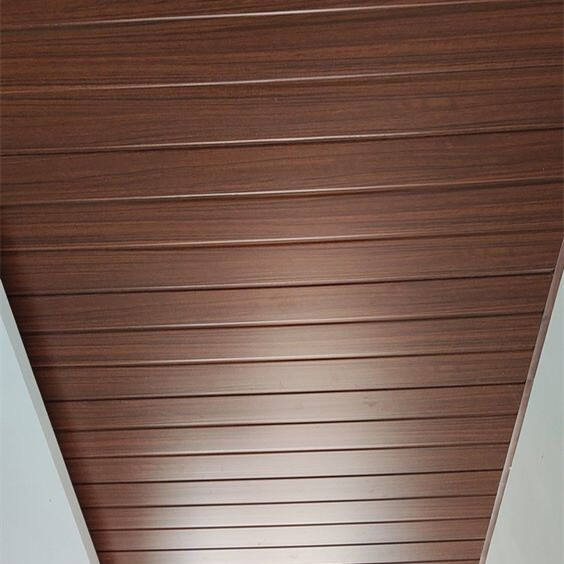
Why Insulated Ceiling Panels Are Critical for Reducing Building Energy Demand
Most commercial buildings eat through a ton of energy just keeping things at comfortable temperatures, and HVAC systems alone usually take up around 40% or more of that total consumption. Standard ceiling setups tend to be real trouble spots when it comes to heat management. They let all sorts of unwanted heat move through via conduction, convection, and radiation, which means the heating and cooling equipment has to work harder than necessary. Building managers end up paying higher utility bills month after month, not to mention the extra carbon going into the atmosphere. For companies trying to hit their green targets, these hidden inefficiencies can really throw a wrench in their sustainability plans.
Insulated ceiling panels tackle this issue head on by building in those high performance thermal barriers right into the ceiling itself. Most of these panels have multiple layers, usually with either rigid polyurethane or polyisocyanurate cores sandwiched between materials that create tight seals at the joints. The result? These panels can offer insulation values that are around 30 percent better than what we typically see in regular suspended ceilings. What does this mean for buildings? Less heat moving through the ceiling space, which keeps indoor temperatures more consistent and means HVAC systems don't need to run as often. Actual installations in commercial buildings have demonstrated savings where heating and cooling needs drop anywhere from 20 to 30 percent when compared to traditional ceiling setups.
These panels do more than just save money on bills too. The environmental benefits are pretty significant actually. For every kilowatt hour we save, around half a pound of carbon dioxide stays out of the atmosphere. Building regulations are getting stricter by the day as they push for those net zero goals. Take a look at what's happening with standards like ASHRAE 90.1-2022 or the latest version of the International Energy Conservation Code coming out in 2024. Insulated panels make sense as part of any major building envelope improvements. What makes them stand out is how they cut down on thermal bridging problems. With their continuous layer of insulation and those tight interlocking seals between panels, buildings perform better overall whether it's an old building getting upgraded or something brand new going up from scratch.
Thermal Performance Comparison: Insulated Ceiling Panels vs. Conventional Ceilings
R-value and U-factor benchmarks across common ceiling panel materials
When it comes to thermal performance, insulated ceiling panels featuring PUR or PIR cores beat traditional mineral wool and fiberglass hands down. Take PUR for instance, which offers around R-6.5 per inch of thickness. That's roughly twice what fiberglass manages at about R-3.8 and three times better than expanded polystyrene (EPS) at just R-2.5. These superior insulation properties result in U-factors under 0.25 W/m²K for modern insulated systems, compared to over 0.4 W/m²K for standard suspended ceilings. The secret lies in their closed cell construction that locks in inert gases, effectively blocking both conductive and convective heat transfer. Mineral wool products don't have this advantage and must compensate through sheer thickness and density. A recent study from Building Insulation Analysis found that buildings equipped with these advanced panels saw reductions in HVAC system workload ranging between 23% to nearly 40%, depending on specific conditions and installation quality.
Real-world impact on radiant heat transfer and occupant thermal comfort
Insulated panels help keep ceiling surfaces at stable temperatures during both summer and winter months. This means less radiant heat coming through from above in warm weather and better retention when it gets cold outside. The result? Fewer uncomfortable cold drafts or those annoying hot spots right under people's heads. Research on climate controlled environments indicates somewhere between 15 to 22 percent improvements in how comfortable folks feel thermally according to ASHRAE standards. When there's less of this temperature layering effect where all the warm air just sits up near the ceiling, everyone below enjoys much more consistent conditions across their workspace. Plus, since heating systems don't need to cycle on and off so frequently, there's also less background noise and those sudden changes in humidity levels that nobody really likes. Buildings that have invested properly in ceiling insulation tend to see about 10% drop in complaints related to thermal comfort issues. And interestingly enough, workers in these spaces actually perform better on cognitive tasks too, as noted in a recent Indoor Environmental Quality Review study back in 2023.
Key Design Strategies to Unlock Full Energy Savings from Insulated Ceiling Panels
Effective implementation hinges on envelope integrity and system coordination. Poor sealing or misaligned integration can erode up to 40% of potential energy benefits—negating insulation gains before commissioning (Building Efficiency Journal, 2023).
Air sealing and thermal continuity: How gasketed, interlocking ceiling panel systems minimize leakage
Gasketed, interlocking systems eliminate discontinuities at panel joints—the most common source of thermal bridging in suspended ceilings. When compressed during installation, integrated elastomeric seals reduce air leakage by 80% versus standard grid-and-tile assemblies. This delivers:
- 15–20% lower HVAC loads
- Indoor temperature stability within ±0.5°C
- Eliminated condensation risk in climate zones 4–7 (per IECC definitions)
Integration best practices—coordinating insulated ceiling panels with lighting, HVAC, and fire-rated assemblies
Seamless integration ensures energy savings don’t compromise safety, acoustics, or functionality:
- Lighting: Use recessed fixtures with integrated thermal break pads to prevent localized heat transfer through the panel core
- HVAC: Right-size ductwork and airflow volumes based on reduced thermal load—not legacy assumptions
- Fire-rated assemblies: Specify mineral wool–core panels with Class A fire ratings (ASTM E84) that retain structural integrity and R-value under thermal stress
- Acoustic control: Pair with sound-absorbing backing layers to achieve ¥0.75 NRC without sacrificing thermal performance
When executed holistically, this approach cuts annual energy costs by 30%, extends HVAC equipment life, and supports compliance with LEED v4.1, WELL Building Standard, and local energy codes.
FAQ
What are insulated ceiling panels?
Insulated ceiling panels are building materials designed with multiple layers, including rigid cores, to provide high thermal resistance and reduce heat transfer through ceilings.
How do insulated ceiling panels save energy?
These panels enhance thermal resistance, minimizing heat transfer and stabilizing indoor temperatures. This reduces the load on HVAC systems, saving energy and lowering utility bills.
What are the environmental benefits of using insulated ceiling panels?
By reducing energy demand, insulated ceiling panels help decrease carbon dioxide emissions, supporting sustainability efforts and compliance with evolving building energy codes.
How do insulated ceiling panels improve thermal comfort?
They maintain stable ceiling surface temperatures, reducing radiant heat transfer, drafts, and temperature variations within indoor spaces, thus enhancing occupant comfort.
What are the key considerations when installing insulated ceiling panels?
Ensure proper air sealing and system coordination, integrating panels with HVAC, lighting, and fire-rated assemblies to optimize energy savings, comfort, and safety.